Cleaning large frameless windows can be tedious and risky, especially when exterior glass is difficult to reach. The right window-cleaning robot can handle much of the work while you stay safely on the ground.
We selected 10 models with different combinations of suction, spray technology, navigation, edge detection, safety systems, and remote control features to help you find the best fit for your glass surfaces.
Best 10 Window Cleaning Robots for Frameless Windows Picks for 2026
Best for Streak-Resistant Scraping
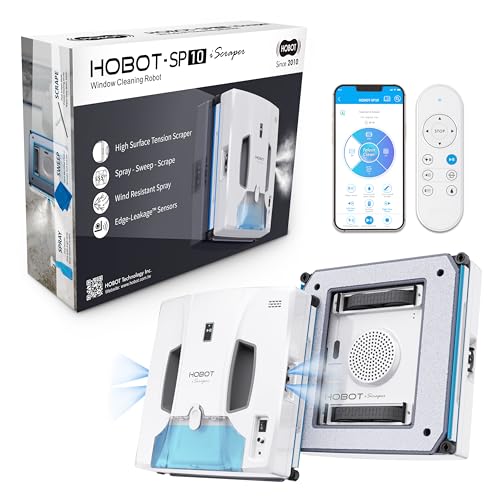
- Spray-sweep-scrape cleaning system
- Edge-leakage sensing for frameless glass
- 6000Pa suction with 20-minute UPS backup
Best For: Frameless windows where water removal and edge awareness are priorities
Best Dual-Stage Cleaner

- Round wet pad plus square dry-polishing pad
- 6500Pa suction with 55N constant pressure
- NAVI 7.0 mapping and 30-minute backup
Best For: Detailed cleaning of windows, mirrors, and glass doors
Best Remote-Control Value

- Four-nozzle spray coverage
- Six cleaning modes with manual control
- 25-minute backup and triple safety system
Best For: High windows and glass doors cleaned by remote control
Best Simple Large-Window Option

- 6500Pa suction and 25-minute UPS backup
- Edge detection for framed and frameless glass
- Three routes, 60ml tank, and 10 pads
Best For: Routine cleaning of large windows and floor-to-ceiling glass
Best Frameless-Glass Safety Features
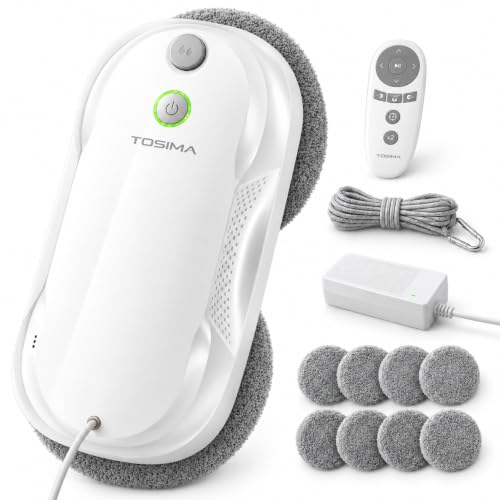
- Air-pressure edge detection
- Up to 6400Pa adaptive suction
- Triple safety system
Best For: Compact homes with frameless or smooth glass windows
Best High-Suction Pick
6400Pa Dual-Spray Window Robot

- 6400Pa variable-frequency suction
- Backup battery, pressure sensor, and safety rope
- Dual spray with edge and corner detection
Best For: High windows and shoppers prioritizing suction and safety
Best Frameless-Glass Fit

- Designed for frameless glass
- Three paths with edge detection
- 3000Pa suction and 20-minute UPS backup
Best For: Frameless windows, glass doors, and angled skylights
Best Smart-Path Option

- AI 5.0 path planning with edge detection
- Dual nozzles and double-helix cleaning heads
- 3000Pa suction with up to 30-minute UPS backup
Best For: Remote-controlled cleaning of windows, mirrors, and glass doors
Best for Streak-Resistant Scraping – HOBOT-SP10 iScraper
For shoppers comparing window cleaning robots for frameless windows, the HOBOT-SP10 stands out for combining pressurized spraying, cloth sweeping, and dual-scraper water removal. Its edge-leakage sensors and 6000Pa suction are designed to support stable cleaning across framed or frameless glass.
Best For: Frameless windows and users who prioritize water removal and reduced streaking.
Pros:
- Three-step spray, sweep, and scrape cleaning process.
- Edge-leakage sensors respond to frameless edges and minor bumps.
- 6000Pa suction, app and remote control, and a 20-minute UPS backup.
- Suitable for reclined windows, greenhouse roofs, and solar panels.
Cons:
- Requires a corded power connection during operation.
- The supplied information does not specify a water-tank capacity.
The SP10 is a strong fit when edge handling and residual-water removal matter more than simple wipe-only cleaning. Its replaceable scrapers and machine-washable cloth also support ongoing maintenance.
Best Dual-Stage Cleaner – HUTT 10 Round-Square Robot
Among window cleaning robots for frameless windows, the HUTT 10 uses a round wet-lifting pad followed by a square dry-polishing pad. Its NAVI 7.0 mapping, 14 sensors, and round-square design are intended to improve edge reach, corner coverage, and overall path efficiency.
Best For: Users seeking a more comprehensive wet-cleaning and dry-polishing routine for windows, mirrors, and glass doors.
Pros:
- Dual-stage cleaning combines wet lifting with dry wiping and polishing.
- 6500Pa suction and constant 55N pressure support vertical cleaning.
- NAVI 7.0 mapping and 14 sensors assist with routes and edge detection.
- 30-minute power-off adhesion protection and a 220kg-rated safety rope.
Cons:
- Purified water is recommended, and cleaning liquid is not included.
- Wet pads or dusty drive tracks can reduce traction and affect movement.
The HUTT 10 is especially appealing for buyers who want more than a single-pass wipe. Its larger feature set and dual-pad workflow may require more setup and pad care, but they are geared toward a clearer, streak-reduced finish.
Best Remote-Control Value – WA9C Pro Window Robot
The WA9C Pro is a practical option among window cleaning robots for frameless windows, pairing four spray nozzles with remote-controlled path selection. Its pressure monitoring, drop sensor, and multiple cleaning modes are designed to help with high windows, mirrors, and glass doors.
Best For: Buyers who want remote operation, adjustable spray, and several route options without app-based controls.
Pros:
- Four-nozzle spray system provides broad moisture coverage.
- Offers N-shaped, Z-shaped, and manual remote-controlled cleaning modes.
- Air-pressure monitoring and a bottom drop sensor support secure operation.
- Power-failure battery protection lasts up to 25 minutes and includes a safety rope.
Cons:
- Its stated 2600–3200Pa adsorption force is lower than some 6500Pa alternatives.
- Remote control is the listed control method; app control is not specified.
- The 6-pound listed weight may be less convenient to handle than lighter models.
The WA9C Pro makes sense for straightforward remote operation and customizable cleaning paths. It offers useful safety features for elevated work, though shoppers wanting maximum suction or app control may prefer another model.
Best Simple Large-Window Option – 6500Pa Remote Window Robot
For shoppers seeking window cleaning robots for frameless windows without complicated controls, this 6500Pa model offers remote operation, edge detection, and three directional cleaning paths. It is designed for windows, glass doors, and floor-to-ceiling glass, including regularly maintained surfaces.
Best For: Routine dust, fingerprint, and light-mark cleaning on large or hard-to-reach glass.
Pros:
- 6500Pa suction with a 25-minute UPS backup and 5-meter safety rope.
- Edge and obstacle sensors support framed and frameless glass cleaning.
- Three selectable routes cover top-down, left-down, and right-down patterns.
- Includes a 60ml tank, remote control, and 10 cleaning pads.
Cons:
- Heavy buildup and stubborn water stains may require pre-cleaning or extra cycles.
- The product is intended for routine cleaning rather than intensive stain removal.
- The listed battery-life detail is inconsistent with the stated 25-minute UPS backup.
This model is a straightforward choice for maintaining accessible and high glass surfaces with minimal manual effort. Properly dampening and wringing the pad is important for traction and cleaning performance.
Best Ultrasonic Spray Control – Tosima X1
The Tosima X1 is a practical option for shoppers comparing window cleaning robots for frameless windows and other indoor glass. Its dual ultrasonic spray nozzles, visible 85 ml tank, automatic S-shaped cleaning path, and remote control support routine cleaning on both large and small windows.
Best For: Homeowners who want visible water-level monitoring, flexible remote control, and a robot suitable for windows as small as 30×30 cm.
Pros:
- Dual nozzles spray in the direction of travel to help limit smears.
- 85 ml water tank has a viewing window for quick level checks.
- Backup battery keeps the robot attached for about 25 minutes during a power outage.
- Safety tether, edge-cleaning feature, and remote-controlled manual adjustment add flexibility.
Cons:
- At 65 dB, it may be noticeable during operation.
- It is corded during normal use, so placement depends on access to power.
- The 5-pound body is less lightweight than some compact alternatives.
The X1 stands out for its combination of controlled water application, a visible tank, and flexible cleaning modes. Its safety tether and outage backup are useful additions, though shoppers should account for its weight, noise level, and corded setup.
Best Frameless-Glass Safety Features – Tosima W5
For shoppers specifically seeking window cleaning robots for frameless windows, the Tosima W5 offers an air-pressure sensor designed to detect edges. Its adaptive suction, intelligent navigation, dual spray system, and triple safety setup make it a feature-rich choice for smooth glass surfaces.
Best For: Apartment and condo owners who prioritize frameless-glass edge detection, compact storage, and strong safety support.
Pros:
- Air-pressure sensor helps the robot detect edges on frameless glass.
- Variable-frequency suction reaches up to 6400Pa and adapts to the surface.
- Triple safety system includes suction, a safety rope rated for up to 220 kg, and a backup battery.
- Compact, lightweight design and replaceable spray and tank-cap components simplify handling and maintenance.
Cons:
- Its 6-inch cleaning path is narrower than the X1’s listed 8-inch path.
- The manufacturer warranty is listed as one year.
- It still requires a power connection for normal operation.
The W5 is the most directly targeted option here for frameless glass because of its stated edge-detection capability. Adaptive suction and multiple safety measures add reassurance, while the compact format suits smaller homes, though its narrower path may mean more passes on broad windows.
Best Compact Daily-Cleaning Model – ECOVACS WINBOT Mini
The ECOVACS WINBOT Mini is a compact choice for everyday glass maintenance and narrow or hard-to-reach windows. Its dual ultrasonic spray nozzles, intelligent path planning, three cleaning modes, and app control make it convenient for light dust, fingerprints, and quick touch-ups.
Best For: First-time robot users, apartment dwellers, and anyone wanting a lightweight indoor model for frequent maintenance cleaning.
Pros:
- Compact 8.46-inch square body is designed for easy handling and storage.
- Dual ultrasonic nozzles and three cleaning modes support routine glass cleaning.
- 9-stage protection system, strong suction, and anti-slipping features support stable operation.
- App control and low-noise operation suit regular home use.
Cons:
- The supplied notes position it mainly for light dirt; heavily soiled glass may require pad cleaning or multiple cycles.
- App control requires a compatible smartphone.
- It is intended for indoor use and requires corded power.
The WINBOT Mini is a sensible maintenance-focused pick rather than a heavy-duty restoration tool. Its compact design, quiet operation, and simple setup are appealing for frequent cleaning, but tougher buildup may take extra cycles.
Best High-Suction Pick – 6400Pa Dual-Spray Window Robot
If you need window cleaning robots for frameless windows and other smooth surfaces, this model stands out for its variable-frequency suction, edge and corner detection, and dual-direction spray. It also includes a backup battery, pressure sensor, safety rope, remote control, and multiple cleaning modes for indoor or outdoor glass.
Best For: High windows, larger glass surfaces, and shoppers prioritizing stronger suction and layered safety features.
Pros:
- 6400Pa variable-frequency suction is designed to adapt to different dirt levels and glass surfaces.
- Triple safety system includes a backup battery, air-pressure anti-drop sensor, and 178-inch safety rope.
- Dual-direction spray, edge and corner detection, and three cleaning modes support more thorough cleaning.
- Includes 10 replacement microfiber mop pads.
Cons:
- Cleaning solution should be applied to the glass or pads rather than poured directly into the machine.
- The listed tank capacity varies between the title and notes, so buyers should verify the included specification.
This is the most feature-rich option of the three, particularly if suction strength and safety equipment are your main concerns. Follow the pad-moistening and solution instructions to help prevent nozzle clogging and streaks.
Best Frameless-Glass Fit – 3000Pa Dual-Spray Robot
For window cleaning robots for frameless windows, this model is explicitly designed for glass without conventional frames. Its intelligent path planning, edge detection, dual spray, and 3000Pa suction are paired with practical operating guidance, including a recommended dry pass followed by a wet pass.
Best For: Frameless windows, glass doors, skylights angled at least 30 degrees, mirrors, and other smooth glass surfaces.
Pros:
- Specifically states compatibility with frameless glass and uses edge detection to navigate window boundaries.
- Dual atomizing spray, three cleaning paths, and a 50ml tank support wet cleaning.
- Triple safety protection combines 3000Pa suction, a four-meter safety rope, and a 20-minute UPS battery.
- Includes 10 microfiber cloths and remote control operation.
Cons:
- It must remain plugged in; the UPS battery provides emergency holding power rather than cordless operation.
- Not recommended for curved glass, thick trim, raised decorative elements, or horizontal surfaces.
- Bird droppings, dried mud, paint, and other stubborn debris require manual pre-cleaning.
This is the clearest match for frameless-window shoppers because the product notes directly identify that use case. Its limitations are important, but the dry-then-wet cleaning method and explicit surface guidance make setup easier to follow.
Best Smart-Path Option – AI 5.0 Dual-Spray Robot
This AI-enabled option gives shoppers considering window cleaning robots for frameless windows a combination of path planning, edge detection, dual water nozzles, and remote control. Its sensors are designed to adjust the route around frames or obstacles, while three automatic modes and manual control add flexibility.
Best For: Users who want guided navigation, remote-selectable cleaning modes, and a robot for windows, mirrors, and glass doors.
Pros:
- AI 5.0 path planning and sensors are designed to choose an efficient route.
- Edge detection helps the robot adjust around frames and obstacles.
- Dual water nozzles, double-helix cleaning heads, and microfiber pads target dust, fingerprints, and smudges.
- 3000Pa suction, UPS power storage rated for up to 30 minutes, and a safety rope provide layered protection.
Cons:
- The supplied details list a 50ml capacity but do not specify a tank-cleaning procedure.
- Indoor use is listed in the product details, so buyers seeking outdoor operation should confirm suitability.
- As with similar suction robots, the safety rope and power connection remain important during use.
This model is a sensible choice if navigation features matter as much as cleaning power. Its AI path planning and remote-controlled modes offer convenience, while the safety rope and UPS system add reassurance during operation.
How We Picked the Best Window Cleaning Robots for Frameless Windows
We focused on the features that matter most when a robot operates on frameless or edge-to-edge glass. These include dependable vacuum grip, backup power, tether systems, edge detection, path planning, spray control, and the ability to clean both indoor and outdoor surfaces. We also considered whether each model offers useful controls such as a remote, app, or automatic cleaning modes.
Because product specifications can vary by seller and revision, confirm the current manual and compatibility details before buying. A robot should never be used on a surface its manufacturer excludes.
Quick Comparison
| Feature | What to look for | Why it matters |
|---|---|---|
| Suction | Approximately 3,000Pa to 6,500Pa or higher | Helps maintain contact with smooth glass |
| Safety | UPS battery, tether, alarms, and fault detection | Reduces fall risk during power loss or grip problems |
| Cleaning system | Dual spray, ultrasonic mist, or multiple passes | Improves coverage and loosens light grime |
| Navigation | Intelligent paths, edge detection, and corner handling | Helps the robot cover more of the pane consistently |
| Controls | Remote control, app, or one-touch operation | Makes setup and supervision easier |
Key Buying Factors for Window Cleaning Robots for Frameless Windows
Grip and Emergency Protection
Frameless glass gives the robot fewer physical boundaries, so stable suction and reliable backup protection are essential. Look for a safety tether, emergency battery, audible alerts, and automatic responses to suction loss or power interruption. More suction is not automatically better if the pads, seals, or surface are incompatible.
Edge Detection and Route Planning
Choose a model that explicitly supports frameless glass and includes edge sensors or intelligent path planning. These features help the robot recognize the pane’s limits instead of relying on a frame to stop it. Corner performance can still vary, so expect to finish stubborn edges by hand.
Spray, Pads, and Maintenance
Dual nozzles, ultrasonic atomization, and adjustable spray can improve cleaning while limiting excess moisture. Check tank capacity, pad availability, washable-pad instructions, and whether the robot requires a specific cleaning solution. Dirty or worn pads can reduce grip and leave streaks.
Surface and Weather Limits
Verify compatibility with glass thickness, textured or tinted coatings, wet surfaces, windows with obstacles, and outdoor temperatures. Most units work best on smooth, relatively clean glass and still need supervision, particularly outdoors.
Who Should Buy Which Window Cleaning Robots for Frameless Windows?
Choose a compact model if you have smaller panes, limited storage, or mainly indoor cleaning needs. A higher-suction model with a larger tank and stronger safety system is better for large exterior windows or frequent use. Models with app control suit users who want detailed operation, while remote-controlled options are often simpler for occasional cleaning.
If your windows have deep frames, screens, mullions, heavy mineral buildup, or unusual coatings, prioritize confirmed compatibility over headline suction numbers. For any model in this roundup, secure the safety tether, inspect the pads and seal before each use, and supervise every cleaning cycle.