The best thermal camera can reveal heat loss, electrical hot spots, HVAC problems, moisture-related temperature differences, and mechanical issues that ordinary cameras cannot see.
We selected 10 thermal imaging cameras ranging from compact smartphone accessories to professional commercial tools, emphasizing image quality, temperature range, usability, battery life, and practical features.
Best 10 Thermal Camera Picks for 2026
Best Overall

- Enhanced 512 × 384 thermal imaging
- 8-hour battery and 64GB storage
- Rugged, connected field-inspection design
Best For: Detailed professional inspections and documentation
Best for Long Runtime

- Up to 10.5 hours of battery life
- 512 × 384 imaging with 25Hz refresh
- Six-point measurement and temperature alarms
Best For: Full-day HVAC, electrical, and mechanical inspections
Best for Easy Operation
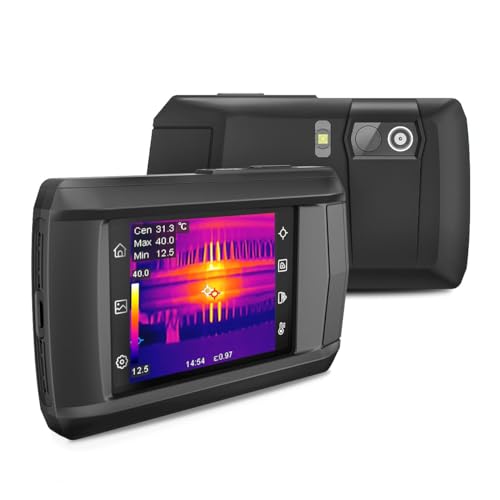
- 3.5-inch touchscreen with five imaging modes
- Scene detection for leaks and insulation gaps
- Large image and video storage capacity
Best For: Accessible home and building inspections
Best Value Features
Flagfront YXI96 Thermal Camera

- 240 × 240 imaging at a 25Hz refresh rate
- 50° field of view with high/low alarms
- IP54 protection and 6.6-foot drop resistance
Best For: DIY home, vehicle, and circuit inspections
Best Rugged Thermal Camera

- -25°C to 300°C temperature range
- MSX-enhanced images and Bullseye laser
- IP54, drop-tested design with included pouch
Best For: Building, HVAC, and electrical spot inspections
Best Phone-Compatible Thermal Camera

- 512 × 384 TISR-enhanced thermal resolution
- Dual-lens imaging with 25Hz refresh rate
- 33g plug-and-play design for phones and Windows
Best For: Mobile inspections and portable troubleshooting
Best Professional Thermal Camera

- 240 × 180 infrared resolution with MSX
- -20°C to 550°C measurement range
- Wi-Fi and FLIR Ignite cloud workflow
Best For: Commercial inspections and documented troubleshooting
Professional Detailer

- TISR-enhanced 240×180 effective resolution and 25Hz imaging
- -4°F to 1022°F range with temperature alarms
- Windows PC analysis, reports, and 8GB image storage
Best For: Detailed HVAC, electrical, building, automotive, and mechanical inspections
Phone-Based Pro
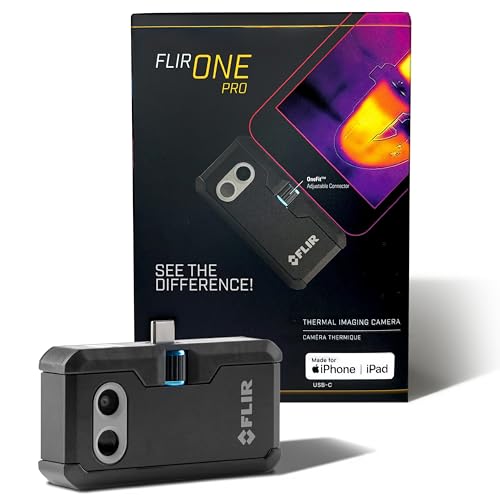
- Plugs into USB-C iPhone 15 and newer models
- 480×360 Super Resolution with MSX image enhancement
- App includes step-by-step thermal inspection guides
Best For: Portable inspections by compatible iPhone users
Long-Run Compact Pick
TOPDON TC004 Mini Thermal Camera

- TISR-enhanced 240×240 output at a smooth 25Hz
- 15-hour battery life with automatic shutdown options
- Temperature alerts, automatic photos, and 8,000-photo storage
Best For: Extended portable inspections around homes, machinery, and electrical systems
Best Overall – TOPDON TC004 Thermal Camera
The TOPDON TC004 is a well-equipped thermal camera for detailed inspections, combining enhanced 512 × 384 imaging, a large display, long battery life, and generous storage. Its laser pointer, wireless connectivity, and rugged construction make it practical for documenting findings in the field.
Best For: Professionals and serious DIY users who need detailed thermal images, extended runtime, and convenient inspection documentation.
Pros:
- 256 × 192 infrared resolution enhanced to 512 × 384 with TISR technology
- Up to 8 hours of battery life and 64GB of built-in storage
- 3.5-inch display, laser pointer, Wi-Fi, LED light, and PC/mobile analysis support
- IP54 protection and 2-meter drop resistance for field use
Cons:
- At 2.11 pounds, it is less compact than lightweight inspection cameras
- Its higher-resolution feature set may be more than casual users need
The TC004 stands out when image detail, storage, and all-day usability matter. It is a strong choice for electrical, HVAC, mechanical, and building inspections where findings need to be captured and shared efficiently.
Best for Long Runtime – Thermal Master Thor002
The Thermal Master Thor002 is a versatile thermal camera with enhanced 512 × 384 resolution, a 25Hz refresh rate, and a broad temperature range from -4°F to 1022°F. Its long-lasting battery, multiple measurement points, alarms, and wireless transfer options support demanding inspection work.
Best For: HVAC, electrical, mechanical, and building inspectors who value long battery life and flexible measurement tools.
Pros:
- Up to 10.5 hours of runtime from its 5000mAh battery
- 512 × 384 X³-enhanced resolution, 25Hz refresh rate, and 40mK sensitivity
- Measures six points simultaneously and includes high/low temperature alarms
- Supports 4X digital zoom, USB PC analysis, Wi-Fi transfer, voice notes, and QR file management
Cons:
- Weighs 3.12 pounds, making it relatively heavy for extended handheld use
- Its broad professional feature set may require more setup than a basic thermal camera
With the longest stated battery life in this roundup and strong documentation features, the Thor002 is suited to full workdays in the field. It is especially useful when inspections involve varied surfaces, distant targets, or repeated measurements.
Best for Easy Operation – HP96 Thermal Imaging Camera
The HP96 is a user-friendly thermal camera built around a 3.5-inch touchscreen and phone-style interface. Its intelligent scene detection, multiple viewing modes, live super resolution, and automatic temperature tracking help simplify inspections of leaks, insulation gaps, and overheating components.
Best For: Home inspectors and DIY users who want touchscreen controls, visual overlays, and automated assistance with common anomalies.
Pros:
- Touchscreen interface with Thermal, Visual, Fusion, PIP, and Blending modes
- IntellFault scene detection can identify water leaks and insulation gaps
- Live super resolution enhances 96 × 96 infrared imaging to 240 × 240
- Stores approximately 30,000 thermal images and 20 hours of video, according to the supplied notes
Cons:
- Its temperature range tops out at 662°F, lower than the other listed cameras
- The notes specify that it does not provide moisture readings
- Battery life is listed as up to 4 hours, shorter than the other options
The HP96 prioritizes accessibility and visual guidance over the highest native infrared resolution. Its touchscreen workflow and scene-recognition features make it appealing for routine property and maintenance inspections, provided its temperature range fits the job.
Best Value Features – Flagfront YXI96 Thermal Camera
The Flagfront YXI96 offers a practical set of thermal camera features for home, vehicle, and circuit checks. It combines 240 × 240 super-resolution imaging, a 50° field of view, temperature alarms, and a wide -4°F to 1022°F range in a portable, rugged design.
Best For: Homeowners and DIY inspectors who need broad scanning coverage, temperature alerts, and a durable handheld design.
Pros:
- 240 × 240 super-resolution imaging with a smooth 25Hz refresh rate
- Wide 50° field of view for scanning larger areas efficiently
- High/low temperature alarms and on-screen highest, lowest, and center readings
- IP54 protection and 6.6-foot drop resistance
Cons:
- The supplied notes do not mention wireless transfer, video recording, or built-in storage capacity
- It offers fewer listed visualization options than the HP96, with six color palettes and no stated visible-light camera
The YXI96 is a straightforward option for finding abnormal heat during household, automotive, and electrical checks. Its broad field of view and alarms are particularly useful for fast scanning, while adjustable emissivity and distance settings support more accurate readings across different materials.
Best Rugged Thermal Camera – FLIR TG165-X
The FLIR TG165-X is a practical thermal camera for locating heat problems in buildings, HVAC systems, and electrical equipment. Its Bullseye laser helps indicate the measurement area, while MSX overlays visual detail for easier-to-read thermal images.
Best For: Building, HVAC, and electrical inspections where a durable handheld design and straightforward spot measurements matter.
Pros:
- Measures temperatures from -25°C to 300°C (-13°F to 572°F).
- MSX technology adds visual detail to thermal images.
- Drop-tested design with IP54 protection against dirt, dust, and oil.
- Includes a rechargeable battery, wrist strap, USB-C cable, and carry pouch.
Cons:
- Its 80 × 60 infrared resolution is lower than the higher-resolution models in this roundup.
- Listed response time is 3 seconds, so it is geared more toward spot checks than rapid scanning.
The TG165-X is a sensible choice when durability, simple targeting, and FLIR’s MSX image enhancement are more important than advanced connectivity or maximum resolution.
Best Phone-Compatible Thermal Camera – TOPDON TC001 Max
The TOPDON TC001 Max turns a compatible phone or tablet into a portable thermal camera. Its dual-lens design combines infrared and visible-light views, while the companion apps provide image capture, temperature analysis, graphs, and multiple color palettes.
Best For: Users who want a compact, app-based thermal camera for Android, iPhone, iPad, Windows, automotive, HVAC, electrical, or PCB work.
Pros:
- Uses TISR to enhance 256 × 192 infrared data to 512 × 384 thermal resolution.
- 25Hz refresh rate and ≤40mK NETD support smooth, sensitive imaging.
- Measures from -20°C to 550°C (-4°F to 1,022°F).
- Compact 33g design requires no separate battery, charging, or wireless pairing.
Cons:
- Requires a compatible phone, tablet, or Windows device for operation.
- USB-C and Lightning adapters may add connection considerations across devices.
The TC001 Max is the most portable option here, especially for users who prefer reviewing and sharing thermal data through a mobile app rather than using a standalone handheld camera.
Best Professional Thermal Camera – FLIR E6 Pro
The FLIR E6 Pro is a commercial thermal camera designed for more detailed troubleshooting and documentation. It provides 240 × 180 infrared resolution, MSX image enhancement, radiometric JPEG files, Wi-Fi connectivity, and FLIR Ignite cloud support for storing, editing, and sharing images.
Best For: Commercial inspections and professionals who need higher-resolution thermal images, onboard documentation, and cloud-based workflow tools.
Pros:
- Captures 43,200 pixels with 240 × 180 infrared resolution.
- Measures temperatures from -20°C to 550°C (-4°F to 1022°F).
- FLIR Ignite supports automatic cloud storage, editing, and sharing.
- Records JPEG files with radiometric data and offers a listed 4-hour battery life.
Cons:
- It is substantially heavier and more specialized than the phone-connected TC001 Max.
- Its feature set may be more than casual users need for occasional spot checks.
The E6 Pro is the strongest fit for professionals who need a dedicated FLIR platform with detailed imaging and a convenient path from field capture to shared inspection reports.
Professional Detailer – FOXWELL RT280 Thermal Camera
The FOXWELL RT280 is a versatile thermal camera for users who need detailed handheld inspections and PC-based reporting. Its TISR-enhanced imaging, broad temperature range, and built-in inspection tools suit HVAC, electrical, building, automotive, and mechanical troubleshooting.
Best For: Detailed professional inspections, especially when PC analysis and report generation are useful.
Pros:
- TISR enhances effective thermal resolution from 120×90 to 240×180, with a 25Hz refresh rate.
- Measures from -4°F to 1022°F and provides high, low, and center temperature readings with alerts.
- Windows software supports point, line, area, 2D, and 3D analysis plus automatic reports.
- Stores more than 20,000 images and videos on its 8GB eMMC storage.
Cons:
- PC analysis software is compatible with Windows, not Mac.
- Its feature set may be more than casual household users need.
The RT280 stands out when documentation and deeper analysis matter. A laser pointer, LED light, nine color palettes, IP54 protection, and 6.6-foot drop resistance add practical value for field work.
Phone-Based Pro – FLIR ONE Pro Thermal Camera
The FLIR ONE Pro is a compact thermal camera that connects directly to compatible iPhones through USB-C. It combines a phone-based workflow with Vivid IR upscaling, FLIR MSX visual detail enhancement, and in-app inspection guidance for practical troubleshooting.
Best For: iPhone 15 and newer users who want a highly portable thermal inspection tool.
Pros:
- Connects directly to USB-C iPhones, including iPhone 15 and newer models.
- Upscales 160×120 native IR to 480×360 and uses MSX to add visual detail.
- The FLIR ONE app includes step-by-step guides for common inspection issues.
- Compact, lightweight design and 1.5-meter drop resistance suit mobile jobsite use.
Cons:
- Designed for USB-C iPhones rather than a standalone handheld display.
- Temperature accuracy is specified for particular ambient and scene temperature ranges.
This model is a convenient choice for inspections involving air leaks, moisture, automotive systems, machinery, and other common applications. Its main advantage is portability, provided your phone is compatible.
Long-Run Compact Pick – TOPDON TC004 Mini Thermal Camera
The TOPDON TC004 Mini is a compact thermal camera built for extended handheld inspections. It combines 128×128 IR imaging with TISR-enhanced 240×240 output, automatic temperature alerts, photo capture, and up to 15 hours of battery life.
Best For: Long inspection sessions involving home systems, electrical equipment, machinery, leaks, and underfloor heating.
Pros:
- TISR enhances the 128×128 sensor output to 240×240, with a 25Hz refresh rate.
- Measures from -4°F to 842°F with high, low, and center temperature readings.
- Offers automatic warning photos, manual photo capture, and storage for up to 8,000 photos.
- Provides up to 15 hours of runtime, IP54 protection, and resistance to drops up to 2 meters.
Cons:
- The package includes a charging cable but no charging head.
- It has five color palettes, fewer than some competing inspection cameras.
- The user manual is provided electronically rather than as a paper copy.
The TC004 Mini is especially appealing for users who value portability and fewer charging interruptions. Its automatic shutdown options and temperature-triggered photo capture can make repetitive inspection work more efficient.
How We Picked the Best Thermal Cameras
We compared these models across the features that matter during real inspections and troubleshooting: infrared resolution, enhanced or super-resolution output, refresh rate, temperature range, stated accuracy, display quality, battery life, image and video capture, connectivity, durability, and ease of use. We also considered the type of buyer each camera serves, since a phone-connected imager can be more convenient for occasional checks while a dedicated handheld unit is often better for field work.
Specifications can vary by measurement mode and operating conditions. Treat published accuracy as a guideline, and verify critical findings with appropriate test equipment before making safety-related decisions.
Quick Comparison
For the highest image detail among the handheld options, look at cameras with 512 × 384 infrared resolution or comparable enhanced output. Midrange 240 × 240 and 320 × 240 models can provide a useful balance for home inspection, HVAC service, and general maintenance. Smartphone accessories are typically the most portable, but they depend on a compatible phone and may offer less convenient ergonomics for extended use.
Refresh rates around 25Hz make moving across equipment or scanning a building feel smoother than slower systems. A wide temperature range is helpful for both household diagnostics and hotter mechanical or electrical applications, while a long battery rating matters when working away from an outlet.
Key Buying Factors for a Thermal Camera
Resolution and Image Clarity
Higher infrared resolution displays smaller temperature differences and makes it easier to identify the precise location of a hot or cold spot. Enhanced-resolution processing can improve the saved image, but it does not replace native infrared detail.
Temperature Range and Accuracy
Choose a range suited to your work. Home and HVAC inspections generally need less capacity than industrial troubleshooting. Check accuracy, measurement distance, emissivity controls, spot meters, and high- and low-temperature markers if you need repeatable readings.
Display, Modes, and Documentation
A built-in screen is convenient for standalone field use. Features such as visual-camera overlays, multiple imaging modes, laser pointers, video recording, and Wi-Fi or USB connectivity can make reports and follow-up work easier.
Battery, Design, and Durability
Consider rated runtime, charging method, grip, weight, storage, and protection against dust or water. A compact camera is easier to carry, while a larger handheld model may be more comfortable for frequent scanning.
Who Should Buy Which Thermal Camera?
Homeowners and DIY users: Choose a straightforward handheld or compact model with a clear display, automatic hot- and cold-spot detection, and enough range for insulation, drafts, outlets, and HVAC checks.
HVAC technicians and inspectors: Prioritize 25Hz operation, useful temperature controls, durable construction, strong battery life, and enough resolution to distinguish pipes, vents, breakers, and building surfaces.
Electrical and maintenance professionals: Favor accurate spot measurements, a broad temperature range, laser guidance, image storage, and reliable documentation features.
Mobile and occasional users: A USB-C smartphone camera can be the most convenient choice if your phone is compatible and you prefer using an existing screen and app. For frequent professional work, a dedicated Thermal Camera usually offers better ergonomics and independence from phone battery life.