The best manual meat slicers give home cooks more control over thickness, portion size, and preparation than a standard kitchen knife. They are especially useful for frozen meat, hot pot, deli-style slices, and homemade jerky.
Our roundup covers compact household cutters, durable manual slicers, specialty jerky tools, and one electric alternative for shoppers who value speed. Use the guide below to match blade design, adjustment range, capacity, and cleanup requirements to your cooking style.
Best 10 Manual Meat Slicers Picks for 2026
Best Frozen-Meat Pick
Befen Manual Frozen Meat Slicer

- 0.2–20 mm adjustable thickness
- Thick stainless-steel construction
- Includes spare blade and accessories
Best For: Thinly slicing properly frozen meat at home
Best Traditional Design
GRAEF H9 Manual All-Purpose Slicer

- Portable manual operation
- Removable stainless-steel carriage
- Wood construction with suction feet
Best For: General slicing with a classic countertop look
Best Powered Alternative
Nutrichef Electric Meat Slicer

- 200W automatic slicing
- 0–15 mm adjustable range
- Removable blade and carriage
Best For: Convenient home slicing of meat, deli foods, and bread
Best for Biltong and Jerky
Radiused Manual Biltong Slicer
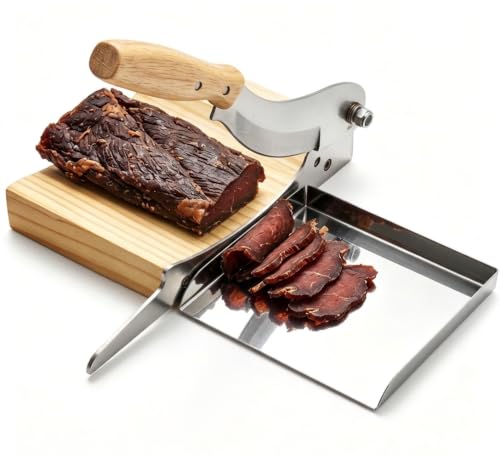
- 7.1-inch curved stainless-steel blade
- Hardwood base with ergonomic grip
- Includes detachable serving tray
Best For: Biltong, jerky, sausages, cheese, and firm foods
Best Compact Fresh-Meat Pick

- Cuts up to 18 thin slices in one stroke
- Includes 2 mm and 4 mm blade sets
- Compact design with suction-base stability
Best For: Fresh pork, beef, chicken, or salmon preparation at home
Best for Homemade Jerky
Weston Manual Beef Jerky Slicer

- Produces consistent quarter-inch jerky strips
- Handles meat up to 5 inches wide
- C-clamp mounts to tables up to 2 inches thick
Best For: Large-batch homemade jerky from beef, game, turkey, or duck
Best Versatile Countertop Slicer
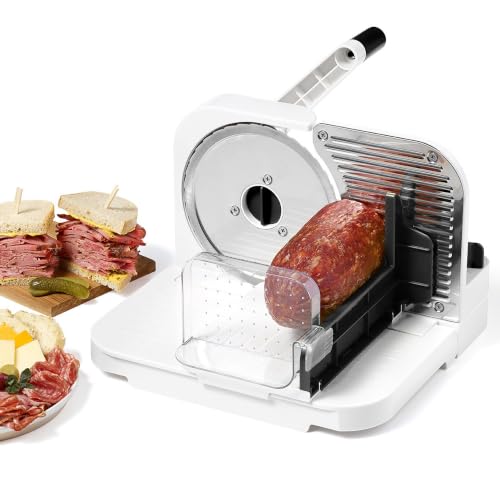
- Adjusts from deli-thin to 1-inch slices
- Slices meat, cheese, and bread
- Dishwasher-safe parts and compact storage design
Best For: Everyday countertop slicing across several food types
Best Overall for Frozen Meat
Adjustable Stainless Steel Hot Pot Slicer
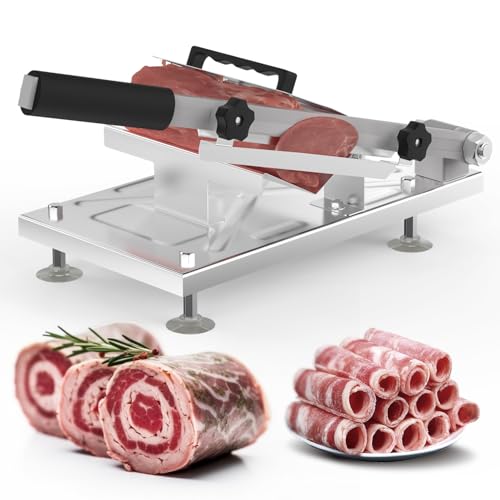
- 0.2mm–20mm adjustable thickness
- Thickened stainless steel construction
- Includes spare blade and accessories
Best For: Home cooks slicing properly frozen meat for hot pot, BBQ, and sandwiches
Best for Bones and Hard Foods
Heavy-Duty Ribs and Meat Chopper

- Forged 4Cr13 steel double blades
- Handles small ribs and hard vegetables
- Adjusts from thin slices to 57mm cuts
Best For: Tougher cutting tasks involving small bones, frozen meat, and hard vegetables
Best Compact Option for Frozen Meat
ZOMAT Hand Slicer with Extra Blade

- Made for frozen and semi-frozen meat
- Non-slip base and safety pusher
- Compact design with replacement blade
Best For: Home kitchens preparing frozen meat for hot pot, BBQ, and meal prep
Best Frozen-Meat Pick – Befen Manual Frozen Meat Slicer
Among manual meat slicers, the Befen stands out for home cooks who want thin, adjustable slices from properly frozen meat. Its stainless-steel construction and included accessories make it suitable for hotpot, stir-fry, sandwiches, jerky, and other preparations.
Best For: Slicing frozen beef, lamb, chicken, ham, and fish into adjustable portions at home.
Pros:
- Adjustable slice thickness from 0.2 mm to 20 mm.
- Thickened 1.5 mm stainless-steel board and high-carbon stainless-steel blade.
- Includes a meat holder, spare blade, meat bags, suction cups, and hex key.
- Supports a range of uses, including hotpot, BBQ, sandwiches, and beef jerky.
Cons:
- Requires meat to be properly frozen for clean cutting.
- Hand-wash care is recommended.
- The unit is relatively long at 18.1 inches.
This is a practical choice if your priority is thin frozen-meat slicing and adjustable thickness rather than powered operation. Follow the preparation instructions and secure the slicer with its suction cups before use.
Best Traditional Design – GRAEF H9 Manual All-Purpose Slicer
The GRAEF H9 is a compact manual option for shoppers who prefer a traditional countertop slicer with a genuine wood design. Its removable carriage and stainless-steel blade support general slicing tasks, while suction rubber feet help keep it in place.
Best For: Home users seeking a portable, all-purpose manual slicer with a wood-bodied design.
Pros:
- Manual, portable design for straightforward countertop use.
- Includes a removable stainless-steel sledge and leftover holder.
- Suction rubber feet provide added countertop stability.
- Genuine wood handle and wood construction offer a distinctive appearance.
Cons:
- The supplied details do not specify an adjustable thickness range.
- Hand-wash care is recommended.
- At 14.76 inches tall, it may need dedicated storage space.
The H9 makes the most sense for buyers who value a classic manual slicer and general-purpose functionality. Consider it when design, portability, and a removable carriage matter more than detailed thickness specifications.
Best Powered Alternative – Nutrichef Electric Meat Slicer
Although it is electric rather than manual, the Nutrichef is a useful comparison for shoppers evaluating manual meat slicers. Its 200W motor, adjustable 0–15 mm range, and removable components offer a faster, more automated approach to slicing meat, deli foods, and bread.
Best For: Home users who prioritize powered slicing, adjustable thickness, and compact storage.
Pros:
- 200W motor supports automatic slicing.
- Adjustable cutting thickness from 0 to 15 mm.
- Removable blade and food carriage simplify cleaning.
- Includes a safety guard, food pusher, safety lock, and on-off switch.
Cons:
- It is automatic, so it does not provide manual operation.
- Requires access to a 110V power supply.
- Hand-wash care is recommended.
This model is best viewed as an alternative when speed and convenience outweigh the hands-on control of manual meat slicers. Its compact footprint and removable parts are helpful for regular home use.
Best for Biltong and Jerky – Radiused Manual Biltong Slicer
This Radiused slicer takes a specialized approach to manual meat slicers, using a curved stainless-steel blade and hardwood base for biltong, jerky, sausages, cheese, and slightly thawed frozen meat. Its tray catches finished slices, while silicone pads help anchor the base during use.
Best For: Biltong enthusiasts, jerky makers, and cooks slicing firm specialty foods.
Pros:
- 7.1-inch thickened stainless-steel blade is designed for firm foods.
- Hardwood base and ergonomic handle provide leverage and control.
- Anti-slip silicone pads help reduce movement on the counter.
- Detachable stainless-steel serving tray catches sliced food.
Cons:
- Its specialized guillotine design may be less versatile than an adjustable slicer.
- Hand-wash care is recommended.
- The supplied details do not specify adjustable slice thickness.
Choose this model if your main goal is cutting biltong, thick jerky, sausages, or similarly firm foods. It is a focused countertop tool rather than a general replacement for every type of meat slicer.
Best Compact Fresh-Meat Pick – SupMaKin Fresh Meat Slicer
If you mainly prepare fresh pork, beef, chicken breast, or salmon, this manual meat slicer offers a compact way to create consistently thin cuts. Its two blade sets support 2 mm or 4 mm slices, while the suction base helps keep the slicer steady on a smooth countertop.
Best For: Home cooks who want thin fresh-meat slices for hot pot, jerky, sushi, strips, or dices.
Pros:
- Seventeen blades can produce up to 18 slices in one stroke.
- Includes 2 mm and 4 mm blade sets for adjustable cutting.
- Compact, wall-mountable design includes a cleaning brush.
- Stainless steel blades and a suction base support stable use.
Cons:
- Designed for fresh meat, not frozen or deli meat.
- Hand washing is recommended.
This is a space-conscious choice for fresh-meat preparation, especially when thin, uniform slices matter. The fixed slice options are less flexible than continuously adjustable models, but the included blade sets cover several common kitchen uses.
Best for Homemade Jerky – Weston Manual Beef Jerky Slicer
For shoppers focused on jerky, this manual meat slicer is built around fast, consistent strip cutting. Its 32 stainless steel blades produce quarter-inch strips and its large chute accommodates meat up to 5 inches wide and 1.25 inches thick.
Best For: Home jerky makers working with large cuts of beef, game meat, turkey, or duck breast.
Pros:
- Creates consistent quarter-inch strips for jerky.
- Can cut up to 15 strips at once.
- Built-in C-clamp mounts to flat surfaces up to 2 inches thick.
- Includes stainless steel combs and tongs for feeding and handling meat.
Cons:
- Its 9.39-pound weight is less convenient for frequent relocation.
- Designed primarily for strips rather than general-purpose slice thicknesses.
The Weston is a purpose-built option for batch jerky preparation. Its wide chute and clamp make it suitable for larger cuts, while the included combs and tongs address feeding and handling during use.
Best Versatile Countertop Slicer – Starfrit Deli Slicer
If you want one manual meat slicer for more than meat, the Starfrit Deli Slicer combines a 6.5-inch serrated stainless steel blade with thickness adjustment from deli-thin to 1 inch. Its carriage, food pusher, thumb guard, and large suction base add practical support for countertop slicing.
Best For: Kitchens that slice meat, cheese, and bread and need adjustable thickness in a compact format.
Pros:
- Adjusts from deli-thin slices up to 1 inch thick.
- Works with meat, cheese, and bread.
- Extra-large non-slip suction base and sturdy base improve stability.
- Detachable components are dishwasher safe, and the design is compact and nestable.
Cons:
- The 6.5-inch blade may be less suitable for very large cuts.
- Its plastic-and-stainless-steel construction may not suit shoppers seeking an all-metal slicer.
The Starfrit stands out for flexibility and easier cleanup. Its broad thickness range and multi-food design make it a practical everyday option, while the compact, foldable format helps with storage between uses.
Best Overall for Frozen Meat – Adjustable Stainless Steel Hot Pot Slicer
Among manual meat slicers, this model is a practical choice for home cooks who regularly prepare frozen beef, pork, mutton, ham, or fish. Its 7.9-inch stainless steel blade offers adjustable thickness from 0.2mm to 20mm, making it suitable for hot pot, BBQ, sandwiches, and stir-fry preparation.
Best For: Home cooks who want very thin or thicker slices from properly frozen meat.
Pros:
- Adjustable slicing thickness from 0.2mm to 20mm.
- Thickened 1.5mm stainless steel board is designed for pressure resistance and easy cleaning.
- Includes a spare blade, meat holder, food bags, suction cups, wrench, and instructions.
- Compact manual design requires no electricity.
Cons:
- Requires properly frozen meat for the best results.
- Hand-wash-only care requires manual cleaning.
- The included components and compact footprint may still require storage space in a small kitchen.
This is a well-equipped option for everyday frozen-meat preparation, especially if you value fine thickness control and useful accessories. Follow the instructions and keep the meat properly frozen for cleaner cuts.
Best for Bones and Hard Foods – Heavy-Duty Ribs and Meat Chopper
This manual meat slicer is built for tougher kitchen tasks, including meat with small ribs, whole chicken, frozen meat, and hard vegetables. Its forged 4Cr13 steel blades and stable support design give it a more heavy-duty focus than a typical thin-slice meat cutter.
Best For: Users who need a manual cutter for small bones, ribs, frozen meat, and hard vegetables.
Pros:
- Forged and polished 4Cr13 steel blades are designed for powerful cutting.
- Two screw sizes provide thickness ranges of 0–57mm and 0–8mm.
- Balance support feet and the table-gripping design help keep the unit stable.
- Includes a food-storage shovel to help collect cut ingredients.
Cons:
- It cannot cut beef ribs, trotters, large ribs and bones, or cow bones.
- At about 4,355g, it is considerably heavier than compact slicers.
- Hand-wash-only care adds cleanup work.
Choose this model when cutting strength and broad thickness adjustment matter more than portability. Its stated limitations are important, so reserve it for the smaller bones and hard ingredients it is designed to handle.
Best Compact Option for Frozen Meat – ZOMAT Hand Slicer with Extra Blade
For shoppers seeking manual meat slicers for occasional home use, the ZOMAT focuses on frozen and semi-frozen beef, lamb, pork, or chicken. Its adjustable thickness, non-slip suction base, safety pusher, and compact design support controlled slicing for hot pot, BBQ, deli-style meals, and meal prep.
Best For: Home kitchens that need a compact slicer for frozen or semi-frozen meat.
Pros:
- Adjustable thickness supports thin and thicker cuts for several dishes.
- Food-grade stainless steel construction is rust-resistant and durable.
- Non-slip base, ergonomic handle, and safety pusher improve stability and hand protection.
- Includes an extra replacement blade and has a compact footprint.
Cons:
- Designed for frozen or semi-frozen meat only, not fresh or raw meat.
- Hand wash only and must be dried thoroughly after cleaning.
- Proper technique and partially frozen meat are needed for the cleanest, most consistent slices.
This is a straightforward choice for buyers who prioritize a small footprint, safety features, and a replaceable blade. Its frozen-meat-only requirement makes it less versatile than models intended for broader food preparation.
How We Picked the Best Manual Meat Slicers
We compared these 10 slicers by intended use, construction, cutting capacity, adjustment options, handling, and cleanup. Because “manual slicer” can describe several tool types, the lineup includes hand-cranked frozen-meat cutters, deli-style slicers, jerky tools, bone and rib cutters, and a powered alternative for shoppers who may prefer automatic operation.
We also considered whether each design suits occasional home use or more frequent preparation. A compact slicer may be easier to store, while a heavier stainless steel or aluminum model can provide better stability when working with dense or partially frozen food.
Quick Comparison
| Best For | What to Prioritize |
|---|---|
| Frozen meat and hot pot | Sharp stainless steel blade, adjustable thickness, stable base |
| Deli-style slices | Fine thickness control, smooth carriage, easy cleaning |
| Beef jerky | Consistent cuts, suitable width and thickness capacity |
| Ribs, bones, and dense foods | Reinforced construction and purpose-built cutting mechanism |
| High-volume preparation | Large cutting capacity or an electric motor |
Key Buying Factors for Manual Meat Slicers
Blade and Food Compatibility
Check whether the slicer is intended for fresh, semi-frozen, or fully frozen meat. Thin hot-pot slices often require a different blade and technique than thick jerky strips or bone-in cuts. Stainless steel is a practical choice for corrosion resistance and routine kitchen maintenance.
Thickness Adjustment
Adjustability matters if you prepare several foods. Look for clearly marked settings or a dependable guide that keeps the food at a consistent distance from the blade. A narrow range may be fine for one specialty task, while a broader range is more versatile.
Stability and User Control
Manual cutting requires firm support. Non-slip feet, clamps, a steady handle, and a rigid frame can make the tool safer and more comfortable to use. Always follow the manufacturer’s instructions and keep hands away from the cutting path.
Capacity and Storage
Confirm the maximum food width and thickness before buying. Compact models are convenient for occasional use but may not accept large cuts. Also check whether the blade or food-contact parts are removable and how much counter space the slicer needs.
Cleaning and Maintenance
Choose a design with accessible food-contact surfaces and straightforward disassembly. Dry metal parts thoroughly after washing, and follow the stated care instructions for sharpening, lubrication, and dishwasher use rather than assuming components are dishwasher-safe.
Who Should Buy Which Manual Meat Slicers?
Choose a compact adjustable manual cutter if you mainly prepare small portions of frozen beef, pork, or mutton for hot pot. A deli-style slicer is a better fit for sandwiches, cheese, vegetables, and controlled everyday slicing. Jerky makers should focus on a tool designed for consistent strips and the thickness they prefer.
Buy a heavy-duty aluminum or reinforced model if you regularly process wider or denser cuts and want a sturdier platform. Specialty rib or bone cutters are best reserved for shoppers whose recipes specifically require that capability. Finally, consider an electric slicer when speed, repeated batches, or reduced hand effort matters more than the compact simplicity of Manual Meat Slicers.