Freshly milled flour can bring more flavor, aroma, and control to home baking, but choosing the right stone-burr mill depends on how often you grind and what you process.
This roundup compares 10 options, including an electric countertop mill and manual granite or stone grinders for dry grains, wet foods, and multipurpose kitchen use.
Best 10 Grain Mill with Stone Burrs Picks for 2026
Best Electric Pick

- 450-watt motor with thermal protection
- Corundum milling stones and texture control
- Compact design for home baking
Best For: Electric home milling and fresh flour preparation
Best Traditional Design
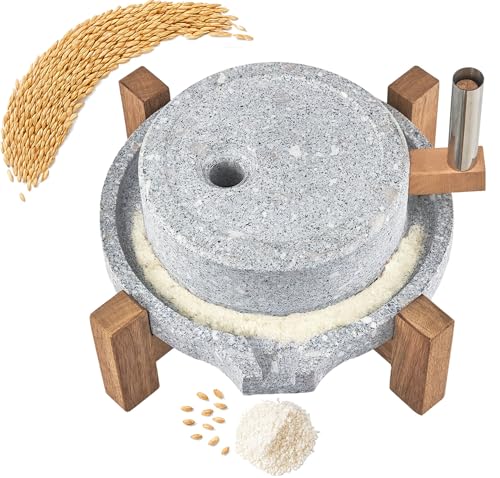
- Hand-polished granite for dry or wet use
- Wood base with ergonomic handle
- Supports grains, seeds, and wet foods
Best For: Hands-on small-batch grinding with rustic appeal
Best Rustic Countertop Option

- Granite stone with fine grinding teeth
- Stainless steel handrails and wooden frame
- Works with flour, spices, coffee, and grains
Best For: Decorative manual countertop grinding
Best Wet-and-Dry Versatility

- Natural bluestone for wet and dry grinding
- Handles grains, beans, seeds, and spices
- Detachable design supports easier rinsing
Best For: Manual flour, paste, soy milk, and spice preparation
Rustic Kitchen Pick

- Natural granite with deep grinding grooves
- Stable wooden base and ergonomic handle
- Manual design for controlled grain and spice grinding
Best For: Small-batch home grinding with a traditional look
Large-Batch Traditional Choice

- Large 15.7-inch lower millstone
- Handles grains, beans, rice, oats, and coffee beans
- Beech wood stand with manual hand-crank operation
Best For: Experienced home bakers wanting a substantial manual mill
Most Versatile Manual Option

- Handles both wet and dry grinding
- Granite body with 304 stainless steel grinding core
- Enlarged inlet and detachable parts support usability
Best For: Multi-purpose food grinding with a fixed manual setup
Best Traditional Wet/Dry Pick

- Natural granite grinding section
- Wet and dry grinding support
- Includes filter bag and brush
Best For: Small-batch traditional grinding and soaked-bean preparation
Best Heavy-Duty Traditional Option

- Supports wet and dry grinding
- Heavy traditional construction
- Includes stand, filter bag, and brush
Best For: Stable countertop grinding of varied household ingredients
Best Decorative Natural-Stone Pick

- Natural granite construction
- Dry and wet grinding capability
- Compact traditional design
Best For: Occasional grinding of grains, herbs, and spices
Best Electric Pick – NutriMill Harvest
The NutriMill Harvest is a practical grain mill with stone burrs for home bakers who want fresh flour without manual grinding. Its 450-watt motor, corundum milling stones, and adjustable texture control support a range of home milling tasks.
Best For: Home baking, gluten-free flour, and regularly milling dry grains with electric convenience.
Pros:
- 450-watt heavy-duty motor for convenient electric milling
- Near-diamond-hard corundum Grainmaster milling stones
- Patented texture control knob for adjusting the grind
- Thermal protection with automatic shutoff
Cons:
- At 19.3 pounds, it is not especially lightweight
- Its 450 g capacity may require batches for larger quantities
- Designed for 120-volt use
With CSA testing and listing plus a compact 7-by-7-by-13-inch design, this is the most straightforward choice for shoppers prioritizing powered, repeatable milling at home.
Best Traditional Design – Natural Granite Manual Mill
This manual grain mill with stone burrs uses hand-polished natural granite and a stable wood base. It is suited to shoppers who prefer hands-on milling and want one tool for dry grains, seeds, and selected wet preparations.
Best For: Manual home grinding, small-batch flour, soy milk, corn juice, and rustic kitchen use.
Pros:
- Natural granite construction designed for dry and wet grinding
- Solid wood base and ergonomic handle
- Can process wheat, beans, corn, rice, sesame, and more
- Deep grooves support low-speed, low-temperature grinding
Cons:
- Manual operation requires physical effort
- Granite and wood construction may be relatively heavy or bulky
- Wet grinding requires additional cleaning after use
The traditional construction gives this mill practical versatility and decorative appeal, making it a good fit for buyers who value a slower, more hands-on process over electric speed.
Best Rustic Countertop Option – Stainless-Handle Stone Mill
This manual grain mill with stone burrs combines a granite grinding stone with a handcrafted wooden frame and stainless steel handles. Its countertop format is aimed at buyers who want a functional mill that also has a vintage display quality.
Best For: Manual flour, spice, coffee, and whole-grain grinding in a decorative countertop setup.
Pros:
- Granite stone with fine grinding teeth for repeated grinding
- Stainless steel handles designed for a secure hand fit
- Wooden frame includes a base for catching ground ingredients
- Can be used for flour, spices, coffee beans, and whole-grain powders
Cons:
- At 37.5 pounds, it is very heavy to move
- Manual grinding is slower and more labor-intensive than electric milling
- The decorative frame may require dedicated counter space
The stainless steel handles offer a durability-focused alternative to wooden handles, while the granite-and-wood construction makes this a particularly distinctive choice for traditional kitchen use.
Best Wet-and-Dry Versatility – Bluestone Kitchen Mill
This bluestone grain mill with stone burrs is designed for both wet and dry kitchen processing. It can handle grains, beans, seeds, spices, and preparations such as soy milk or corn paste, making it a flexible manual option.
Best For: Wet-and-dry grinding of flour, beans, seeds, spices, soy milk, and similar homemade foods.
Pros:
- Natural bluestone with deep grinding teeth
- Supports wheat, corn, rice, beans, seeds, spices, and nuts
- Low-temperature grinding is intended to retain flavor and nutrients
- Detachable parts and water-rinsable surfaces simplify cleaning
Cons:
- Its 37.5-pound weight makes repositioning difficult
- Manual turning requires effort
- Several passes or pre-soaking may be needed for refined powder or liquid
The combination of wet and dry capability, an enlarged feed inlet, and detachable components makes this a strong choice for shoppers seeking more than basic flour milling from one traditional tool.
Rustic Kitchen Pick – Natural Granite Hand Mill
If you want a grain mill with stone burrs for small-batch home use, this manual granite model emphasizes controlled, slow grinding. Its deep grooves, wooden base, and hand crank are suited to users who value a traditional setup and a rustic kitchen aesthetic.
Best For: Home cooks who want a compact manual mill for slow grinding of grains and spices.
Pros:
- Natural granite construction is designed for wear resistance and long-term use.
- Deep grinding grooves support smoother crushing and a more even flour texture.
- Solid wooden base and heavy-duty handle help keep the mill stable during operation.
- Surface is designed for straightforward rinsing after use.
Cons:
- Manual operation requires hand effort and takes longer than electric milling.
- The listed dimensions may require dedicated counter space.
This is a straightforward choice for buyers who prefer hands-on preparation and classic materials. Choose it for controlled home grinding rather than high-volume processing.
Large-Batch Traditional Choice – 15.7-Inch Stone Hand Mill
This grain mill with stone burrs uses a large stone grinding mechanism and hand crank to process ingredients such as wheat, corn, rice, oats, beans, and coffee beans. Its beech wood stand and traditional operation appeal to shoppers who want a substantial, non-electric mill for experimenting with fresh flours.
Best For: Bakers and home cooks seeking a large manual stone mill for varied grains and ingredients.
Pros:
- Large lower millstone measures 15.7 inches, with an 11.8-inch upper millstone.
- Hand-crank operation is designed to be accessible for beginners.
- Can grind a broad selection of grains and ingredients, including wheat, corn, rice, oats, beans, and coffee beans.
- Stone grinding is intended to preserve the natural oils and flavors of grains.
Cons:
- At about 29.94 kg, it is a heavy appliance to position or move.
- Manual cranking may be demanding for extended grinding sessions.
- Its large stone-and-stand design may not suit small kitchens.
The standout feature is scale: this is a serious traditional mill rather than a compact countertop gadget. Confirm that you have adequate space and are comfortable with hand-crank operation before buying.
Most Versatile Manual Option – Heavy-Duty Wet and Dry Mill
For shoppers comparing a grain mill with stone burrs that can handle more than dry grains, this 40-pound granite model adds wet-grinding capability. Its enlarged inlet, detachable parts, stainless steel grinding core, and manual design make it a versatile option for seeds, nuts, corn, spices, and other foods.
Best For: Users who want one manual stone grinder for both dry ingredients and wet-food preparation.
Pros:
- Supports both dry and wet grinding for broader food-preparation use.
- Natural granite construction includes a 304 stainless steel grinding core.
- Enlarged feed inlet and ergonomic handle simplify loading and turning.
- Detachable rotating plate and chassis are designed to make rinsing and cleaning easier.
Cons:
- Its 39.7-pound weight makes it less convenient to move frequently.
- Manual grinding is slower and more labor-intensive than electric milling.
- The 11.81-inch footprint may be substantial for limited counters.
This model is the strongest fit when versatility matters more than portability. The wet-and-dry capability and cleanable detachable design broaden its usefulness, while the heavy construction favors a dedicated setup.
Best Traditional Wet/Dry Pick – Manual Granite Stone Mill
If you want a grain mill with stone burrs for traditional, small-batch preparation, this manual model combines a natural granite grinding section with a cedar-wood stand and hand crank. Its carved grinding teeth and included filter bag are designed for fine results, while the slow grinding process suits both soaked beans and other ingredients.
Best For: Home cooks who want a hand-operated mill for wet grinding, soaked beans, grains, and fresh pastes.
Pros:
- Natural granite grinding section with hand-carved teeth arranged from coarse to fine.
- Supports wet grinding and includes a filter bag for finer output.
- Comfortable wooden handle and smooth surface designed for easier operation.
- Includes a brush, filter bag, hand mill, and wooden frame.
Cons:
- Manual grinding requires more time and effort than an electric mill.
- Soaking beans for about eight hours is recommended for the described wet-grinding process.
- Its approximately 7.9-by-11.8-by-12.6-inch footprint may need dedicated counter space.
This is a practical choice for buyers prioritizing traditional wet grinding and hands-on control. The natural-stone construction and included accessories add versatility, but it is best suited to patient, small-batch preparation rather than high-volume flour milling.
Best Heavy-Duty Traditional Option – 41.9-lb Stone Grain Mill
For shoppers seeking a grain mill with stone burrs and a substantial traditional build, this manual stone grain mill uses hemp stone, 304 stainless steel, and cedar wood. It is designed for dry and wet grinding, with hand-carved teeth, a wooden handle, filter bag, and brush included for a more complete setup.
Best For: Households wanting a sturdy manual mill for seeds, nuts, corn, green beans, soaked beans, and other wet or dry ingredients.
Pros:
- Supports both dry and wet grinding for a range of household ingredients.
- Hand-carved grinding teeth are arranged from coarse to fine for finer processing.
- Heavy 41.9-pound construction may provide a stable feel during manual use.
- Includes a wooden stand, filter bag, and cleaning brush.
Cons:
- Its heavy weight makes it less convenient to move or store frequently.
- Manual operation is slower and more labor-intensive than powered milling.
- The recommended wet-grinding process calls for soaking beans for about eight hours.
The weight and traditional materials make this a compelling option when stability matters more than portability. Choose it for controlled, small-batch grinding and a broad ingredient range, not for fast, continuous flour production.
Best Decorative Natural-Stone Pick – Handmade Granite Grain Mill
This handmade grain mill with stone burrs is aimed at buyers who value natural materials and traditional kitchen style. Its natural granite stone, wooden handle, and 304 stainless steel grinding core support controlled dry or wet grinding for grains, herbs, spices, and other ingredients.
Best For: Traditional-food enthusiasts who want a compact manual grinder that can also serve as a decorative kitchen piece.
Pros:
- Natural granite stone construction with a polished, wear-resistant surface.
- Handles both dry and wet ingredients, including grains, herbs, and spices.
- Enlarged feed inlet and ergonomic wooden handle support easier filling and operation.
- Detachable design and smooth surface are intended to simplify cleaning.
Cons:
- Hand-powered grinding is slower than using an electric grain mill.
- The supplied notes do not list included accessories beyond the stone mill.
- Its approximately 7.8-by-7.8-by-4.8-inch size may limit batch capacity.
This model stands out for its natural granite construction, compact dimensions, and vintage-inspired appearance. It is a sensible fit for occasional, controlled grinding where traditional character matters as much as kitchen utility.
How We Picked the Best Grain Mill with Stone Burrs
We focused on the features that matter most when comparing a Grain Mill with Stone Burrs: grinding method, stone construction, capacity, adjustability, stability, cleanup, and the types of ingredients each design is intended to handle. The selection includes both electric and manual models so occasional users, dedicated home bakers, and shoppers seeking a traditional hand-powered tool can compare practical alternatives.
Product descriptions were also checked for intended dry or wet use, included stands or handles, footprint, and likely countertop requirements. Because performance can vary with grain hardness and manufacturer specifications, buyers should verify the latest dimensions, materials, and care instructions before ordering.
Quick Comparison
- Best for convenience: An electric stone mill is the simplest choice for frequent flour making and larger batches.
- Best for traditional use: Manual granite mills offer hands-on grinding and do not require electricity.
- Best for versatility: Dry-and-wet models can handle ingredients such as grains, beans, seeds, spices, and pastes when their instructions allow.
- Best for stability: Look for a substantial base, wide stance, secure clamps, or a sturdy wooden stand.
- Best for occasional use: A compact manual model may cost less and take up less storage space.
Key Buying Factors for a Grain Mill with Stone Burrs
Electric or Manual Operation
Electric mills reduce physical effort and are generally more practical for repeated batches. Manual mills are quieter, portable, and usable during power outages, but hand-cranking becomes tiring when processing large quantities.
Stone Material and Grinding Range
Natural granite and other stone burrs are valued for traditional grinding and can produce flour, meal, or paste depending on the design. Confirm whether the mill is intended for dry grains only or supports wet ingredients. Never assume a wet-capable model can process every food safely.
Adjustment and Output
Check how easily the grind can be changed from coarse meal to finer flour. Hopper size, throughput, and batch capacity matter more for frequent bakers, while occasional users may prefer a slower, simpler mill.
Stability, Cleanup, and Storage
A heavy base helps prevent movement, especially with manual cranking. Consider the available counter space, handle clearance, disassembly, and how readily flour or damp residue can be removed. Stone surfaces may require thorough drying after wet use.
Who Should Buy Which Grain Mill with Stone Burrs?
Choose an electric stone-burr mill if you bake regularly, value speed, or want to minimize effort. Choose a manual granite or natural-stone model if you appreciate traditional preparation, need an electricity-free option, or grind small quantities. A wet-and-dry multifunction mill is the better fit for shoppers who also prepare rice paste, spice mixtures, beans, seeds, or other compatible foods. For beginners, prioritize stable construction, clear operating instructions, and straightforward grind adjustment over the largest advertised capacity.