Choosing the right grain mill for corn depends on more than motor power. Batch size, grind adjustment, cleanup, storage, and whether you need meal for cooking or feed all affect the best fit.
This roundup compares 10 manual and electric options so you can match your workload, available power, and preferred texture to a practical corn grinder.
Best 10 Grain Mill for Corn Picks for 2026
High-Hopper Hand Mill
Victoria 2400g Cast Iron Grain Mill

- Manual cast-iron construction
- 2400g high-hopper capacity
- Adjustable coarse-to-fine grinding
Best For: Power-free corn grinding and versatile home use
Compact Electric Feed Mill

- 1000W electric operation
- 25-liter hopper
- Five interchangeable sieves
Best For: Household and small-farm dry feed preparation
Low-Hopper Manual Mill
Victoria 1200g Cast Iron Corn Grinder

- Low-hopper manual design
- Adjustable grinding screw
- Clamps to 1/2–2-inch tables
Best For: Smaller home batches and power-free grinding
Heavy-Duty Farm Grinder
1500W 6.6-Gallon Electric Corn Mill

- 1500W electric motor
- 25-liter large-capacity hopper
- Seven interchangeable sieves
Best For: Small-farm and homestead livestock-feed production
Traditional Pick
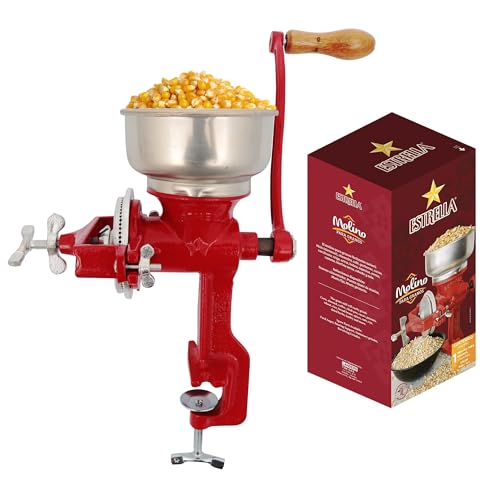
- Cast-iron hand-crank construction
- Adjustable grinding for corn and more
- Clamps to countertops up to 1.5 inches
Best For: Traditional masa and homemade recipe preparation
High-Power Choice
VEVOR Electric Grain Mill Grinder

- 3000-watt electric motor
- Adjustable grinding thickness
- Heavy-duty cast-iron construction
Best For: High-output dry grinding with electrical power
Large-Capacity Manual

- Six-cup hopper for larger batches
- 12-inch flywheel eases hand grinding
- Can be motorized later
Best For: Manual dry-grain milling and home baking
High-Power Corn Milling
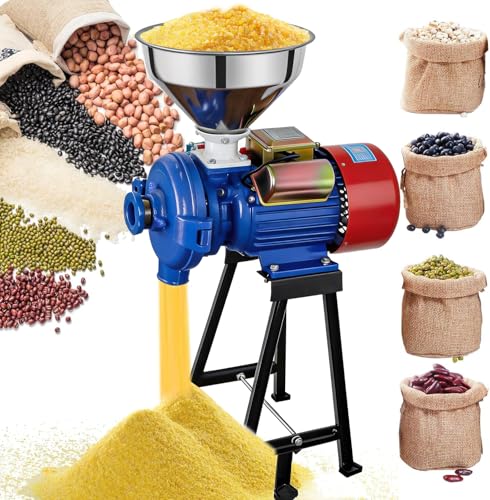
- 3000W motor for fast dry grinding
- Adjustable coarse-to-fine thickness control
- Large stainless steel hopper and heavy-duty body
Best For: High-volume dry corn and grain processing
Versatile Dry Grinding
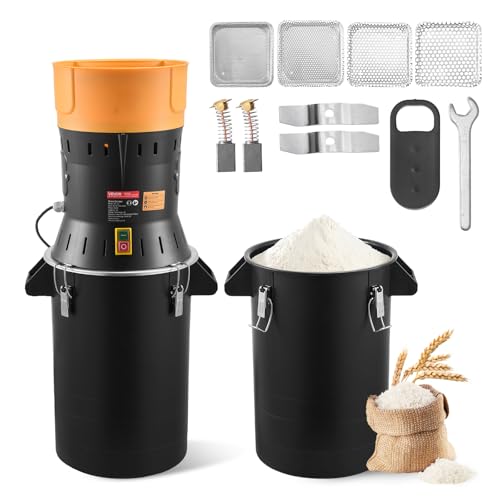
- Five interchangeable screens from 3 to 8 mm
- Grinds corn, grains, spices, and coffee
- Detachable parts support easier cleaning
Best For: Multi-purpose dry grinding with selectable particle sizes
Wet-and-Dry Flexibility

- Supports both wet and dry grinding
- Adjustable thickness for multiple ingredients
- Heavy-duty cast-iron body with stainless funnel
Best For: High-capacity corn milling plus wet food preparation
High-Hopper Hand Mill – Victoria 2400g Cast Iron Grain Mill
If you want a traditional grain mill for corn without relying on electricity, this Victoria manual model offers sturdy cast-iron construction, a high hopper, and an adjustable grind setting. It clamps to tables from 1/2 to 2 inches thick and is suited to a range of dry ingredients and kitchen tasks.
Best For: Home users who want a manually operated corn grinder with a larger 2400g capacity and versatile food-grinding capability.
Pros:
- Heavy-duty cast-iron body with double tin plating and erosion-resistant discs.
- High hopper accommodates up to 2400g.
- Adjustable screw helps change the grind from coarse to fine.
- Includes a non-slip rubber protector for more stable clamping.
Cons:
- Manual operation requires physical effort.
- Does not produce a superfine texture.
- Will not grind whole wheat into a fine powder.
This is a practical choice when durability, portability, and power-free operation matter more than producing ultra-fine flour. Its broad ingredient compatibility also makes it useful beyond corn grinding.
Compact Electric Feed Mill – 1000W 6.6-Gallon Corn Grinder
For shoppers seeking an electric grain mill for corn, this 1000W model combines a 25-liter hopper with interchangeable sieves for different particle sizes. Its push-button controls and detachable hopper make it suited to household or small-scale farm feed preparation.
Best For: Users processing dry corn, grains, spices, or animal feed who want electric operation and a large 6.6-gallon capacity.
Pros:
- 1000W motor supports efficient electric grinding.
- Large 25-liter hopper reduces the need for frequent refills.
- Five included sieves offer 2, 3, 4, 6, and 8mm options.
- Detachable hopper and bucket simplify transport and cleaning.
Cons:
- Designed for dry materials; water must be kept away from the motor.
- The hopper should be dried thoroughly before reassembly.
- Its included sieve options are coarser than a superfine flour setting.
This mill is a stronger fit for recurring feed or grain-processing tasks than occasional countertop use. The multiple screens provide useful flexibility, while the detachable design helps with cleanup and storage.
Low-Hopper Manual Mill – Victoria 1200g Cast Iron Corn Grinder
This low-hopper Victoria is a practical grain mill for corn if you prefer a manually powered grinder with a compact profile. Its cast-iron construction, adjustable screw, and table clamp support straightforward grinding of corn and other dry ingredients.
Best For: Home cooks and homesteaders who want a durable manual corn mill with a low hopper and broad ingredient versatility.
Pros:
- Durable cast-iron construction with double tin plating.
- Adjustable screw lets you control coarseness and fineness.
- Clamps to tables from 1/2 to 2 inches thick.
- Can also handle grains, coffee, seeds, nuts, spices, and dried beans.
Cons:
- Manual cranking is slower and more labor-intensive than electric grinding.
- It cannot produce a superfine texture.
- It will not turn whole wheat into fine powder.
Choose this version when a low-hopper format and power-free operation suit your workspace. Its 1200g configuration is useful for smaller batches, while the adjustable setting adds flexibility for different grinding needs.
Heavy-Duty Farm Grinder – 1500W 6.6-Gallon Electric Corn Mill
Built for larger feed-preparation jobs, this electric grain mill for corn uses a 1500W motor, a 25-liter hopper, and seven interchangeable sieves. It is designed for dry corn, wheat, rice, barley, sorghum, soybeans, and other grains used in home or livestock feed processing.
Best For: Small farms, homesteads, and livestock owners who need high-capacity electric grinding with customizable feed texture.
Pros:
- 1500W motor is suited to frequent farm and feed-processing work.
- 6.6-gallon hopper supports larger batches with fewer refills.
- Seven sieves allow customized particle sizes for feed, flour, or grain crushing.
- Built-in handle and simple start/stop buttons support easier handling.
Cons:
- Specified for 230V operation, so electrical compatibility should be checked.
- Only dry materials should be used.
- Screens must be replaced only after unplugging the mill and clearing any clog.
This model offers the most capacity and sieve flexibility in the group, making it a logical option for regular livestock-feed production. Its larger motor and hopper favor throughput over compact kitchen use.
Traditional Pick – Estrella Manual Grain Mill
If you want a hands-on grain mill for corn, the Estrella Manual Grain Mill is designed for traditional preparation. Its cast-iron body and adjustable settings suit masa, tortillas, tamales, and other homemade recipes, while the countertop clamp keeps setup straightforward.
Best For: Home cooks making masa, nixtamal, and other Latin American dishes by hand.
Pros:
- Traditional hand-crank design for corn, nixtamal, masa, and other ingredients
- Heavy-duty cast-iron construction with adjustable grinding settings
- Also handles chickpeas, wheat, rice, coffee beans, spices, and soybeans
- Clamps to countertops up to 1.5 inches thick, with removable parts for cleaning
Cons:
- Manual operation requires physical effort
- Its 5.2-pound design and countertop clamp may be less convenient for frequent relocation
The Estrella is a practical choice when authentic, small-batch preparation matters more than speed. It offers broad ingredient versatility without requiring electricity.
High-Power Choice – VEVOR Electric Grain Mill Grinder
For buyers who need a high-output grain mill for corn, the VEVOR Electric Grain Mill Grinder uses a 3000-watt motor and cast-iron grinding plates for continuous dry grinding. Its adjustable thickness control accommodates corn, wheat, rice, soybeans, spices, and other ingredients.
Best For: Users seeking an electric, heavy-duty mill for larger dry-grinding tasks.
Pros:
- Powerful 3000-watt motor supports continuous grinding
- Adjustable thickness control for powders and coarser results
- Cast-iron stand and grinding plates are built for prolonged use
- Stainless-steel funnel provides a consistent feeding design
Cons:
- At 46.7 pounds, it is substantially heavier than manual alternatives
- Its 500-gram capacity may require repeated filling for larger batches
- Electric operation requires access to a 110-volt power source
This VEVOR model favors speed and power over portability. It makes sense for demanding dry-grinding work, provided you have adequate counter space and electrical access.
Large-Capacity Manual – Lehman's Power Grain Mill
The Lehman’s Power Grain Mill is a strong option if you want a manual grain mill for corn with a larger hopper and easier hand-cranking. It grinds free-flowing dry grains into pastry flour and can also be motorized, giving it flexibility for home baking and self-sufficient food preparation.
Best For: Home bakers and preparedness-minded users who want a large-capacity manual mill.
Pros:
- Grinds dry corn, wheat, rye, rice, quinoa, and small beans
- Six-cup hopper supports larger batches than compact manual mills
- 12-inch iron flywheel provides momentum for easier hand grinding
- Stainless-steel grinding burrs have a smooth, electrolytic-polished surface
Cons:
- Its 26-pound weight makes it less portable
- Designed for free-flowing, dry grains rather than wet ingredients
- Four base holes may require bolting it down for secure use
Lehman’s stands out for capacity and manual-grinding leverage. It is well suited to planned batch grinding, especially when you value the option to motorize the mill later.
High-Power Corn Milling – 3000W Electric Grain Mill
If you need a grain mill for corn that can handle frequent dry-grinding tasks, this 3000W model emphasizes speed, capacity, and adjustable results. Its coarse-to-fine thickness control makes it suitable for corn, wheat, rice, oats, sorghum, coffee beans, flour, starch, and animal feed.
Best For: Home users, farms, and small commercial operations processing large quantities of dry corn and other grains.
Pros:
- Powerful 3000W copper motor running at up to 1,460 rpm.
- Adjustable coarseness supports results from coarse meal to fine powder.
- Large stainless steel hopper supports more continuous feeding.
- Heavy-duty galvanized body and cast-iron head are designed for demanding use.
Cons:
- For dry grinding only; soaked or wet ingredients should not be used.
- Requires starting the machine before gradually adding grain to help prevent jams.
This is a strong choice when throughput and rugged construction matter more than compact size. Keep in mind that careful feeding and dry ingredients are required for proper operation.
Versatile Dry Grinding – VEVOR 600W Corn Mill
This VEVOR grain mill for corn is designed for flexible dry grinding at home, on a farm, or in a ranch setting. Its interchangeable screens let you choose among several particle sizes for corn, grains, spices, coffee, flour, and feed.
Best For: Users who want one dry grinder for corn, spices, coffee, and other materials with adjustable screen sizes.
Pros:
- Handles corn, wheat, soybeans, coffee beans, pepper, cinnamon, and other dry materials.
- Includes five screens in 3, 4, 5, 6, and 8 mm sizes.
- 15,000-rpm motor and galvanized blades support efficient grinding.
- Detachable hopper and feed inlet simplify cleaning.
Cons:
- Designed for dry grinding rather than wet ingredients.
- Screen-based sizing may be less convenient than a continuously adjustable dial.
Its interchangeable screens make this a practical option for buyers who value versatility and straightforward operation. The six-step workflow and detachable components also help keep routine use and cleanup manageable.
Wet-and-Dry Flexibility – VEVOR 3000W Corn Mill
For shoppers seeking a grain mill for corn with broader food-processing capability, this VEVOR model supports both dry and wet grinding. It can process corn, wheat, rice, sorghum, and soybeans into dry powder, while its wet-grinding setup handles soaked soybeans and rice for pulp.
Best For: Users who need a heavy-duty mill for corn, flour, feed, and selected wet preparations such as soy milk or rice cakes.
Pros:
- Includes separate cast-iron and sand milling discs for dry and wet grinding.
- 3000W motor supports continuous, high-capacity grinding.
- Adjustable thickness control works with corn, grains, spices, coffee beans, and nuts.
- Stainless steel funnel and cast-iron body are built for prolonged use.
Cons:
- Its industrial dimensions and heavy-duty construction may require substantial storage space.
- Wet and dry grinding require changing to the appropriate milling disc.
- Operation and cleanup may be more involved than with a basic dry-only mill.
This is the most flexible option of the three when wet processing is important alongside corn milling. Its large industrial-style build favors capacity and versatility over portability.
How We Picked the Best Grain Mill for Corn
We focused on the features that matter most when turning dried corn into meal, flour, or animal feed: drive type, stated capacity, power, hopper design, grind control, construction, and ease of use. Manual mills were considered for portability, reliability, and low operating cost, while electric models were evaluated for speed and larger batches.
Product descriptions can use different terms for similar equipment, so confirm the manufacturer’s recommended grain types and operating limits before purchase. A mill designed for dry corn may not be suitable for wet, oily, or unusually hard ingredients.
Quick Comparison
| Best for | Look for | Likely choice |
|---|---|---|
| Small kitchen batches | Manual operation and manageable hopper size | Compact Victoria or Estrella-style mill |
| Frequent home milling | Durable construction and adjustable texture | Heavy-duty manual or mid-power electric model |
| Large feed batches | High wattage, large capacity, and multiple screens | 6.6-gallon electric feed grinder |
| Fine flour production | Thickness adjustment and suitable screens | Adjustable commercial-style electric mill |
Key Buying Factors for a Grain Mill for Corn
Manual Versus Electric Power
A manual mill works without electricity and offers strong control over pace, making it useful for emergencies, off-grid use, or occasional cooking. It requires more effort, especially with large quantities. Electric mills are faster and better for repeated batches, but they need a suitable outlet and may be louder.
Capacity and Throughput
Hopper capacity is not the same as output rate. A large hopper reduces refilling, while motor power and burr or blade design influence how quickly the mill processes corn. For animal feed or bulk storage, prioritize throughput and cooling requirements over compact size.
Texture Control and Screens
Choose adjustable settings or interchangeable sieves if you need both coarse meal and finer flour. Multiple screens can be valuable for separating feed textures, but they also add cleaning and storage requirements. Verify that the included screens match your intended grain and particle size.
Construction, Cleanup, and Safety
Cast iron is valued for durability but is heavy and should be dried thoroughly to prevent rust. Electric grinders should have stable bases, protected moving parts, and clear instructions for preventing overloads. Never grind damp ingredients unless the manufacturer specifically allows it.
Who Should Buy Which Grain Mill for Corn?
Choose a manual mill if you grind occasionally, want an electricity-free option, or prefer a simple tool that can be stored between uses. A larger flywheel and hopper can make repeated hand milling more manageable.
Choose a compact electric mill if convenience and faster meal preparation matter more than maximum capacity. These models suit kitchens, hobby farms, and moderate batches when outlet compatibility and noise are acceptable.
Choose a high-capacity electric feed grinder if you regularly process corn, wheat, rice, or other dry grains for livestock. Large hoppers, multiple sieves, and higher power can reduce work, but confirm the unit’s duty cycle and ventilation needs first.