A damp crawl space can encourage mold, odors, wood rot, and poor indoor air quality. The right exhaust fan helps move stale, humid air outside while supporting a drier, healthier foundation area.
This roundup compares 10 ventilation fans for crawl spaces, from compact 220–300 CFM models to higher-output 540 CFM units with automatic humidity or temperature controls. Use the guide below to match airflow, controls, construction, and installation requirements to your space.
Best 10 Ventilation Fans for Crawl Spaces Picks for 2026
Quiet Moisture Control

- 220 CFM dual-fan exhaust
- Built-in thermostat and dehumidistat
- Quiet 25 dB operation
Best For: Standard crawl-space vent openings needing automated moisture control
Durable Dual-Fan Exhaust

- Corrosion-resistant stainless steel housing
- 220 CFM dual-fan airflow
- Dehumidistat and freeze protection
Best For: Humid spaces requiring durable air-out ventilation
Smart Programmable Ventilation

- 240 CFM exhaust airflow
- Wi-Fi and Bluetooth app control
- 10 speeds with climate programming
Best For: Automated crawl-space or basement ventilation with remote monitoring
High-Capacity Stainless Steel

- 540 CFM air-out performance
- IP55 stainless steel construction
- 10%–80% humidistat control
Best For: Large or particularly damp crawl spaces needing high airflow
Balanced Humidity Control
CADPXS Crawlspace Ventilation Fan
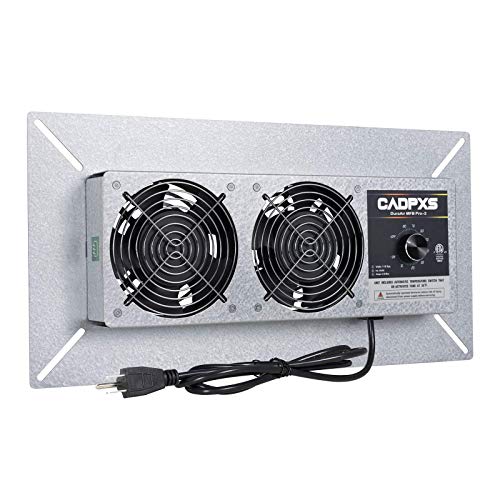
- 220 CFM exhaust airflow
- 20%–80% RH dehumidistat
- Freeze protection below 35°F
Best For: Smaller or moderate crawl spaces needing automatic humidity control
High-Flow Damp-Space Ventilation
ALORAIR 540CFM Crawl Space Fan

- 540 CFM air-out airflow
- 10%–80% RH dehumidistat
- IP-55-rated housing and isolation mesh
Best For: Damp, larger spaces needing higher airflow
Radon-Focused Exhaust

- 220 CFM exhaust airflow
- Designed to dilute low radon levels
- Maintenance-free fan design
Best For: Ventilated crawl spaces needing straightforward radon-focused exhaust
Best Programmable Pick
ALORAIR 300 CFM Crawl Space Fan

- 300 CFM airflow and 40 dBA listed noise level
- LCD programming for humidity, temperature, and time
- IP55 stainless-steel housing with freeze protection
Best For: Programmable crawl-space ventilation in spaces up to 550 square feet
Best High-Airflow Option
Abestorm 540 CFM Crawlspace Fan

- 540 CFM airflow for active air exchange
- Automatic humidity control and freeze protection
- IP55 housing with isolation mesh and trimmable faceplate
Best For: High-volume ventilation in damp crawl spaces and other enclosed areas
Best Adjustable Controls

- 0–100% adjustable humidity control
- 0–100°F adjustable thermostat
- 3-year warranty and wall-mount installation
Best For: Compact spaces needing broad humidity and temperature adjustment
Quiet Moisture Control – Tjernlund V2D UnderAire
For homeowners comparing ventilation fans for crawl spaces, the Tjernlund V2D UnderAire is a purpose-built exhaust system designed to use existing passive vents. Its dual-fan setup delivers 220 CFM and includes both a thermostat and dehumidistat for automated moisture-focused ventilation.
Best For: Crawl spaces with standard brick or block foundation ventilation openings.
Pros:
- Dual fans provide 220 CFM of exhaust airflow.
- Includes a thermostat and dehumidistat for automatic operation.
- Quiet 25 dB operation and a maintenance-free 40-watt design.
- Face plate is sized for standard ventilation openings.
Cons:
- Only one speed and one power level are listed.
- Requires a permanent installation rather than a simple portable setup.
- Measure the opening carefully to confirm fit.
The V2D is a straightforward choice when quiet, automated moisture management matters more than app controls or multiple speed settings.
Durable Dual-Fan Exhaust – Durablow 220 CFM Air-Out
The Durablow 220 CFM Air-Out is one of the ventilation fans for crawl spaces built for humid environments. Its stainless steel 430 housing, dual fans, built-in dehumidistat, and freeze-protection thermostat make it suited to continuous air exchange where durability and simple controls are priorities.
Best For: Damp crawl spaces, basements, attics, or garages needing stainless steel air-out ventilation.
Pros:
- Stainless steel 430 panel and housing resist corrosion in humid spaces.
- Dual-fan design provides 220 CFM airflow.
- Built-in dehumidistat operates across a 20%–80% RH range.
- Freeze-protection thermostat shuts the fan off below approximately 35°F.
Cons:
- Listed noise level is 55 dB, louder than some alternatives.
- The air-out model does not provide intake airflow by itself.
- Requires measuring the vent opening before purchase.
With plug-and-play installation, three speed settings, and corrosion-resistant construction, the Durablow is a practical option for demanding, moisture-prone spaces.
Smart Programmable Ventilation – AC Infinity AIRTITAN T8
The AC Infinity AIRTITAN T8 stands out among ventilation fans for crawl spaces with its app-connected controls and environmental programming. It provides 240 CFM of exhaust airflow while supporting temperature, humidity, VPD, timers, schedules, cycles, and minimum-speed settings.
Best For: Users who want detailed automated control and climate monitoring in a crawl space or basement.
Pros:
- 240 CFM exhaust airflow with a 32 dBA noise rating.
- Wi-Fi and Bluetooth connectivity support app-based programming and alerts.
- Offers 10 speeds plus timers, cycles, scheduling, and minimum-speed control.
- IP55-rated stainless steel design suits ventilation applications.
Cons:
- Uses a 12-volt power system rather than a standard 120-volt fan specification.
- Its advanced controls may be more than needed for basic ventilation.
- Permanent mounting is required.
The T8 is the most control-focused option here, making it attractive for buyers who want ventilation tied to changing humidity and temperature conditions rather than a simple on/off setup.
High-Capacity Stainless Steel – ALORAIR 540 CFM VentirPro
For larger or especially humid areas, the ALORAIR VentirPro 540S is a high-capacity choice among ventilation fans for crawl spaces. It combines 540 CFM air-out performance with a stainless steel, IP55-rated housing, a built-in humidistat, and a factory-installed thermostat.
Best For: Crawl spaces and other humid areas where higher airflow and weather-resistant construction are important.
Pros:
- Delivers 540 CFM, substantially more airflow than the 220–240 CFM models listed.
- Stainless steel housing and IP55-rated fan resist moisture and dust.
- Humidistat provides 10%–80% humidity regulation.
- Includes an isolation mesh, mounting screws, and grounded power cord.
Cons:
- Listed noise level is below 55 dB, so it is not the quietest option.
- Only three speed or power settings are listed.
- The vent opening must be measured, although the faceplate can be trimmed for non-standard openings.
The VentirPro 540S is a strong fit when airflow capacity is the deciding factor, especially in a damp environment where stainless steel and IP55 protection add useful durability.
Balanced Humidity Control – CADPXS Crawlspace Ventilation Fan
If you need ventilation fans for crawl spaces with automatic humidity management, the CADPXS Crawlspace Ventilation Fan combines 220 CFM exhaust airflow with a built-in dehumidistat. Its freeze-protection thermostat helps prevent operation below 35°F, while the grounded cord and knob controls simplify setup.
Best For: Homeowners ventilating crawl spaces, basements, attics, garages, or planting tents where humidity control and automatic low-temperature protection are useful.
Pros:
- 220 CFM exhaust airflow helps exchange indoor and outdoor air.
- Built-in dehumidistat offers a 20%–80% RH control range.
- Freeze-protection thermostat prevents operation below 35°F.
- Plug-in design with a grounded 6.56-foot power cord and knob controls.
Cons:
- Lower airflow than the 540 CFM ALORAIR model.
- Specified noise level is 48 dB, so it is not completely silent.
- Operation is limited when outdoor temperatures fall below 35°F.
The CADPXS is a practical choice when automatic humidity control matters more than maximum airflow. Its compact wall-mount design and plug-in operation make it approachable for smaller or moderate ventilation needs.
High-Flow Damp-Space Ventilation – ALORAIR 540CFM Crawl Space Fan
For larger or especially damp areas, the ALORAIR VentirPro 540 is one of the higher-output ventilation fans for crawl spaces, delivering 540 CFM of air-out airflow. It adds automatic humidity control, freeze protection, an IP-55-rated axial fan, and an isolation mesh intended to help keep particulates out.
Best For: Damp crawl spaces, basements, attics, and garages that need stronger airflow and automatic humidity-based operation.
Pros:
- 540 CFM airflow provides substantially higher circulation than many compact crawl-space fans.
- Dehumidistat operates across a 10%–80% RH range.
- IP-55-rated aluminum-zinc shell is designed for humid environments.
- Includes a 6-foot grounded power cord and a trimmable faceplate for non-standard openings.
Cons:
- Listed noise level is under 55 dB, making it louder on paper than the CADPXS.
- Its 15-inch by 10.2-inch faceplate may require careful opening measurements.
- Freeze protection prevents operation below 35°F.
The ALORAIR stands out when airflow capacity is the priority. Its weather-resistant construction and broad humidity range make it a strong fit for damp spaces, although buyers should confirm the opening dimensions and accept the higher noise rating.
Radon-Focused Exhaust – Tjernlund RV2 Crawl Space Fan
The Tjernlund RV2 is a straightforward option among ventilation fans for crawl spaces, with a stated focus on diluting low levels of radon in ventilated crawl spaces. Its 220 CFM exhaust fan uses a maintenance-free design and a faceplate sized for openings through standard block foundations.
Best For: Ventilated crawl spaces where low-level radon dilution and a simple exhaust setup are the main priorities.
Pros:
- Designed specifically for ventilated crawl spaces and radon dilution.
- Provides 220 CFM of exhaust airflow.
- Maintenance-free exhaust fan design.
- Faceplate is sized for standard block-foundation ventilation openings.
Cons:
- Supplied notes do not list a built-in humidistat or thermostat.
- Lower airflow than the ALORAIR 540 CFM model.
- Its application is described for diluting low levels of radon, not as a complete radon-remediation system.
The RV2 is best viewed as a focused exhaust solution rather than an all-purpose humidity-control fan. Its standard-opening faceplate and maintenance-free design may appeal to buyers who already have a suitable ventilated crawl-space opening.
Best Programmable Pick – ALORAIR 300 CFM Crawl Space Fan
For homeowners comparing ventilation fans for crawl spaces, the ALORAIR VentirMax 300SD combines 300 CFM airflow with automatic humidity and temperature control. Its LCD panel, freeze-protection thermostat, and stainless-steel construction make it a versatile choice for crawl spaces, basements, attics, and other enclosed areas up to 550 square feet.
Best For: Buyers who want programmable humidity, temperature, and timing controls in a compact wall-mounted fan.
Pros:
- 300 CFM airflow with a listed 40 dBA noise level.
- LCD control panel supports humidity, temperature, and time programming.
- IP55-rated stainless-steel design includes an isolation mesh to help limit dust and particulates.
- Freeze protection stops operation below 37°F, and memory restart restores settings after a power failure.
Cons:
- Its 300 CFM capacity is lower than the 540 CFM option in this roundup.
- The multiple controls may be more than needed for shoppers seeking a simple knob-operated fan.
The ALORAIR is a strong fit when automatic operation and precise programming matter more than maximum airflow. Its durable housing and freeze protection add useful safeguards for moisture-prone spaces.
Best High-Airflow Option – Abestorm 540 CFM Crawlspace Fan
The Abestorm 540 CFM is a high-airflow choice for shoppers evaluating ventilation fans for crawl spaces, basements, garages, and attics. It exchanges indoor and outdoor air while using a built-in dehumidistat and freeze-protection thermostat to automate operation in damp or changing conditions.
Best For: Larger or especially damp enclosed areas where maximum airflow and straightforward knob control are priorities.
Pros:
- 540 CFM capacity provides the highest listed airflow among these products.
- Humidity settings can automatically turn the fan on or off.
- IP55-rated aluminum-zinc housing and 5.5mm isolation mesh are designed for humid environments and help deter reptile entry.
- Includes a 6-foot grounded power cord and a trimmable faceplate for installation flexibility.
Cons:
- Its listed noise level is 55 dB, higher than the ALORAIR model.
- Knob controls offer less programming flexibility than an LCD-based system.
- The thermostat stops operation below 35°F, so cold-weather runtime is limited by design.
Choose the Abestorm when moving a large volume of air is the main goal. It favors strong ventilation and simple setup over quieter operation or advanced scheduling.
Best Adjustable Controls – 240 CFM Crawl Space Vent Fan
This 240 CFM model offers a compact approach to ventilation fans for crawl spaces and other moisture-prone enclosed areas. Its adjustable humidistat and thermostat let you set both humidity and temperature response, helping automate airflow in crawl spaces, basements, foundation vents, and utility areas.
Best For: Compact installations where broad humidity and temperature adjustment ranges are more important than maximum airflow.
Pros:
- Adjustable humidity control spans 0–100%.
- Adjustable temperature control spans 0–100°F.
- Wall-mount design provides 240 CFM airflow for compact spaces.
- Includes a 3-year warranty and customer support.
Cons:
- Its 240 CFM capacity is the lowest among the three listed products.
- The supplied specifications list 48 dB noise and 110 watts, which may not suit shoppers prioritizing the lowest power or noise figures.
- The product details contain inconsistent connector and voltage specifications, so installation compatibility should be confirmed before purchase.
This fan is worth considering when adjustable environmental thresholds and warranty coverage are key buying factors. Its lower airflow makes it better suited to compact applications than high-volume ventilation.
How We Picked the Best Ventilation Fans for Crawl Spaces
We focused on the specifications that matter most in crawl-space ventilation: rated airflow, automatic controls, housing durability, installation practicality, and the intended use. The selection includes dedicated crawl-space fans from Tjernlund, ALORAIR, AC Infinity, Durablow, CADPXS, and Abestorm, along with models designed for moisture control or ventilated-crawl-space radon applications.
Airflow ratings are useful for comparison, but real-world performance depends on duct length, grilles, foundation vents, static pressure, and whether the space is sealed or naturally ventilated. Humidistats can automate operation when moisture rises, while thermostats may help manage warm-air buildup. These fans are not interchangeable with a complete dehumidification, drainage, encapsulation, or radon-mitigation system.
Quick Comparison
| What to Compare | Best For | Typical Options in This Roundup |
|---|---|---|
| Airflow | Matching fan capacity to crawl-space size and resistance | About 220–540 CFM |
| Humidistat | Automatic moisture-responsive operation | Several selected models |
| Thermostat | Temperature-based fan control | Available on select units |
| Construction | Corrosion resistance in damp locations | Stainless-steel options and enclosed fan designs |
| Specialized use | Ventilated crawl spaces or radon exhaust | Dedicated Tjernlund options |
Key Buying Factors for Ventilation Fans for Crawl Spaces
Airflow and Crawl-Space Size
Choose capacity based on the volume of the crawl space and the resistance created by vents, screens, ducting, and bends. A higher CFM rating can be useful for larger or more obstructed spaces, but excessive airflow is not a substitute for sealing water leaks or controlling groundwater.
Humidity and Temperature Controls
A built-in humidistat is valuable when you want the fan to run only after humidity reaches a selected level. A thermostat can add seasonal control, but verify the adjustment ranges and whether the controls operate independently. A digital display may make monitoring easier.
Construction and Placement
Look for corrosion-resistant materials, protected electrical components, and a housing suited to a damp crawl space. Confirm the fan’s dimensions, outlet direction, grille requirements, and mounting method before purchase. Follow the manufacturer’s electrical and clearance instructions.
Noise, Power, and Maintenance
Check listed sound levels and wattage if the crawl space is near living areas. Inspect the intake and exhaust paths periodically for dust, insects, and obstructions. Clean or replace screens as recommended so airflow does not fall over time.
Who Should Buy Which Ventilation Fans for Crawl Spaces?
- Choose a compact 220–300 CFM fan for a smaller crawl space, modest ventilation needs, or an installation where lower power and simpler sizing are priorities.
- Choose a 540 CFM model for a larger space or a setup with more restrictive vents, provided the foundation and exhaust path can support the airflow.
- Choose a humidistat-equipped fan if automatic moisture response is more important than manual scheduling.
- Choose a humidistat-and-thermostat model if you want both humidity and temperature-based automation.
- Choose a radon-focused ventilator only when it fits a properly designed, ventilated crawl-space radon strategy. For elevated radon readings, consult a qualified mitigation professional and follow local requirements.
Before installation, address standing water, plumbing leaks, poor drainage, and unsealed soil. In many homes, encapsulation and a dedicated dehumidifier are more effective than ventilation alone, especially in humid climates or tightly sealed crawl spaces.