A well-designed shoe cabinet can keep everyday footwear organized without making your entryway feel crowded. Adjustable shelves are especially useful because they accommodate sneakers, boots, sandals, and taller shoes more efficiently than fixed compartments.
These 10 options cover narrow cabinets, flip-drawer designs, farmhouse styles, slatted doors, rattan accents, and larger multi-tier organizers. Use the guide below to match storage capacity, dimensions, access, and appearance to your space.
Best 10 Shoe Cabinets with Adjustable Shelves Picks for 2026
Best Overall
ONBRILL 3-Door Adjustable-Shelf Cabinet
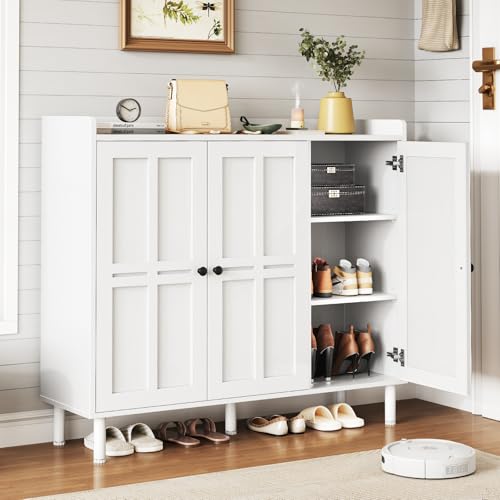
- Stores about 30 pairs
- Separate storage for tall footwear
- Six shelves with adjustable organization
Best For: High-capacity entryway storage
Best Mid-Century Style
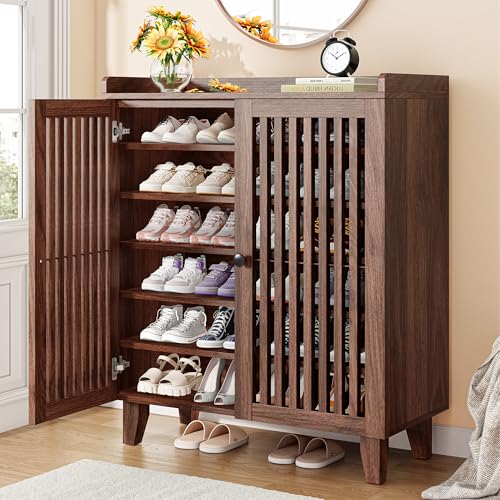
- Fits about 24–35 pairs
- Three adjustable or removable shelves
- Slatted doors support airflow
Best For: Stylish, flexible shoe storage
Best Slim Design
GRUSIGN Flip-Drawer Shoe Cabinet

- Ultra-slim 9.5-inch depth
- Three flip drawers for daily shoes
- Side adjustable storage for boots and accessories
Best For: Narrow hallways and compact homes
Best Farmhouse Value
Homleke 2-Door Adjustable Cabinet
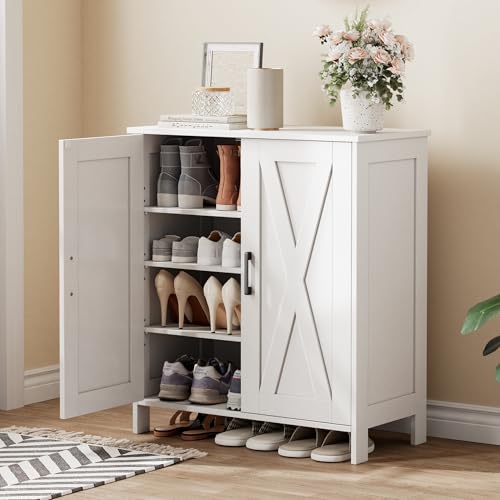
- Three adjustable shelves
- Holds 15+ pairs
- Barn-door farmhouse design
Best For: Compact farmhouse-style entryways
Best for Easy Setup

- Six adjustable tiers for varied footwear
- Sliding doors suit narrow entryways
- Walnut mid-century design with wall anchors
Best For: Families wanting flexible, enclosed entryway storage
Best Traditional Design
ONBRILL Cross-Molding Shoe Cabinet

- Stores 18–24 pairs according to the listing
- Three adjustable shelves for varied shoe heights
- Metal legs and decorative cross-molding doors
Best For: Larger entryways needing classic enclosed storage
Best for Narrow Spaces
Rustic Flip-Drawer Shoe Cabinet

- Slim 10.5-inch depth for tight areas
- Eight adjustable shelf levels and removable shelves
- Side hooks and open base add entryway utility
Best For: Small entryways with limited floor depth
Best All-Around Storage

- Two adjustable shelves fit shoes and boots
- Drawer stores entryway essentials
- Louvered doors encourage airflow
Best For: Families and larger shoe collections
Best Decorative Design

- Five tiers with adjustable or removable shelves
- Rattan doors add warm accent-cabinet style
- Supports up to 100 pounds
Best For: Style-focused entryways and multipurpose rooms
Best for Narrow Hallways
GRUSIGN Flip-Drawer Shoe Cabinet

- 9.45-inch depth suits tight spaces
- Adjustable shelves hold up to 16 pairs
- Flip doors provide easy access
Best For: Small entryways and narrow hallways
Best Overall – ONBRILL 3-Door Adjustable-Shelf Cabinet
If you want shoe cabinets with adjustable shelves and substantial capacity, the ONBRILL 3-door cabinet is a practical entryway option. It holds about 30 pairs, includes six shelves, and has a separate door area for boots, heels, and other taller footwear.
Best For: Families or households needing high-capacity, concealed shoe storage with a farmhouse-inspired look.
Pros:
- Stores about 30 pairs, depending on shoe size.
- Adjustable shelving and a separate section accommodate taller footwear.
- Cross-molding doors add rustic character.
- Five adjustable metal legs and soft-closing hinges support everyday use.
Cons:
- At 43.8 inches wide and weighing 86.3 pounds, it requires considerable space and effort to move.
- Assembly is likely easier with two people.
Its broad footprint and generous capacity make it a strong choice when organization matters more than a compact profile. The countertop also provides useful space for keys, plants, or décor.
Best Mid-Century Style – IRONCK 6-Tier Walnut Cabinet
The IRONCK is one of the more versatile shoe cabinets with adjustable shelves, combining six-tier storage with a warm walnut finish and slatted doors. Three adjustable or removable shelves help organize everyday shoes while making room for tall boots.
Best For: Shoppers who want adjustable storage, airflow-friendly doors, and mid-century styling in a moderately sized cabinet.
Pros:
- Holds approximately 24 to 35 pairs, depending on footwear size and style.
- Three shelves can be adjusted or removed for boots.
- Slatted doors allow air circulation.
- Includes solid wood legs and an anti-tip kit.
Cons:
- Its 31.5-inch width provides less capacity than wider cabinets.
- Assembly takes approximately 40 minutes for two people.
With a 14.7-inch depth that fits men’s size 13 shoes and a compact width, this cabinet balances capacity with a manageable footprint. Its walnut finish also makes it suitable for visible entryway storage.
Best Slim Design – GRUSIGN Flip-Drawer Shoe Cabinet
For narrow hallways and small apartments, the GRUSIGN offers a slim alternative among shoe cabinets with adjustable shelves. Its 9.5-inch depth combines three flip drawers with a side cabinet and adjustable shelving for boots, slippers, shoe-care items, and small essentials.
Best For: Space-conscious households that need tall, narrow storage with separate compartments for different footwear and accessories.
Pros:
- The 9.5-inch depth suits tight entryways and hallways.
- Three flip drawers keep everyday shoes dust-protected.
- Side adjustable shelving accommodates taller items and accessories.
- Wide top surface provides room for décor or daily essentials.
Cons:
- The supplied notes do not specify total shoe-pair capacity.
- At 47.2 inches high, the tall profile may not suit every space.
This cabinet prioritizes vertical organization and a clean, handle-free appearance. Its combination of drawers and side storage is especially useful when a standard deep shoe cabinet would obstruct a narrow walkway.
Best Farmhouse Value – Homleke 2-Door Adjustable Cabinet
The Homleke is a compact farmhouse option for shoppers comparing shoe cabinets with adjustable shelves. Its three adjustable shelves create five storage levels, while the two barn doors conceal shoes and the 13.8-inch depth keeps the cabinet practical for entryways and closets.
Best For: Smaller households wanting affordable-looking farmhouse storage for shoes, bags, and everyday accessories.
Pros:
- Three adjustable shelves organize flats, sneakers, and boots.
- Stores 15 or more pairs according to the supplied product notes.
- Barn doors, wood legs, and black handles provide farmhouse styling.
- Includes a wall-anchoring device for added stability.
Cons:
- Its capacity is lower than larger cabinets in this roundup.
- The supplied dimensions may make it less suitable for extensive shoe collections.
Measuring 27.6 inches wide, this cabinet is easier to fit into modest entryways than the larger alternatives. Adjustable shelves and multipurpose compartments add flexibility beyond shoe storage.
Best for Easy Setup – DHH Sliding-Door Shoe Cabinet
For shoppers comparing shoe cabinets with adjustable shelves, the DHH combines six storage tiers with a space-saving sliding-door design. Its 15-inch depth and 31.5-inch width make it a practical choice for an entryway, hallway, or living room, while the walnut mid-century styling keeps stored footwear concealed.
Best For: Families needing flexible, enclosed shoe storage in a narrow entryway.
Pros:
- Six tiers and adjustable shelf positions accommodate flats, high heels, sneakers, and ankle boots.
- Front-and-back sliding roller doors do not require extra clearance to open.
- Adjustable feet and included wall anchors support stability and safer placement.
- The top shelf provides room for shoe-care accessories.
Cons:
- At 60 pounds, it may take effort to move and assemble.
- Engineered-wood construction may not suit shoppers seeking solid wood.
The DHH is a strong all-around option when adjustable organization, concealed storage, and clearance-saving doors matter more than a compact footprint.
Best Traditional Design – ONBRILL Cross-Molding Shoe Cabinet
The ONBRILL is one of the more substantial shoe cabinets with adjustable shelves, offering five hidden shelves plus one open shelf. Three shelves can be repositioned for different shoe heights, and the two-door cabinet stores an estimated 18 to 24 pairs in a 14-inch-deep footprint.
Best For: Entryways that need higher-capacity storage with a classic black cabinet appearance.
Pros:
- Three adjustable shelves help accommodate flats, sneakers, boots, high heels, and shoeboxes.
- Reported capacity of 18 to 24 pairs supports larger footwear collections.
- Metal legs with adjustable feet help with leveling and floor protection.
- Cross-molding doors and round black knobs add decorative character.
Cons:
- The 70-pound cabinet is relatively heavy.
- Assembly is recommended for two to three people.
- Its 29.5-inch width and 45.3-inch height may be too large for very tight spaces.
Choose the ONBRILL if you want a tall, enclosed organizer that balances adjustable storage with a more furniture-like traditional design.
Best for Narrow Spaces – Rustic Flip-Drawer Shoe Cabinet
Among shoe cabinets with adjustable shelves, this rustic model stands out for its slim 10.5-inch depth and added entryway features. Two flip-down drawers conceal footwear, while removable or repositionable shelving creates space for sneakers, boots, and other shoes in a compact footprint.
Best For: Small entryways, hallways, and foyers where floor depth is limited.
Pros:
- Compact dimensions organize an estimated 16 to 20 pairs without extending far into a walkway.
- Eight shelf levels allow detailed adjustment; removing shelves creates clearance up to 11 inches.
- Open base space can hold slippers or a robot vacuum.
- Side hooks hold leashes, umbrellas, tote bags, or keys, with each rated up to 17.6 pounds.
Cons:
- The narrow design has a lower listed capacity than some wider cabinets.
- Its rustic wood-grain and cross-textured styling may not match every interior.
- Assembly takes approximately 30 to 45 minutes.
This cabinet is especially practical when depth is the main constraint, since it combines concealed flip-drawer storage, flexible shelving, and useful hooks in one narrow unit.
Best All-Around Storage – Yaheetech 4-Tier Shoe Cabinet
For shoppers comparing shoe cabinets with adjustable shelves, this Yaheetech model combines four-tier storage with a drawer for small entryway essentials. Two adjustable shelves accommodate everything from sneakers to tall boots, while louvered doors help maintain airflow.
Best For: Families or shoe collections needing enclosed storage, adjustable compartments, and a useful accessory drawer.
Pros:
- Two adjustable shelves help fit boots and high-top sneakers.
- Each shelf holds about 3–4 pairs, for roughly 12–16 pairs total.
- Includes a drawer for keys, belts, inserts, and other small items.
- Anti-tip units and a 77-pound top capacity add practical stability.
Cons:
- At 15 inches deep and 56.2 pounds, it may be substantial for very narrow spaces.
- Assembly is required.
Its balanced freestanding design, ventilated doors, and adjustable interior make it a versatile choice when you want organized shoe storage with extra drop-zone space.
Best Decorative Design – Rattan Entryway Shoe Cabinet
This rattan cabinet is a stylish option among shoe cabinets with adjustable shelves, pairing warm wood-and-rattan doors with five interior tiers. The shelves adjust from 6.1 to 8.7 inches or can be removed for taller boots.
Best For: Entryways, foyers, and living spaces where concealed shoe storage should also function as an attractive accent cabinet.
Pros:
- Adjustable or removable shelves accommodate sandals, sneakers, and boots.
- Five tiers provide flexible storage for a broad shoe collection.
- Soft-closing doors, magnetic closures, and metal handles support convenient daily use.
- Anti-tip hardware, reinforced feet, and a 100-pound capacity provide solid support.
Cons:
- Its 41.1-inch height and 32.4-inch width require more vertical and horizontal room.
- Door alignment may require hinge adjustment during setup.
- Assembly is required.
With a raised base for easier cleaning and a versatile sideboard-style shape, this cabinet suits buyers who want storage that blends into farmhouse or boho décor.
Best for Narrow Hallways – GRUSIGN Flip-Drawer Shoe Cabinet
For tight hallways, this GRUSIGN model is a space-saving choice among shoe cabinets with adjustable shelves. Its 9.45-inch depth keeps the footprint narrow, while two adjustable or removable shelves help organize up to 16 pairs, including heels and boots.
Best For: Small entryways and narrow hallways that need concealed shoe storage without sacrificing adjustable organization.
Pros:
- Only 9.45 inches deep, making it suitable for compact spaces.
- Two flip doors open to 60 degrees for easier shoe access.
- Adjustable shelves and elevated bottom storage accommodate varied footwear.
- Top fence provides a spot for keys, plants, or dog leashes.
Cons:
- The narrow design may offer less front-to-back room for bulkier shoes.
- Assembly is required.
This cabinet prioritizes hallway efficiency with vertical storage, flip-door access, and a small-item perch on top. Its anti-tip kit and sturdy construction add reassurance for everyday use.
How We Picked These Shoe Cabinets with Adjustable Shelves
We focused on practical features that matter in daily use: adjustable or flexible shelf placement, usable storage capacity, cabinet dimensions, door or drawer access, construction style, ventilation, stability, and entryway-friendly appearance. The selection also includes several formats, from slim flip drawers for tight hallways to wider freestanding cabinets for households with larger shoe collections.
Because product dimensions and assembly requirements vary, check the current listing carefully before buying. Pay particular attention to interior clearance, maximum shoe length, included hardware, and whether the advertised capacity assumes smaller low-top shoes.
Quick Comparison
| Best For | Look For | Most Useful Format |
|---|---|---|
| Small entryways | Shallow depth and flip drawers | Narrow cabinet |
| Mixed footwear | Adjustable shelf heights | Multi-tier cabinet |
| Frequent access | Wide doors or open ventilation | Slatted-door design |
| Decor-focused rooms | Finished doors and stable legs | Accent-style cabinet |
| Larger households | Six or more tiers and sturdy support | Full-height organizer |
Key Buying Factors for Shoe Cabinets with Adjustable Shelves
Measure Depth, Width, and Door Clearance
Measure the available wall space, baseboard clearance, and walking path. A cabinet that fits the wall may still obstruct a doorway when its doors or drawers open. Slim flip drawers can save floor space, while hinged doors usually provide easier access to bulky footwear.
Match Shelf Adjustability to Your Footwear
Adjustable shelves are valuable when your collection includes boots, high-top sneakers, or shoes with thick soles. Look for multiple height positions and enough interior depth for your largest pair. If shelves are removable rather than fully adjustable, verify that the remaining openings will still suit everyday shoes.
Check Ventilation and Visibility
Closed cabinets hide clutter and help create a cleaner-looking entryway, but shoes may benefit from airflow before storage. Slatted, rattan, or partially ventilated doors can improve circulation. For children or frequently worn shoes, visible labeling or easy-access drawers may be more convenient than fully concealed storage.
Consider Stability, Materials, and Assembly
Freestanding cabinets should be assembled securely and anchored when the manufacturer recommends it. Check the construction materials, leg design, hardware, and weight limits. A cabinet with a narrow footprint deserves extra attention to tipping resistance, especially in homes with children or pets.
Who Should Buy Which Shoe Cabinets with Adjustable Shelves?
Choose a slim flip-drawer cabinet if your priority is preserving hallway space. Select a six-tier or wider adjustable-shelf model if you need room for multiple people or mixed footwear. Slatted-door cabinets suit shoppers who want airflow and a more open visual style, while farmhouse, cross-molding, and rattan designs work well when the cabinet also needs to function as entryway furniture.
For the best fit, prioritize accurate measurements and shelf flexibility over stated pair counts. The right shoe cabinet should hold your largest shoes comfortably, open without blocking traffic, and remain stable enough for everyday use.