A thermal camera for an Android phone can turn your device into a practical inspection tool for spotting heat loss, electrical hot spots, plumbing issues, HVAC problems, and more.
These 10 options range from compact plug-in cameras to higher-resolution models with dual lenses, temperature tracking, and smart alerts. The right choice depends on your phone’s USB-C compatibility, the detail you need, and the types of inspections you plan to perform.
Best 10 Thermal Camera for Android Phone Picks for 2026
Best High-Resolution Pick

- 512x384 enhanced thermal resolution
- -4°F to 1022°F measurement range
- Nine palettes and multiple measurement modes
Best For: Android inspections requiring detailed thermal images
Best Cross-Platform Option

- USB-C support for iOS, Android, and Windows
- 320x240 QuadIR output at 25Hz
- Advanced tracking, reports, and 12 palettes
Best For: Detailed maintenance work across compatible USB-C devices
Best USB-C Versatility

- Works with USB-C iOS, Android, and Windows devices
- 512x384 enhanced resolution at 25Hz
- Photo, video, and up-to-16.4-foot measurements
Best For: Multi-device households and portable inspections
Best Compact Fluke Option

- Lightweight 22-gram Android camera
- Temperature analysis up to 1022°F
- Real-time image sharing and quick startup
Best For: Portable, straightforward thermal checks with Android phones
Best All-Around Pick

- 512×384 TISR imaging with 25Hz refresh
- Dual-lens infrared and visible-light cameras
- -4°F to 1,022°F range with USB-C and Lightning support
Best For: Detailed home, HVAC, electrical, automotive, and general inspections
Best for Smart Alerts

- 512×384 TISR imaging with under 40mK NETD
- Smart high- and low-temperature alerts
- Battery-free 30g body with extension cable
Best For: Android-based HVAC, electrical, automotive, and maintenance inspections
Best for Guided Inspections

- MSX combines thermal and visual image details
- App includes step-by-step inspection guides
- 1.5-meter drop rating with protective case
Best For: Guided home inspections, air-leak checks, and moisture detection
Best All-Around Resolution
REVASRI 320×240 Thermal Camera
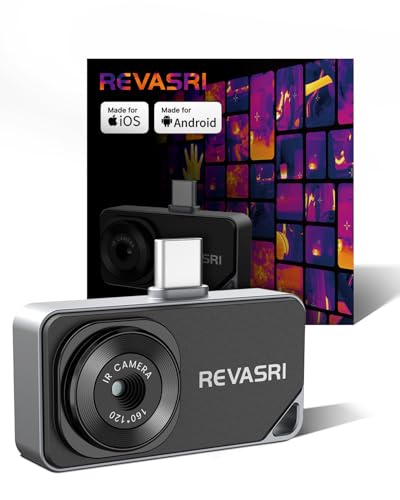
- 320×240 imaging with a smooth 25Hz refresh rate
- -4°F to 842°F measurement range
- Zoom, alarms, tracking, and IP54 protection
Best For: Versatile home, HVAC, electrical, and automotive inspections
Best for Extended Use
Thermal Master P1 320×240 Thermal Camera

- 320×240 imaging with 25Hz refresh rate
- Measures up to 1112°F with ±3.6°F accuracy
- 17g body and 5–8 hours of operation
Best For: Portable HVAC, electrical, automotive, and industrial diagnostics
Best Compact Option
GOYOJO GW192A Thermal Imaging Camera

- Plug-and-play USB-C operation with no battery
- 192×192 resolution and a 50° field of view
- -4°F to 752°F range with ±2% accuracy
Best For: Portable leak, HVAC, electrical, plumbing, and automotive checks
Best High-Resolution Pick – TOPDON TC001
The TOPDON TC001 is a strong thermal camera for Android phone users who want detailed readings, broad temperature coverage, and practical inspection tools. It connects through OTG, uses the phone for power, and supports image enhancement, fusion, and multiple measurement modes.
Best For: Android users inspecting HVAC systems, electrical components, vehicles, or home temperature issues.
Pros:
- Enhances 256×192 thermal imaging to 512×384 with TISR technology.
- Measures from -4°F to 1022°F with stated accuracy of ±2% or 3.6°F.
- Offers point, line, and surface measurements, waveform graphs, and nine color palettes.
- Compact one-ounce design includes a longer cable, protective bag, and cleaning cloth.
Cons:
- Not compatible with iOS devices.
- Android phones must support OTG, and TISR support should be confirmed before purchase.
Choose the TC001 if resolution and flexible analysis tools matter more than broad device compatibility. Its low power draw and compact design also make it convenient for extended field use with a compatible Android phone.
Best Cross-Platform Option – RISION Magic Thermal Camera
The RISION Magic is a versatile thermal camera for Android phone users who also need support for USB-C iOS and Windows devices. Its app combines thermal and visible imagery, while hot/cold tracking, adjustable emissivity, and reporting tools support detailed inspection work.
Best For: HVAC, electrical, automotive, mechanical, and home energy inspections across multiple USB-C platforms.
Pros:
- Works with USB-C iOS, Android, and Windows devices; no Mac support.
- Provides 320×240 QuadIR output from a native 160×120 sensor, with a 25Hz refresh rate.
- Measures -4°F to 1112°F with stated ±3.6°F accuracy and 40mK sensitivity.
- App includes hot/cold spot tracking, threshold analysis, graphs, reports, and 12 palettes.
Cons:
- Mac devices are not supported.
- QuadIR resolution is produced through image upscaling from the native sensor resolution.
The RISION Magic stands out for app depth and device flexibility. It is a practical choice when you need to identify a specific wire, terminal, pipe issue, or insulation problem and document findings in the app.
Best USB-C Versatility – TOPDON TC002C Duo
The TOPDON TC002C Duo is a flexible thermal camera for Android phone users who want one compact device for USB-C smartphones and tablets across iOS, Android, and Windows. It combines enhanced 512×384 imaging, real-time temperature tracking, and photo and video recording.
Best For: Users sharing one thermal imager among compatible USB-C phones and tablets for home, HVAC, electrical, or automotive checks.
Pros:
- Supports USB-C iOS, Android, and Windows smartphones and tablets.
- Enhances 256×192 infrared imaging to 512×384 with TISR technology.
- Provides a 25Hz refresh rate, 40mK sensitivity, and a -4°F to 1022°F range.
- Can measure from up to 16.4 feet and supports photo and video recording.
Cons:
- Not compatible with Mac devices or Android 16 devices temporarily, according to the supplied notes.
- Temperature readings can have an error of up to ±2°C or 2%.
The TC002C Duo is especially appealing when compatibility and portability are priorities. Its USB-C design broadens device choice, while the enhanced resolution and recording functions help with both quick checks and documented inspections.
Best Compact Fluke Option – Fluke TC01A iSee
The Fluke TC01A iSee is a compact thermal camera for Android phone users who want a quick way to capture and share thermal images. It connects through USB, supports indoor and outdoor use, and offers full temperature-range analysis in a lightweight 22-gram design.
Best For: Android users who prioritize simple startup, portability, and real-time thermal image sharing.
Pros:
- Designed for Android smartphones and connects through USB.
- Offers detailed image quality described as comparable to professional thermal imagers.
- Supports full temperature-range analysis up to 1022°F.
- Provides real-time image sharing and a lightweight 22-gram form factor.
Cons:
- The supplied notes do not specify thermal resolution or measurement accuracy.
- Compatibility is listed for Android rather than iOS or Windows devices.
The TC01A makes sense for buyers who value a straightforward, pocketable Fluke-branded tool. It is less informative on paper than some rivals about resolution and accuracy, but its quick-start design and sharing capability suit routine Android-based checks.
Best All-Around Pick – TOPDON TC001 Max
The TOPDON TC001 Max is a versatile thermal camera for Android phone users who want high-resolution imaging, smooth viewing, and broad inspection capability. Its dual-lens design combines infrared and visible-light views, while USB-C and Lightning adapters support Android, iPhone, iPad, and Windows devices.
Best For: Home inspectors, HVAC technicians, electricians, automotive users, and anyone who needs detailed thermal measurements across a wide temperature range.
Pros:
- 512×384 TISR output from a 256×192 infrared sensor, with 25Hz refresh and ≤40mK NETD sensitivity.
- Dual-lens imaging helps clarify outlines and identify heat-related problems more quickly.
- Measures from -4°F to 1,022°F and supports photo, video, temperature analysis, graphs, and multiple color palettes.
- Compact, 33g, battery-free design connects directly through USB-C or Lightning and works with most phone cases.
Cons:
- Its advanced analysis features require the compatible TopInfrared or TopView apps.
- The product’s broad capabilities may be more than casual users need for occasional checks.
The TC001 Max stands out when resolution, device flexibility, and measurement range matter. It is a strong choice for buyers seeking one portable thermal camera for Android phone use and more demanding inspection tasks.
Best for Smart Alerts – AMPBANK M256
The AMPBANK M256 is a practical thermal camera for Android phone users who want automated temperature warnings and inspection-focused software. It connects through USB-C, runs from the phone without a battery, and includes an extension cable for reaching tight or awkward spaces.
Best For: HVAC technicians, electricians, auto mechanics, maintenance workers, and DIYers who need threshold alerts during inspections.
Pros:
- Uses TISR to upscale 256×192 infrared data to 512×384, with under 40mK NETD sensitivity.
- Smart high- and low-temperature alerts can warn when a set threshold is crossed.
- 25Hz refresh rate and a -4°F to 842°F measurement range suit HVAC, automotive, electrical, and insulation checks.
- Lightweight, battery-free 30g design includes a 19.7-inch extension cable, storage bag, and cleaning cloth.
Cons:
- It is designed for OTG-enabled Android devices and computers and is not for iOS.
- Its stated accuracy is ±3.6°F, which may be less precise than some specialized inspection equipment.
Choose the M256 if alert-based monitoring and flexible field use are priorities. Its Android app and PC software add useful tools such as isotherms, area readings, picture-in-picture, and data export.
Best for Guided Inspections – FLIR One Thermal Camera
The FLIR One is a straightforward thermal camera for Android phone users with compatible USB-C devices, including Samsung Galaxy and Google Pixel models. It combines thermal and visual imagery with FLIR MSX enhancement, while the companion app provides step-by-step inspection guidance for common household problems.
Best For: Homeowners, DIYers, and professionals who want guided checks for air leaks, moisture buildup, and other common inspection issues.
Pros:
- MSX overlays thermal and visual details to make objects and problem areas easier to interpret.
- Vivid IR upscales the 80×60 native image to 240×180 for improved detail.
- FLIR One app includes inspection guides for addressing typical faults and home inspection tasks.
- Jobsite-oriented construction is rated for a 1.5-meter drop and includes a case and USB cable.
Cons:
- Compatibility is limited to USB-C Android devices; it is not presented as an iPhone-compatible model.
- Its native 80×60 infrared resolution is lower than the higher-resolution alternatives in this roundup.
- Temperature accuracy is specified as ±3°C or ±5% under stated temperature conditions.
The FLIR One favors approachable operation over maximum resolution. Its guided app experience and MSX image enhancement make it a sensible option for routine home inspections and users who want help interpreting thermal images.
Best All-Around Resolution – REVASRI 320×240 Thermal Camera
For shoppers seeking a versatile thermal camera for Android phone use, the REVASRI combines 320×240 imaging, a 25Hz refresh rate, and a broad temperature range. Its plug-in design draws power from the connected device, making it convenient for inspections around the home, HVAC systems, electrical panels, and vehicles.
Best For: Homeowners, technicians, and DIY users who want high-resolution thermal inspection with useful analysis features.
Pros:
- 320×240 resolution, 25Hz refresh rate, and 40mK thermal sensitivity.
- Measures from -4°F to 842°F (-20°C to 450°C).
- Includes 15× digital zoom, temperature alarms, tracking, nine color modes, and picture-in-picture.
- IP54 protection and 1-meter drop protection support field use.
Cons:
- Requires a compatible USB-C device and the dedicated Camera+ app.
- Powered by the connected device rather than an internal battery.
The REVASRI is a strong choice when image detail and inspection flexibility matter. Its combination of resolution, alerts, zoom, and durability makes it especially practical for repeated household or professional troubleshooting.
Best for Extended Use – Thermal Master P1 320×240 Thermal Camera
The Thermal Master P1 is a compact thermal camera for Android phone users who want detailed imaging without carrying a bulky instrument. It pairs 320×240 X³ IR resolution with a wide temperature range, adjustable settings, and low power consumption for longer inspection sessions.
Best For: Mobile technicians and inspectors who prioritize portability, extended operation, and temperature-setting controls.
Pros:
- 320×240 resolution, 25Hz refresh rate, and detection of temperature differences as small as 0.04°C.
- Measures from -4°F to 1112°F (-20°C to 600°C), with ±3.6°F accuracy.
- Offers 15× digital zoom, alarms, isotherm mode, and adjustable emissivity, ambient temperature, and distance.
- Small 0.62-ounce design and 5–8 hours of continuous operation.
Cons:
- Lightning-port iPhones require a separately sold USB-C-to-Lightning adapter.
- Requires the Thermal Master app for device control.
Choose the P1 if portability and operating time are more important than rugged protection features. Its 600°C upper range and adjustable measurement settings make it particularly useful for broader diagnostic work.
Best Compact Option – GOYOJO GW192A Thermal Imaging Camera
The GOYOJO GW192A is a pocket-sized thermal camera for Android phone and compatible USB-C iPhone use. It offers plug-and-play operation, a 192×192 sensor, and a wide 50° field of view for quickly checking walls, ceilings, panels, ductwork, vehicles, and other hard-to-reach areas.
Best For: DIYers and mobile professionals who need a lightweight thermal tool for general leak, HVAC, electrical, plumbing, and automotive checks.
Pros:
- Plug-and-play USB-C design with no battery or pairing required.
- 192×192 infrared resolution and a wide 50° field of view.
- Detects temperatures from -4°F to 752°F (-20°C to 400°C) with ±2% accuracy.
- Extremely compact 0.48-ounce design for carrying in tight work areas.
Cons:
- Lower infrared resolution than the 320×240 models in this roundup.
- Requires the THG Start app and a compatible USB-C device.
The GW192A makes the most sense when portability and quick setup are priorities. Its wide viewing angle helps cover larger areas efficiently, while its temperature range suits common home, vehicle, and equipment checks.
How We Picked the Best Thermal Camera for Android Phone
We compared the selected models by focusing on the features that matter during real inspections: thermal resolution, refresh rate, temperature range, stated accuracy, connector compatibility, software features, and portability. We also considered whether each camera is suited to occasional home troubleshooting or more demanding HVAC, electrical, automotive, and maintenance work.
Resolution is important, but it is not the only measure of performance. App quality, image controls, measurement tools, and the ability to identify hot and cold spots can make a lower-resolution camera more useful than a specification sheet suggests.
Quick Comparison: Thermal Cameras for Android Phones
- Best for maximum detail: Choose a 512×384 model such as the TOPDON TC001, TC002C, TC001 Max, or AMPBANK M256.
- Best for broad temperature measurements: Look for models rated to approximately 1,000°F or higher, including several TOPDON, Fluke, RISION, and Thermal Master options.
- Best for compact everyday use: Smaller plug-in cameras are convenient for quick checks around the home, vehicle, or workshop.
- Best for guided inspections: FLIR models may appeal to buyers who value MSX image enhancement and inspection-oriented software.
- Best for basic troubleshooting: A 192×192 or 240×180 camera can be sufficient for finding obvious temperature differences without paying for professional-level detail.
Key Buying Factors for a Thermal Camera for Android Phone
Phone and Connector Compatibility
Confirm that the camera works with your exact Android phone, not just Android generally. Check for a USB-C port, required operating-system version, physical clearance around the port, and whether the app supports your device. Some cameras also work with tablets, Windows computers, or iOS devices, but cross-platform support varies.
Thermal Resolution and Refresh Rate
Higher resolution helps you distinguish small components and inspect objects from farther away. A faster refresh rate makes live scanning smoother, especially when moving across electrical panels, ducts, pipes, or machinery. For occasional home use, moderate resolution may be adequate; professionals and frequent users generally benefit from 320×240 or 512×384 output.
Temperature Range and Accuracy
Choose a range that matches your work. Home energy checks and plumbing usually need less range than automotive, industrial, or electrical applications. Stated accuracy can vary with distance, emissivity, reflections, and ambient conditions, so treat the specification as a guide rather than a guarantee.
App Tools and Image Controls
Look for spot measurements, hot- and cold-spot tracking, adjustable palettes, temperature alarms, image capture, video recording, and report-sharing options. These tools often determine how easily you can document a problem or explain it to someone else.
Who Should Buy Which Thermal Camera for Android Phone?
Homeowners: Choose a compact, easy-to-use model for insulation checks, draft detection, water leaks, and basic electrical troubleshooting.
HVAC and maintenance users: Prioritize higher resolution, a fast refresh rate, broad temperature coverage, and reliable hot-spot tracking.
Electricians and technicians: Select a camera with clear detail, accurate spot measurements, a suitable high-temperature limit, and software that supports saved documentation.
Professionals and frequent inspectors: Consider a 512×384 camera with better image clarity, multiple lenses, smart alerts, or enhanced imaging features. Before ordering, verify your phone model, app availability, and the manufacturer’s stated measurement limitations.