Choosing a commercial meat grinder for bones requires more than comparing horsepower. Bone hardness, grinder-plate size, throughput, reverse functionality, and cleaning demands all affect whether a machine performs reliably under regular use.
We selected 10 heavy-duty electric grinders spanning #12, #22, and #32 formats, with options for soft-bone grinding, sausage stuffing, frozen meat processing, and higher-volume preparation. Use the guide below to match motor strength and capacity to your workload.
Best 10 Commercial Meat Grinder for Bones Picks for 2026
Top Soft-Bone Home Grinder
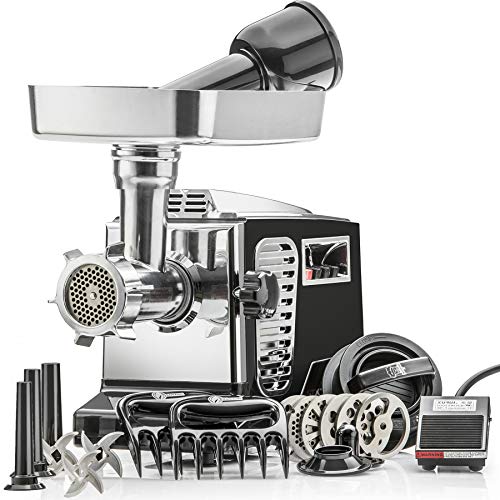
- Processes soft chicken and small-game bones
- High-capacity Size No. 12 design
- Includes extensive grinding and sausage accessories
Best For: Home users handling soft bones and varied meat-preparation tasks
High-Volume Commercial Pick

- Rated for 1,100 pounds per hour
- Supports up to four hours of continuous use
- Large hopper and reverse function
Best For: Commercial meat and pet-food preparation without confirmed bone use
Frozen and Chicken-Bone Option
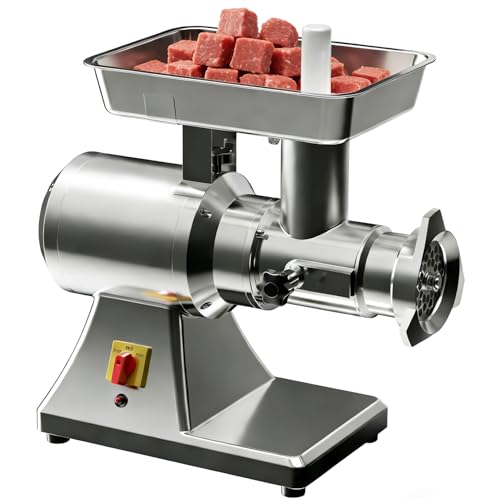
- Listed for chicken with bones and frozen bone
- Processes about 11 pounds per minute
- Full stainless steel body with detachable parts
Best For: Home or small commercial users grinding chicken bones and frozen meat
Industrial-Style Meat Processing Pick
Tangkula #12 Commercial Grinder

- Processes up to 551 pounds per hour
- Steel gear-driven 1,100-watt design
- Includes two plates and two blades
Best For: Commercial boneless meat grinding and sausage preparation
Reliable Home Power

- 0.75 HP motor and stainless steel construction
- Handles raw chicken bones and up to 11 lb/min
- Includes plates, stuffing tubes, and five-year warranty
Best For: Home kitchens processing meat, game, and raw chicken bones
High-Volume Bone-Capable Choice

- 1 HP motor rated for up to 550 lb/hour
- 304 stainless steel body for heavy-duty use
- Includes two plates, two blades, and three stuffing tubes
Best For: Large-batch butchering, small farms, and commercial kitchens
Versatile Commercial Prep
VEVOR #12 Electric Meat Grinder

- Processes up to 552 lb/hour for boneless foods
- Includes plates, blades, kibbe kit, and stuffing tubes
- Dishwasher-safe removable parts and ETL approval
Best For: High-volume boneless grinding and sausage preparation
High-Capacity Workhorse
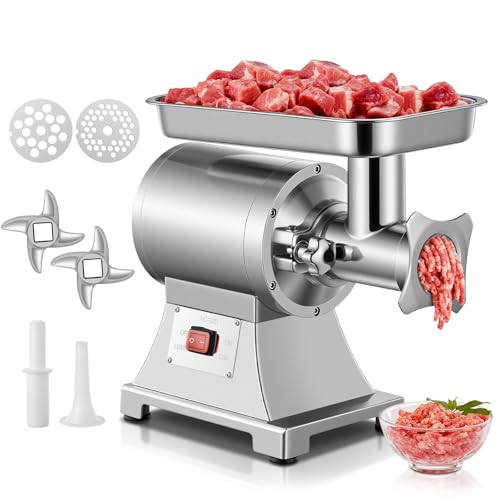
- Processes up to 330 pounds per hour
- Stainless-steel food-contact components
- Includes two plates and a sausage tube
Best For: High-volume meat grinding in kitchens, restaurants, and butcher shops
Bone-Processing Specialist

- Specifically lists chicken bone grinding
- Processes up to 21 pounds per minute
- Includes three plates and three sausage tubes
Best For: Bone-capable grinding and sausage preparation for demanding users
Stainless-Steel All-Rounder

- All-stainless-steel, dishwasher-safe metal parts
- Four plates and four sausage stuffers included
- Compact design with removable auger
Best For: Versatile grinding and sausage making where compact storage matters
Top Soft-Bone Home Grinder – Turboforce II 4000
If you need a commercial meat grinder for bones but primarily work with smaller, softer bones, the STX International Turboforce II 4000 offers substantial home-use capacity. Its Size No. 12 design, high-capacity tray, foot pedal, and multiple grinding accessories make it a versatile option for meat preparation and sausage making.
Best For: Home users processing soft chicken, rabbit, squirrel, or quail bones alongside larger batches of meat.
Pros:
- Handles soft bones and can process approximately 220 to 260 pounds of meat per hour, depending on the plate and meat.
- Large tray holds more than 3 pounds of meat and includes a 2-inch feed tube.
- Includes six grinding plates, stainless steel blades, sausage tubes, a kubbe maker, meat claws, and a patty press.
- Foot pedal, circuit breaker, and patented air-cooling system support convenient operation.
Cons:
- Designed for soft bones, not a general-purpose grinder for hard bones.
- The stated three-year guarantee applies only within the 48 contiguous states and has specific shipping and return terms.
This is a feature-rich choice when bone grinding is occasional and limited to soft poultry or small-game bones. Its accessory package is especially useful if you also want to make sausages, kubbe, or patties.
High-Volume Commercial Pick – FOHERE #22 Meat Grinder
For high-volume kitchens seeking a commercial meat grinder for bones, the FOHERE #22 emphasizes throughput, continuous operation, and easy maintenance. It is built for meat, pet-food preparation, and sausage stuffing, though the supplied specifications do not state that it is intended for grinding bones.
Best For: Restaurants, food-processing facilities, and pet-food preparation involving boneless meat and extended grinding sessions.
Pros:
- Rated for up to 1,100 pounds per hour, or about 19 pounds per minute, with up to four hours of continuous use.
- Large stainless steel hopper holds approximately 26.5 to 33 pounds of prepared meat.
- Reverse function helps address jams, while detachable parts simplify cleaning.
- Includes 6mm and 8mm plates, two stainless steel blades, and a sausage stuffing tube.
Cons:
- The supplied notes do not confirm bone-grinding capability, so it should not be selected specifically for bones without verification.
- Accessories should not be cleaned in a dishwasher and should be wiped dry after washing.
The FOHERE stands out for speed, hopper capacity, and sustained use rather than confirmed bone processing. Choose it for commercial meat throughput, and verify bone compatibility before using it for that purpose.
Frozen and Chicken-Bone Option – #12 1.3HP Grinder
This #12 electric grinder is one of the more directly relevant options for shoppers seeking a commercial meat grinder for bones, since its supplied specifications specifically list chicken with bones and frozen bone among its recommended uses. Its stainless steel construction, low-speed grinding, and 950-watt motor suit frequent home or commercial preparation.
Best For: Users who need to process chicken with bones, frozen meat, and frozen bone while also making sausage or ground meat.
Pros:
- Specifications specifically list chicken with bones and frozen bone among recommended uses.
- Processes approximately 11 pounds per minute with a 950-watt motor.
- Full stainless steel construction, detachable parts, and larger heat-dissipation holes support durability and cleanup.
- Includes 6mm and 8mm plates, a sausage stuffing tube, pusher, stainless steel auger, and large tray.
Cons:
- Its approximately 11-pound-per-minute rate is lower than the highest-capacity models in this roundup.
- Only one stainless steel blade is listed among the included components.
Among these choices, this grinder provides the clearest stated fit for chicken-bone and frozen-bone preparation. Its moderate throughput and complete stainless steel build make it a practical crossover machine for home and smaller commercial workloads.
Industrial-Style Meat Processing Pick – Tangkula #12 Commercial Grinder
The Tangkula #12 is a heavy-duty commercial meat grinder for bones only if the bones are confirmed suitable by the manufacturer; the supplied notes describe meat grinding but do not specify bone capability. For commercial meat preparation, its steel gear-driven mechanism, 1,100-watt motor, and 551-pound-per-hour rating provide a solid high-volume foundation.
Best For: Kitchens, restaurants, and other commercial settings focused on fast boneless meat grinding and sausage preparation.
Pros:
- Rated to grind up to 551 pounds of meat per hour with a 1,100-watt motor.
- Steel gear-driven mechanism and corrosion-resistant exterior support heavy-duty use.
- Includes two 6mm and 8mm grinding plates, two blades, a cutting head, and food pusher.
- Ventilation helps protect the motor from overheating, while the smooth surface simplifies cleaning.
Cons:
- The supplied product information does not confirm that it can grind bones.
- The notes mention sausage-making capability but do not clearly list included stuffing tubes in the accessory specification.
This is a straightforward commercial meat grinder for fast, repetitive meat processing, but it is not the safest choice for bone grinding based on the available information. Confirm acceptable bone types before purchasing for that application.
Reliable Home Power – LEM Products BigBite #12
For shoppers seeking a commercial meat grinder for bones that still fits a home kitchen, the LEM Products BigBite #12 offers a stainless steel build, a 0.75 HP motor, and capacity for raw chicken bones. It processes up to 11 pounds of meat per minute and is designed for repeated use.
Best For: Home cooks, hunters, and pet-food preparers handling medium to large batches of meat or raw chicken bones.
Pros:
- Handles beef, pork, poultry, lamb, venison, and raw chicken bones.
- Processes up to 11 pounds per minute with a noise-dampening design.
- Includes three plates, a knife, stomper, and sausage-stuffing tubes.
- Backed by a five-year factory warranty and lifetime customer support.
Cons:
- At 33.1 pounds, it is a substantial countertop appliance.
- The listed capacity is 7 pounds, so larger batches may require multiple loads.
This is a practical choice when bone-capable grinding and long-term home use matter more than the highest commercial throughput. Its included accessories also make it useful for burgers, sausages, game, and pet food.
High-Volume Bone-Capable Choice – Commercial Meat Grinder #22C
This commercial meat grinder for bones is built for large-batch work, with a 1 HP motor, 304 stainless steel construction, and a stated output of up to 550 pounds per hour. It is designed for home butchering, small farms, restaurants, and other demanding food-preparation settings.
Best For: Large-batch meat processing, small-farm use, commercial kitchens, and preparing pet food from suitable meats.
Pros:
- Rated for up to 550 pounds per hour and continuous operation over four hours.
- 304 stainless steel construction is wear- and corrosion-resistant.
- Includes 6 mm and 8 mm plates, two blades, and three stuffing tubes.
- Offers a five-year warranty and lifetime customer support.
Cons:
- Weighing 43 pounds, it is less convenient to move or store frequently.
- Its commercial capacity may be more than needed for occasional household grinding.
Among these options, the #22C is the strongest fit for sustained throughput and heavier workloads. The supplied notes support processing multiple meats, but they do not specify which types of bones it can grind, so confirm bone compatibility before purchase.
Versatile Commercial Prep – VEVOR #12 Electric Meat Grinder
If you need a commercial meat grinder for bones, note that this VEVOR model is explicitly not suitable for bones or frozen meat. For boneless preparation, its 750W/1 HP motor delivers up to 552 pounds per hour, while the included plates, blades, kibbe kit, and stuffing tubes support varied recipes.
Best For: Restaurants, butcher shops, and home kitchens that need high-volume boneless grinding and sausage-making.
Pros:
- Processes up to 552 pounds per hour with a 750W/1 HP motor.
- Includes two plates, two cross blades, a kibbe kit, and three stuffing tubes.
- Removable components are dishwasher-safe for easier cleanup.
- ETL approved with cooling, anti-vibration, and grinding-head locking features.
Cons:
- Not suitable for bones or frozen meat.
- The main motor housing must not be immersed or rinsed.
- Its aluminum body may be less suited to buyers specifically seeking stainless steel construction.
This grinder is a capable high-throughput option for boneless meat, vegetables, and sausage preparation, but it should not be selected for bone grinding. Its accessory package and dishwasher-safe removable parts make it better suited to versatile daily prep than bone processing.
High-Capacity Workhorse – 1100W Heavy-Duty Meat Grinder
If you need a commercial meat grinder for bones and other ingredients, this 1100W model emphasizes high throughput and straightforward operation. Its listed capacity reaches up to 330 pounds per hour, while the aluminum body and stainless-steel food-contact components are suited to busy kitchen, restaurant, butcher-shop, and sausage-shop use.
Best For: High-volume meat and vegetable grinding where a simple, powerful setup is the priority.
Pros:
- 1100W pure copper motor with a stated output of up to 330 pounds per hour.
- Food-grade stainless-steel hopper plate, grinding head, and feed screw.
- Includes two blades, two cutting plates, and a sausage tube for flexible preparation.
- Removable working parts are designed for simple assembly, disassembly, and cleaning.
Cons:
- The 40.3-pound build may be cumbersome to move or store.
- The supplied notes do not specifically confirm bone-grinding capability.
- Cleaning instructions call for low-temperature soapy water rather than placing parts in a dishwasher.
This is a practical choice for buyers who value capacity and a commercial-style build. If bone processing is essential, confirm the manufacturer’s guidance before purchase, since the supplied specifications focus on meat and vegetable grinding.
Bone-Processing Specialist – VEVOR #32 1.5HP Meat Mincer
For shoppers specifically comparing a commercial meat grinder for bones, this VEVOR model is the most directly aligned option in the group. Its 1100W/1.5HP motor is rated for up to 21 pounds per minute, and the supplied notes specifically list chicken cartilage and chicken bones among the ingredients it can grind.
Best For: Commercial or advanced home users who need bone-capable grinding plus sausage-making accessories.
Pros:
- Listed capability includes chicken cartilage, chicken bones, frozen meat, and fresh meat.
- High-output 1100W/1.5HP motor with a stated rate of up to 21 pounds per minute.
- Includes coarse, fine, and stuffing plates plus three sausage tubes.
- Reverse function, overload protection, cooling, and an integrated accessory-storage box support extended use.
Cons:
- At 73 pounds, it is substantially heavier than the other listed models.
- The large footprint may require dedicated counter or storage space.
- The main body must not be immersed or rinsed; only removable components are dishwasher-safe.
Among these options, this model offers the clearest match for bone-related grinding based on its stated capabilities. Its heavy construction and safety-oriented features suit demanding workloads, but buyers should plan for its size and weight.
Stainless-Steel All-Rounder – Anatole 1.5HP Bone Mincer
This Anatole model combines a 1.5HP, 1100W motor with an all-stainless-steel construction and a broad accessory package. As a commercial meat grinder for bones, it is worth considering for buyers who want a compact machine for varied food preparation, although the supplied notes do not specify which types or sizes of bones it can handle.
Best For: Users seeking a compact stainless-steel grinder with multiple grind settings and sausage-making attachments.
Pros:
- 304 stainless-steel body and metal components are described as dishwasher-safe.
- Includes four grinding plates, two cross blades, and four sausage stuffers.
- Cooling-system design is intended to support longer continuous operation.
- Removable outlet and auger help clear blockages, while the compact design saves storage space.
Cons:
- The supplied notes do not explicitly confirm bone-grinding performance.
- The listed capacity is 6 pounds, lower than the capacities stated for the other two models.
- The product details show conflicting voltage information, so buyers should verify compatibility before ordering.
This is a versatile, space-conscious option with an especially useful selection of plates and sausage tubes. It suits general grinding and food-preparation tasks well, but bone-focused buyers should verify the supported bone types and electrical requirements first.
How We Picked the Best Commercial Meat Grinder for Bones
We compared the listed grinders by motor power, advertised hourly capacity, grinder-head size, bone-processing claims, included plates and stuffing accessories, reverse operation, construction, and likely cleaning requirements. Horsepower and advertised pounds per hour are useful starting points, but they are not directly comparable across brands. Actual output depends on meat temperature, bone size, feed rate, plate selection, and how often the grinder needs to pause.
For bone use, we gave extra attention to models that explicitly mention soft bones or bone mincing. Buyers should still verify the manufacturer’s permitted bone types before processing anything hard, dense, or unusually large.
Quick Comparison
| What to Compare | Best For | What to Notice |
|---|---|---|
| #12 grinder | Home users and small operations | Compact footprint, moderate throughput, easier handling |
| #22 grinder | Frequent batch processing | Larger feed path and stronger commercial-style capacity |
| #32 grinder | High-volume workloads | Fast processing, larger components, more storage and cleaning space |
| Reverse function | Reducing jams | Helpful when sinew or partially frozen material binds the auger |
| Multiple plates and tubes | Mixed food preparation | More flexibility for grind texture and sausage filling |
Key Buying Factors for a Commercial Meat Grinder for Bones
Bone Compatibility and Feed Preparation
Do not assume that a powerful motor can safely grind every type of bone. Many consumer and commercial-style machines are intended for soft bones, such as smaller poultry bones, rather than dense beef or pork bones. Cut ingredients into suitable pieces, follow the manual, and avoid feeding material that exceeds the manufacturer’s guidance.
Motor Power and Real-World Capacity
Models in this roundup range from roughly 1 to 1.5 horsepower, with advertised capacities from about 551 to 1,100 pounds per hour and higher claims on larger machines. These figures are maximum or ideal-condition estimates. For sustained work, prioritize thermal protection, a durable transmission, and a motor that does not require constant stopping over a headline capacity alone.
Grinder Size, Plates, and Accessories
A #12 unit is often easier to store and sufficient for smaller batches. #22 and #32 grinders offer larger feed paths and generally make more sense for regular commercial preparation. Check plate diameters, available grind sizes, knife material, sausage tubes, and whether replacement parts are readily available.
Safety and Cleaning
Look for stable feet, overload protection, a clearly accessible power switch, and a reverse function. Removable food-contact parts should be easy to disassemble and wash. Dry metal components promptly to reduce corrosion, and never put parts in a dishwasher unless the manufacturer specifically approves it.
Who Should Buy Which Commercial Meat Grinder for Bones?
Choose a #12 grinder if you process modest batches, have limited counter space, or want one machine for occasional meat, soft-bone, and sausage work. A #22 model is a better fit for frequent family-scale preparation, hunting use, or a small food business that needs more throughput without moving to the largest footprint. Choose a #32 grinder when speed and batch volume matter more than compact storage.
If bone processing is your main purpose, favor the model with the clearest soft-bone guidance, appropriate safety instructions, and accessible replacement knives and plates. If sausage making is equally important, compare the included stuffing tubes and the ease of switching between grinding and stuffing modes. Whichever model you select, confirm electrical requirements, warranty coverage, and cleaning instructions before purchase.