Tankless water heaters deliver hot water on demand without continuously reheating a storage tank. The right model can save space and provide an efficient solution, but capacity, fuel type, electrical requirements, and installation conditions matter.
This roundup compares 10 options, from high-output natural-gas units for whole-home demand to compact electric and portable models for smaller spaces, sinks, RVs, and off-grid use.
Best 10 Tankless Water Heaters Picks for 2026
Best for Large Natural-Gas Homes

- 7.0 GPM output for multiple fixtures
- 160,000 BTU natural-gas heating
- LeakGuard and digital temperature control
Best For: Large families with multi-bathroom homes
Best Compact Point-of-Use Pick
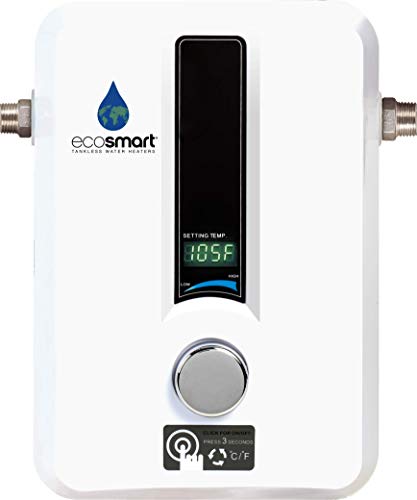
- Compact wall-mounted electric design
- 2 GPM flow rate
- 99.8% listed efficiency
Best For: Small or lower-demand applications
Best Flexible High-Capacity Model

- 10 GPM capacity for up to six fixtures
- Natural gas or propane support
- Indoor or outdoor installation
Best For: High-demand homes needing fuel flexibility
Best Whole-Home Electric Option
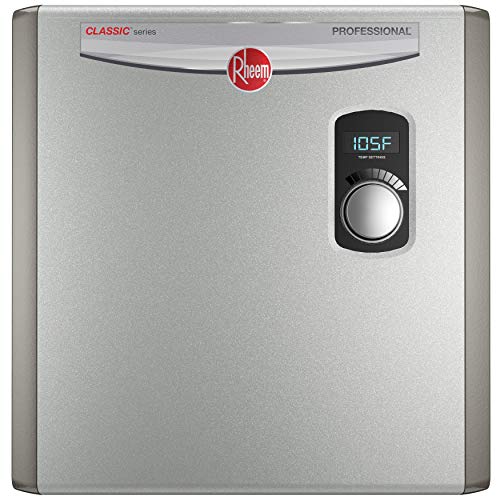
- Up to 5.9 GPM electric output
- No gas venting required
- Compact 24 kW wall-mounted design
Best For: Homes with sufficient 240-volt electrical capacity
Best Portable Pick
CAMPLUX AY132 Outdoor Tankless Water Heater

- Portable 10-pound design with folding handle
- Starts at low 3.0 PSI water pressure
- Includes shower hardware and safety protections
Best For: Camping, RVs, cabins, and off-grid outdoor use
Best for Everyday Use
Rheem RTEX-18 18kW Tankless Water Heater

- Up to 4.4 GPM flow rate
- Self-modulating 18kW electric heating
- External LED thermostat with precise adjustment
Best For: Higher-flow residential electric hot-water demand
Best Point-of-Use Pick
CAMPLUX TE05N4 Compact Electric Water Heater

- Compact design for tight installation spaces
- Self-modulating 4.5kW point-of-use heating
- Requires hardwiring and a 40A circuit
Best For: Single sinks, wet bars, boats, and small commercial spaces
Best Overall
Rheem RTEX-13 13kW Tankless Water Heater

- Up to 3.17 GPM flow rate
- 1-degree external digital temperature control
- 99.8% stated energy efficiency
Best For: Homes needing a higher-flow electric unit
Best for Multiple Fixtures
Rheem RTEX-11 11kW Tankless Water Heater
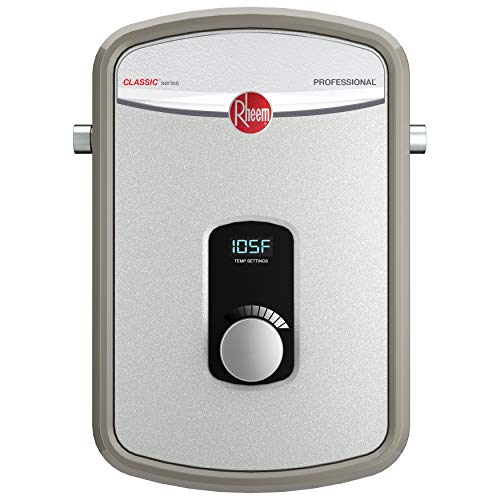
- Up to 2.68 GPM flow rate
- No venting required
- Compact design with 1-degree controls
Best For: Multiple-fixture electric installations
Best Compact Option
Rheem RTEX-08 8kW Tankless Water Heater
- Up to 1.95 GPM flow rate
- Compact wall-mounted design
- Adjustable digital temperature display
Best For: Smaller, lower-demand installations
Best for Large Natural-Gas Homes – Rheem RTG 7.0 GPM
The Rheem RTG Series is a high-capacity option among tankless water heaters for households that need substantial hot-water output. Its 7.0 GPM flow rate and 160,000 BTU rating are designed for as many as two or three simultaneous showers, while the wall-mounted indoor design saves floor space.
Best For: Large families and multi-bathroom homes with natural-gas service and an appropriate direct-vent installation.
Pros:
- 7.0 GPM flow rate supports multiple simultaneous fixtures.
- 0.82 UEF and on-demand heating can reduce energy use compared with a 50-gallon electric tank.
- Includes digital temperature control, freeze protection, flame-failure protection, and LeakGuard leak detection.
Cons:
- Requires natural gas and indoor direct-vent installation.
- Professional installation may be needed to confirm venting and gas-line compatibility.
- Non-condensing design is less efficient than some condensing models.
This Rheem is a practical whole-house choice when strong simultaneous flow matters more than the simplest installation. Verify gas, venting, and household demand requirements before purchasing.
Best Compact Point-of-Use Pick – EcoSmart ECO 8
The EcoSmart ECO 8 is a compact electric option among tankless water heaters, measuring 8 inches wide by 11.5 inches high. Its 8 kW heating capacity and listed 2 GPM flow rate make it better suited to limited-demand applications than whole-home, multi-fixture use.
Best For: Small point-of-use or lower-demand applications with a compatible 240-volt electrical connection.
Pros:
- Compact 4-inch-deep wall-mounted design.
- 99.8% listed efficiency.
- LED display and lifetime warranty covering the electronics, exchanger, and element.
Cons:
- 2 GPM flow rate limits simultaneous hot-water use.
- Requires a 240-volt corded-electric connection.
- Less suitable for high-demand whole-house applications.
The ECO 8 makes sense when space is tight and hot-water demand is modest. Check the expected flow rate and electrical requirements carefully before using it as a replacement for a larger system.
Best Flexible High-Capacity Model – Rinnai RX180iN 10 GPM
The Rinnai RX180iN stands out among tankless water heaters for its flexible installation and high output. It supports natural gas or propane, can be installed indoors or outdoors with the specified vent cap, and delivers up to 10 GPM for as many as six fixtures at once.
Best For: High-demand homes that want fuel flexibility, indoor or outdoor installation, and condensing efficiency.
Pros:
- 10 GPM flow rate and 180,000 BTU output support substantial simultaneous demand.
- Smart Sense supports natural gas or propane operation.
- Indoor/outdoor installation flexibility and a 0.98 UEF rating.
- Quick Flush feature and app-based setup and troubleshooting support.
Cons:
- Professional installation is recommended.
- Outdoor installation requires the RX-OVC vent cap.
- Wi-Fi control requires a separate Controlr module.
This is the most adaptable high-output option in the group, particularly for buyers deciding between natural gas and propane. Factor in installation requirements and optional smart-control hardware when comparing total cost.
Best Whole-Home Electric Option – Rheem RTEX-24 24 kW
The Rheem RTEX-24 is a whole-home electric choice among tankless water heaters, offering up to 5.9 GPM without gas fuel or venting. Its 24 kW output and 1-degree digital controls can support multiple fixtures when the home has the substantial electrical infrastructure this model requires.
Best For: Homes that prefer electric operation and can support a 240-volt, 200-amp electrical service with the required breakers and wiring.
Pros:
- Up to 5.9 GPM for multiple fixtures.
- No gas venting is required.
- Compact design is 90% smaller than a traditional tank water heater.
- 99.8% listed efficiency and 1-degree temperature adjustments.
Cons:
- Requires three 40-amp double-pole breakers and three sets of #8 AWG copper conductors.
- Requires a recommended minimum 200-amp household service panel.
- Performance depends on proper sizing and professional installation.
The RTEX-24 is compelling where gas service or venting is undesirable, but its electrical requirements are significant. Confirm panel capacity, wiring, and expected flow before choosing it for whole-home use.
Best Portable Pick – CAMPLUX AY132 Outdoor Tankless Water Heater
For camping, RVs, and off-grid use, the CAMPLUX AY132 is a portable propane option among tankless water heaters. Its 1.32 GPM output, low-pressure startup, and battery-powered ignition provide hot water without requiring an electrical hookup.
Best For: Campers, RV owners, rural cabins, and outdoor washing tasks.
Pros:
- Lightweight 10-pound design with a folding handle for easier transport.
- Starts at 3.0 PSI and works with a small 12V pump or gravity-fed water bag.
- Includes a shower head, hose, gas regulator, hardware, and multiple safety protections.
Cons:
- Its 1.32 GPM flow rate is intended for portable, single-use applications rather than whole-home demand.
- Requires propane, two D-size batteries, and suitable outdoor ventilation.
The AY132 makes the most sense when portability and off-grid flexibility matter more than high flow. It is a practical outdoor shower and cleanup solution with a relatively simple setup.
Best for Everyday Use – Rheem RTEX-18 18kW Tankless Water Heater
The Rheem RTEX-18 is a high-capacity electric choice among tankless water heaters, offering up to 4.4 GPM for larger hot-water demands. Its self-modulating controls adjust power to demand, while the external LED thermostat makes temperature changes straightforward.
Best For: Homes seeking a wall-mounted electric heater for higher-flow hot-water use.
Pros:
- Delivers up to 4.4 GPM with 18kW of heating power.
- Self-modulates power based on hot-water demand.
- External digital thermostat offers LED display and approximately 1-degree adjustment accuracy.
- Copper immersion heating elements are field serviceable.
Cons:
- Requires a 240V AC electrical supply and appropriate installation.
- Higher-capacity installation may require more electrical planning than a point-of-use model.
Choose the RTEX-18 when you want electric operation and more flow than a compact sink heater can provide. Its serviceable heating elements and simple bottom water connections add practical value for replacement projects.
Best Point-of-Use Pick – CAMPLUX TE05N4 Compact Electric Water Heater
The CAMPLUX TE05N4 is a compact point-of-use option among tankless water heaters, designed for a single sink or other small installation. Its 4.5kW self-modulating system heats water on demand, while the LED touch display provides simple temperature control.
Best For: Single-sink installations in kitchens, wet bars, boats, salons, and other space-limited areas.
Pros:
- Compact wall-mounted design measures approximately 10.95 by 2.52 by 7.4 inches.
- Activates at a low 0.26 GPM flow rate and heats water on demand.
- Self-modulating operation adjusts power according to flow and temperature settings.
- Includes an LED digital display, touch controls, and dry-combustion protection.
Cons:
- Designed for one sink rather than multiple simultaneous fixtures.
- Requires hardwiring, a 40A circuit breaker, 10 AWG wire, and a 1/2-inch NPT water connection.
- Its 120V, 4.5kW output is not intended for high-flow whole-home use.
The TE05N4 is a space-saving solution when hot water is needed close to one fixture. Before buying, confirm that the required electrical circuit and hardwired installation match your location.
Best Overall – Rheem RTEX-13 13kW Tankless Water Heater
The Rheem RTEX-13 is a strong all-around choice for shoppers comparing tankless water heaters. Its 13kW heating capacity, self-modulating power control, digital thermostat, and included 1/2-inch NPT adapters are designed for convenient, efficient residential installation.
Best For: Homes needing a higher-flow electric unit with precise temperature adjustment.
Pros:
- Up to 3.17 GPM flow rate for residential use
- External digital temperature control adjusts in 1-degree increments
- Self-modulating power control and stated 99.8% energy efficiency
- Field-serviceable copper heating elements and included adapters
Cons:
- Requires 240V power and draws 54 amps
- Professional installation may be needed for electrical and plumbing requirements
With its higher output and detailed external controls, the RTEX-13 is the most capable option in this group. Confirm that your electrical service can support its 54-amp requirement before buying.
Best for Multiple Fixtures – Rheem RTEX-11 11kW Tankless Water Heater
The Rheem RTEX-11 is a compact electric option for multiple-fixture applications. This tankless water heater provides up to 2.68 GPM, uses digital controls from 80°F to 140°F, and requires no venting, but its electrical requirements should be verified before installation.
Best For: Multiple-fixture use where a compact, vent-free electric design is preferred.
Pros:
- Provides up to 2.68 GPM
- Digital thermostatic control adjusts in 1-degree increments
- Compact wall-mounted design is stated to be 90% smaller than traditional tank heaters
- No venting required and stated 99.8% efficiency
Cons:
- Requires a 240V, 50-amp double-pole breaker
- Manufacturer recommends a minimum 100-amp household service panel
- Lower flow capacity than the 13kW model
The RTEX-11 balances useful flow capacity with a space-saving design. It is a practical fit when your panel meets the specified wiring requirements and you want to avoid venting.
Best Compact Option – Rheem RTEX-08 8kW Tankless Water Heater
The Rheem RTEX-08 is the lowest-output model in this comparison, making it a sensible choice for applications with more modest hot-water demand. It offers up to 1.95 GPM, adjustable digital temperature control, and a compact wall-mounted format.
Best For: Smaller or lower-demand installations requiring a compact 240V electric heater.
Pros:
- Up to 1.95 GPM flow rate
- Adjustable digital temperature display with 1-degree control
- Compact design intended to save floor space
- No tank energy losses from maintaining stored hot water
Cons:
- Lowest flow rate among these three models
- Requires a 240V, 40-amp double-pole breaker
- Manufacturer recommends a minimum 100-amp household service panel
The RTEX-08 is best selected by matching its 1.95 GPM capacity to your actual demand. Verify the electrical panel and expected simultaneous fixture use before choosing this smaller tankless water heater.
How We Picked the Best Tankless Water Heaters
We compared the selected models by fuel type, flow-rate potential, heating capacity, installation format, intended use, and practical fit. The list includes natural-gas and propane-compatible whole-home units, electric models for homes and individual fixtures, and a portable propane heater for outdoor use.
Because performance depends heavily on incoming water temperature, fixture demand, voltage, gas supply, and local installation requirements, published capacity should be treated as a starting point rather than a guarantee. Always verify specifications and installation instructions before buying.
Quick Comparison
| Best For | Recommended Type | What to Look For |
|---|---|---|
| Large household or simultaneous showers | High-output gas or propane unit | High BTU rating, strong flow rate, compatible venting, adequate gas supply |
| Medium-demand home | Whole-home electric or midrange gas model | Flow capacity, electrical service or gas availability, installation space |
| Single sink or remote fixture | Point-of-use electric heater | Low power draw, compact dimensions, suitable temperature range |
| RV, camping, or off-grid shower | Portable propane heater | Outdoor rating, water-source compatibility, safety shutoffs, portability |
Key Buying Factors for Tankless Water Heaters
Fuel Type and Installation
Natural-gas and propane heaters generally support higher flow rates, but they require fuel connections, venting, combustion-air provisions, and professional installation in many locations. Electric heaters avoid combustion venting and are often compact, yet larger models may require one or more dedicated 240-volt circuits and substantial amperage. Check your electrical panel before choosing an electric unit.
Flow Rate and Temperature Rise
Flow rate describes how much water a heater can deliver, while temperature rise describes how much it can increase water temperature at that flow. Cold incoming water requires more heating power, so a unit that handles one shower comfortably in a warm climate may struggle with multiple fixtures in winter. Add the flow rates of fixtures likely to run at the same time and compare them with the manufacturer’s performance data.
Size, Controls, and Maintenance
Measure the installation area and confirm clearance, venting, water-line, and service requirements. Digital controls and smart features can simplify monitoring, but they should not outweigh basic capacity and compatibility. Gas units may require periodic flushing and inspection, while all tankless systems benefit from scale control in hard-water areas.
Who Should Buy Which Tankless Water Heaters?
Choose a high-output gas model if you need multiple showers or fixtures at once and already have suitable gas infrastructure. A midrange whole-home electric model is a practical fit for smaller households with adequate 240-volt service. Compact point-of-use electric heaters work best for remote sinks, workshops, and low-demand fixtures rather than an entire home. For camping, RVs, and outdoor washing, a portable propane model offers flexibility, provided it is used outdoors exactly as directed.
Before purchasing, confirm local code requirements, warranty conditions, available utilities, and whether installation requires a licensed professional. The best tankless water heater is the one that matches your peak demand and your home’s actual electrical, gas, plumbing, and ventilation capacity.