Textured glass can be difficult to clean evenly because ridges, ripples, and patterned surfaces interrupt a robot’s contact with the pane. The right window-cleaning robot needs more than strong suction—it also needs reliable safety systems, controlled moisture, and cleaning pads that maintain contact across uneven areas.
This roundup compares 10 models by suction design, spray technology, navigation, runtime, and indoor or outdoor usability so you can choose a practical option for your windows.
Best 10 Window Cleaning Robots for Textured Glass Picks for 2026
Compact Adaptive Pick
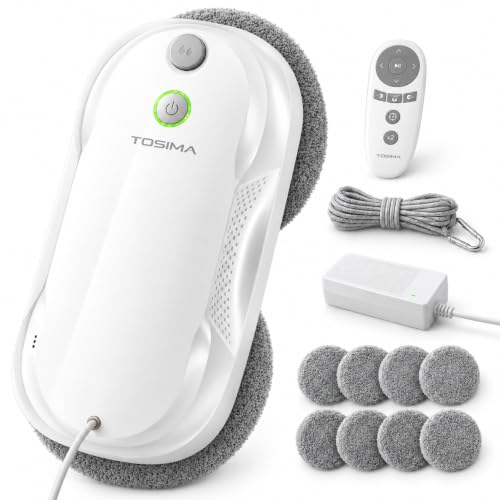
- Compact design for easier storage
- Adaptive suction up to 6400Pa
- 25-minute emergency backup battery
Best For: Apartments and lightly textured glass
Edge-Coverage Specialist

- Round-square dual-stage cleaning
- 6500Pa suction with 55N pressure
- 30-minute power-off protection
Best For: Edge-heavy cleaning on larger glass areas
Budget Safety Option

- 6500Pa suction with UPS backup
- Three selectable cleaning paths
- Includes 10 cleaning pads
Best For: Routine cleaning of windows and glass doors
Best Multi-Spray Option

- Four-nozzle spray system
- Six cleaning modes with remote control
- 25-minute backup battery and safety rope
Best For: High windows and glass doors needing adjustable spray coverage
Best High-Suction Pick

- 5600 Pa stated suction
- Automatic or manual water spraying
- Includes safety rope and 10 cleaning pads
Best For: Smooth windows, tiles, and glass doors
Smart Edge Navigator

- AI 5.0 path planning with edge detection
- Dual nozzles and microfiber cleaning pads
- 3000Pa suction with UPS and safety rope
Best For: Remote-controlled routine cleaning of suitable glass, mirrors, and doors
High-Suction Safety Pick
6400Pa Dual-Spray Window Robot

- Variable-frequency suction up to 6400Pa
- Air-pressure sensor and backup battery
- 178-inch safety rope with edge detection
Best For: High or hard-to-reach indoor and outdoor glass
Surface-Prep Specialist

- Dual spray with 0.05 ml cycle output
- Three paths and edge detection
- Includes 10 cloths and dry-first guidance
Best For: Structured cleaning of suitable smooth glass and skylights
Compact Adaptive Pick – Tosima W5
For shoppers comparing window cleaning robots for textured glass, the Tosima W5 is a compact option with adaptive suction, dual-spray cleaning, and remote control. However, its stated surface recommendation is glass windows and smooth surfaces, so it is better suited to lightly textured or relatively even glass than heavily uneven surfaces.
Best For: Apartments, smaller homes, and routine cleaning of smooth or lightly textured windows.
Pros:
- Compact, lightweight design is easy to handle and store.
- Variable-frequency suction reaches up to 6400Pa and adjusts to the surface.
- Includes edge detection, a 220kg safety rope, and up to 25 minutes of backup power.
Cons:
- Designed for smooth glass surfaces, so heavily textured glass may not be suitable.
- The listed 6-inch cleaning path may require extra passes on larger windows.
The W5 offers a practical balance of compact sizing, automated spraying, and safety features. Its adaptive suction is useful for surface variation, but buyers should confirm that their textured glass is within the robot’s supported range.
Edge-Coverage Specialist – HUTT 10 Window Robot
The HUTT 10 stands out among window cleaning robots for textured glass because its 3D suspension base maintains pressure while its round-square dual-stage system combines wet lifting with dry polishing. Its specifications still focus on glass, so it is most appropriate where the texture is moderate and the robot can maintain reliable track contact.
Best For: Larger glass areas, edge-focused cleaning, and users who want wet lifting followed by dry polishing.
Pros:
- 6500Pa suction and constant 55N pressure support stable vertical cleaning.
- Round and square pads improve edge reach, corner coverage, and frame-line cleaning.
- NAVI 7.0 mapping, 14 sensors, and a 30-minute backup battery add convenience and protection.
- Supports small glass surfaces starting at 30×30cm.
Cons:
- Tracks and pads must remain properly clean, dry, and prepared to prevent slipping.
- Purified water is recommended, and cleaning liquid is not included.
With pressure control, dual-stage cleaning, and detailed edge coverage, the HUTT 10 is one of the more capable choices for uneven cleaning demands. Proper pad preparation is especially important when working on textured or moisture-sensitive glass.
Longest Battery Pick – ECOVACS WINBOT W2 PRO Omni
The ECOVACS WINBOT W2 PRO Omni is a flexible choice for shoppers considering window cleaning robots for textured glass, with intelligent path planning, triple-nozzle spraying, and both battery and plugged-in operation. Its notes describe use on glass and several window formats, but they do not specifically confirm suitability for deeply textured surfaces.
Best For: Large indoor glass areas, locations without convenient outlets, and users who value portable operation.
Pros:
- Battery mode provides up to 110 minutes of cleaning, while plugged-in mode supports continuous use.
- Three-nozzle wide-angle spraying works with the wet cloth to loosen and remove dirt.
- WIN-SLAM 4.0 path planning supports edge detection and varied window configurations.
- Multi-functional station serves as a control panel, charger, stabilizer, and storage solution.
Cons:
- The supplied information does not specify a suction rating for evaluating heavily textured glass.
- It is listed for indoor use, which may limit outdoor applications.
The W2 PRO Omni is particularly appealing when runtime and flexible placement matter. Its spraying and navigation features may help with mildly textured glass, but buyers with pronounced texture should verify surface compatibility before purchase.
Budget Safety Option – 6500Pa Window Cleaning Robot
This remote-controlled window cleaning robot is a straightforward option for routine glass care, with 6500Pa suction, dual-sided spraying, and three selectable cleaning paths. For window cleaning robots for textured glass, its edge sensors and suction are useful starting points, but the product is intended for regularly maintained surfaces and may need pre-cleaning when texture traps heavier buildup.
Best For: Routine cleaning of windows, glass doors, mirrors, and hard-to-reach indoor or outdoor glass.
Pros:
- 6500Pa suction, a 5-meter safety rope, and 25-minute UPS backup support safer operation.
- Three cleaning paths accommodate different window layouts.
- Dual spray nozzles and a 60ml tank help loosen dust, fingerprints, and light marks.
- Includes 10 cleaning pads and remote control operation.
Cons:
- Designed for routine cleaning; heavy buildup or water stains may require pre-cleaning.
- Textured surfaces may need additional cycles and careful pad preparation.
- The listed details contain an inconsistent battery-life entry, so the 25-minute UPS figure is the clearer safety specification.
This model keeps the feature set practical: strong suction, remote operation, spraying, and multiple pads. It can be considered for lightly textured glass, provided users follow the recommended dampening and wringing process and do not expect it to replace deep manual scrubbing.
Best Multi-Spray Option – WA9C Pro
For shoppers comparing window cleaning robots for textured glass, the WA9C Pro stands out for its four-nozzle spray system and multiple cleaning paths. Its 2600–3200 Pa suction, air-pressure monitoring, and bottom drop sensor are designed for secure operation on glass, while the remote allows manual attention to stubborn spots. Because the supplied surface recommendation is glass windows, verify compatibility with your particular textured finish before use.
Best For: High windows, mirrors, and glass doors where adjustable spray coverage and remote-controlled path selection are priorities.
Pros:
- Four precision nozzles provide even water coverage.
- Offers N-shaped, Z-shaped, and manual cleaning modes.
- Includes a 25-minute backup battery, safety rope, and drop-sensing features.
- Comes with four mops, replacement nozzles, and an unclogging needle kit.
Cons:
- Its stated surface recommendation is glass windows, not specifically textured glass.
- At 6 pounds, it is heavier than some compact alternatives.
- Requires an anchored safety rope for overhead work.
The WA9C Pro is a feature-rich choice when spray control and safety monitoring matter most. Its textured-glass suitability should be confirmed first, especially if the surface has pronounced grooves or an uneven finish.
Best High-Suction Pick – HCR-10
The HCR-10 combines 5600 Pa suction with automatic or manual water spraying, making it a practical candidate for shoppers seeking window cleaning robots for textured glass. Its double spiral cleaning head and microfiber cloth are intended to clean without scratching, but the listed surface recommendation is smooth, so textured-glass users should test a small area and confirm fit before relying on it.
Best For: Smooth windows, tiles, and glass doors where strong suction, automatic spraying, and obstacle detection are useful.
Pros:
- Provides a stated 5600 Pa suction rating.
- Supports automatic and manual water spraying.
- Detects window frames and obstacles during cleaning.
- Includes a 300-pound-capacity safety rope, 10 pads, and four cleaning rings.
Cons:
- The product is specified for smooth surfaces rather than textured glass.
- Its 30 ml water capacity may require refills on larger jobs.
- Has a narrower 5.7-inch cleaning path than some listed alternatives.
With its high stated suction and useful accessory package, the HCR-10 is appealing for smooth, framed surfaces. For textured glass, the smooth-surface specification makes cautious compatibility testing especially important.
Best Visible-Tank Design – Tosima X1
The Tosima X1 is a straightforward option for shoppers evaluating window cleaning robots for textured glass, with dual nozzles and ultrasonic water atomization that sprays in the direction of travel. Its 85 ml viewing-window tank helps monitor water use, and the remote supports manual corrections. Since the supplied recommendation is glass, not specifically textured glass, test the robot on an inconspicuous section first.
Best For: Indoor glass surfaces, including large or small windows, where visible water levels and simple S-shaped automatic cleaning are priorities.
Pros:
- Dual nozzles direct atomized water along the travel path.
- Large 85 ml tank includes a viewing window.
- Supports S-shaped automatic cleaning and remote manual adjustment.
- Includes a safety tether and has a 25-minute power-outage backup.
Cons:
- The supplied surface recommendation does not specifically cover textured glass.
- Listed noise level is 65 dB.
- Designed for indoor use and requires a fixed-object tether.
The X1 offers convenient water-level visibility and directional spraying in a compact design. It may suit lightly textured glass if testing confirms adequate contact, but the manufacturer’s supplied details do not establish performance on heavily uneven surfaces.
Smart Edge Navigator – AI Dual-Spray Window Robot
For shoppers comparing window cleaning robots for textured glass, the BSD16 stands out for its AI 5.0 path planning, edge detection, and dual-spray cleaning system. Its 3000Pa suction, microfiber pads, and remote-controlled modes make it suited to routine cleaning of suitable glass surfaces, mirrors, and doors.
Best For: Homeowners who want automated cleaning with guided navigation and remote-controlled spray modes.
Pros:
- AI path planning and edge detection help it navigate frames and obstacles.
- Dual water nozzles, double-helix cleaning heads, and microfiber pads target dust, fingerprints, and smudges.
- 3000Pa suction, UPS backup for up to 30 minutes, and a safety rope provide multiple safety measures.
- Remote control offers three automatic modes plus manual control.
Cons:
- The 50 ml capacity may require refilling during larger cleaning jobs.
- The supplied information is focused on glass, mirrors, and doors rather than textured or irregular surfaces specifically.
The BSD16 is a practical choice when navigation and flexible remote control matter most. For textured glass, verify that the surface is smooth enough to maintain suction and follow the manufacturer’s operating guidance.
High-Suction Safety Pick – 6400Pa Dual-Spray Window Robot
Among window cleaning robots for textured glass, this updated model offers the strongest stated suction in the roundup at up to 6400Pa. Variable-frequency suction, an air-pressure sensor, edge and corner detection, and dual-direction spray are designed for controlled cleaning of indoor or outdoor glass, including high windows.
Best For: High or hard-to-reach glass where stronger suction, backup power, and a long safety rope are priorities.
Pros:
- Variable-frequency suction reaches up to 6400Pa and adapts to dirt levels and glass surfaces.
- Triple safety features include a backup battery, air-pressure anti-drop sensor, and 178-inch safety rope.
- Quick, deep, and spot-cleaning modes support different cleaning tasks.
- Dual-direction ultrasonic spray, edge detection, and 10 replacement microfiber cloths are included.
Cons:
- Users must dampen the pads and pre-apply cleaning solution; solution should not be poured directly into the machine.
- The stated tank capacity varies between the listing title and product details, so confirm the current specification before buying.
This model is the most safety- and suction-focused option here, particularly for exterior or high glass. Because the notes do not specifically confirm performance on textured glass, check surface compatibility before use and follow the preparation instructions carefully.
Surface-Prep Specialist – 3000Pa Glass Cleaning Robot
This 3000Pa model is a sensible option for shoppers evaluating window cleaning robots for textured glass who want clear surface-preparation guidance. Its dual spray, three cleaning paths, pressure sensor, and anti-drop protection are intended for suitable smooth glass, while the included cloths support a dry-first, wet-second cleaning routine.
Best For: Users who prefer a structured two-pass process for smooth windows, glass doors, mirrors, and qualifying skylights.
Pros:
- Upgraded dual spray delivers 0.05 ml per cycle and includes a 50 ml tank.
- Three cleaning paths and edge detection support framed and frameless windows.
- 3000Pa suction, a four-meter safety rope, and 20-minute UPS backup provide layered protection.
- Includes 10 microfiber cloths and recommends dry wiping before wet cleaning.
Cons:
- It is not recommended for curved glass, thick trim, raised decorative elements, or horizontal surfaces.
- Heavy stains such as dried mud, paint, oil, or bird droppings require manual pre-cleaning.
- The robot must remain plugged in; the UPS is emergency backup rather than cordless operation.
This is the clearest choice for buyers who value explicit operating limits and a repeatable cleaning method. Its restrictions are especially important for textured glass: raised elements or gaps can weaken suction, so inspect and pre-clean the surface before relying on the robot.
How We Picked the Best Window Cleaning Robots for Textured Glass
We focused on features that matter when a robot must clean patterned or lightly uneven glass rather than a perfectly smooth pane. Our comparison considers suction strength, pad pressure, spray control, edge detection, path planning, backup power, tether systems, and the likelihood of maintaining stable contact across textured areas.
Models with dual or ultrasonic spray systems can distribute moisture more evenly, while adaptive suction and flexible cleaning pads may help compensate for minor surface variation. However, no robot should be assumed safe on heavily embossed, deeply ridged, cracked, loose, or porous glass without confirmation from the manufacturer.
Quick Comparison
| Feature | What to look for | Why it matters |
|---|---|---|
| Suction | About 5,600Pa to 6,500Pa or adaptive control | Helps maintain grip as the robot crosses surface variations |
| Spray system | Dual-nozzle, multi-nozzle, or ultrasonic atomization | Reduces dry spots and limits excess liquid |
| Safety | UPS backup, tether, edge detection, and alarms | Reduces drop risk during indoor or outdoor cleaning |
| Navigation | Intelligent path planning and corner or edge handling | Improves coverage and reduces missed sections |
| Controls | Remote control, app support, or automatic operation | Makes setup and supervision easier |
Key Buying Factors for Window Cleaning Robots for Textured Glass
Surface Compatibility
Check the manufacturer’s approved surface types before buying. Textured glass varies considerably, and a robot designed for smooth windows may lose contact on pronounced patterns. Look for adaptive suction, compliant pads, and explicit support for uneven or patterned glass.
Moisture and Spray Control
Too little liquid can increase friction and leave streaks, while too much can weaken adhesion or create runoff. Dual-spray and ultrasonic systems are useful when they provide fine, consistent coverage rather than soaking the pad.
Safety and Outdoor Use
For exterior panes or upper-story windows, prioritize a strong safety tether, UPS anti-drop protection, edge detection, and clear low-battery alerts. Outdoor use also requires checking wind, frame, temperature, and maximum height restrictions.
Cleaning Coverage and Maintenance
Compare pad size, cleaning modes, tank capacity, cable length, and the availability of replacement pads. Washable pads should be cleaned frequently because trapped grit can scratch glass or reduce contact on textured surfaces.
Who Should Buy Which Window Cleaning Robots for Textured Glass?
Choose a high-suction model with adaptive control if your windows have noticeable texture and you want the strongest chance of stable coverage. A model with dual or ultrasonic spray is better for larger panes where even moisture distribution is important. For frequent exterior cleaning, prioritize the most complete safety package over a higher headline suction rating.
Basic automatic models may suit smooth interior glass, tiles, or doors, but they are less compelling for pronounced texture unless compatibility is clearly stated. If your glass has deep patterns, damaged coatings, loose panes, or irregular frames, manual cleaning or professional service may be safer. Regardless of the model, supervise the first cleaning, secure the tether, test a small area, and follow the manufacturer’s surface and moisture instructions.