Window cleaning robots with edge detection can make high, exterior, and hard-to-reach glass easier to maintain while reducing the need for ladders. The best models combine dependable suction with intelligent navigation, automatic spraying, and safety systems that help them stay on course.
We compare 10 options across suction power, edge handling, cleaning performance, controls, safety features, and glass compatibility so you can choose a robot that matches your windows and cleaning routine.
Best 10 Window Cleaning Robots with Edge Detection Picks for 2026
Best Value Glass Specialist
Dual-Spray Edge Detection Robot

- 3,000Pa suction with safety rope and UPS backup
- Dual spray, 50ml tank, and 10 microfiber cloths
- Designed for smooth glass and frameless windows
Best For: Routine cleaning of maintained glass surfaces
Premium Edge Coverage

- 10,000Pa suction with a 10-stage safety system
- TruEdge 2.0 targets frames and corners
- Six cleaning modes with WIN-SLAM 4.0 navigation
Best For: Large or hard-to-reach windows needing thorough edge cleaning
Best for Corners
WISEBOT Square-Edge AI Cleaner

- Square design with dedicated edge-cleaning mode
- AI navigation includes frameless and obstacle detection
- Triple spray with a 200ml water tank
Best For: Corner-focused cleaning of large and high glass surfaces
Best Remote-Control Value

- 6,500Pa suction with 5-meter rope and UPS backup
- Edge and obstacle detection for framed or frameless glass
- Three routes, dual spray, and 10 included pads
Best For: Routine indoor and outdoor glass cleaning with remote control
Best All-Around Spraying

- Four spray nozzles with multiple cleaning patterns
- 2400–3200Pa suction and edge detection
- Safety rope and emergency power supply included
Best For: Homes and offices wanting flexible spray modes
Best for AI Path Planning
BSD16 Automatic Window Cleaning Robot

- AI 5.0 route planning with edge detection
- 3000Pa suction and triple safety system
- Dual spray and double-helix cleaning heads
Best For: Indoor glass cleaning with remote-controlled navigation
Best High-Suction Option

- 6400Pa variable suction for vertical glass
- Slim round design with dual spray
- Edge detection, UPS backup, and safety cable
Best For: High windows, skylights, mirrors, and tile walls
Best Edge-to-Edge Scrubbing
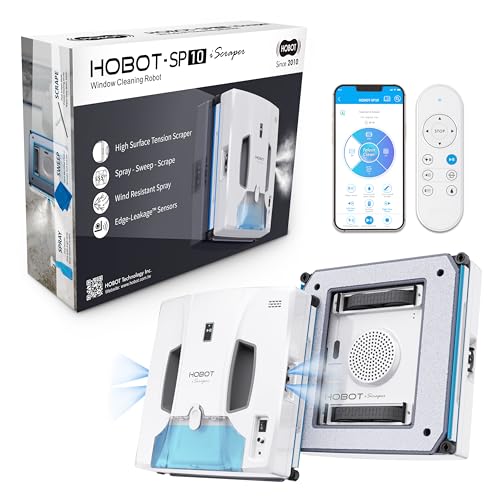
- Spray-sweep-scrape cleaning system
- Edge-leakage sensors for framed or frameless glass
- 6000Pa suction with 20-minute UPS backup
Best For: Detailed cleaning across windows, greenhouse roofs, and solar panels
Best Compact Adaptive-Suction Pick
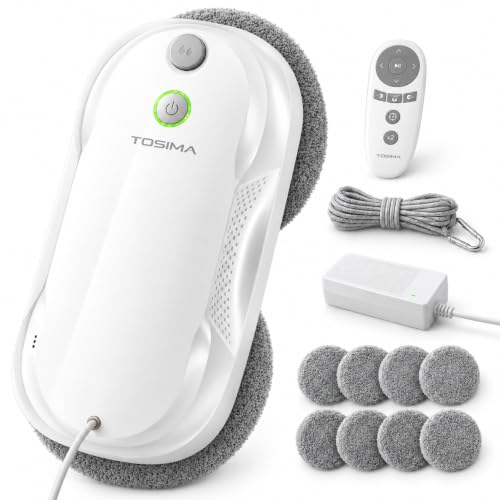
- Compact design for apartments and smaller homes
- 6400Pa adaptive suction with reduced operating noise
- Edge sensor and 25-minute backup battery
Best For: Convenient routine cleaning in space-conscious homes
Best Multi-Surface Value

- Edge detection and smart navigation
- Ultrasonic automatic water spray
- Cleans glass, tiles, mirrors, and marble
Best For: Multi-surface cleaning across home or commercial spaces
Best Value Glass Specialist – Dual-Spray Edge Detection Robot
If you want window cleaning robots with edge detection for routine glass maintenance, this model combines automatic path planning with dual water spray and 3,000Pa suction. It is designed for smooth glass, including frameless windows, but works best after loose dirt and stubborn buildup have been removed.
Best For: Routine cleaning of smooth windows, glass doors, mirrors, and skylights angled at least 30 degrees from horizontal.
Pros:
- Edge detection, pressure sensing, and three cleaning paths support consistent coverage.
- Dual spray system, 50ml tank, and 10 included microfiber cloths support wet cleaning.
- Includes 3,000Pa suction, a safety rope, and a 20-minute UPS backup.
Cons:
- It must remain plugged in; the UPS is emergency holding power rather than cordless operation.
- Not recommended for curved glass, thick trim, raised decorations, or horizontal surfaces.
- Bird droppings, dried mud, paint, oil, and other stubborn stains require manual pre-cleaning.
This is a practical option for regularly maintained glass when you value included accessories and straightforward remote-controlled cleaning. Following the recommended dry-then-wet two-pass process should help improve results and reduce suction issues.
Premium Edge Coverage – ECOVACS WINBOT W2S PRO
The ECOVACS WINBOT W2S PRO is a premium choice among window cleaning robots with edge detection, pairing 10,000Pa suction with TruEdge 2.0 edge cleaning. Its triple-spray system and WIN-SLAM 4.0 navigation are intended to provide more complete coverage on large or difficult-to-reach glass.
Best For: Users who want advanced edge and corner coverage, multiple cleaning modes, and app-controlled cleaning for large or high windows.
Pros:
- TruEdge 2.0 uses four edge brushes and felt bristles to clean closer to frames and corners.
- Triple-spray wet wiping helps loosen dust, pollen, fingerprints, water spots, and pet marks.
- 10,000Pa suction, a 10-stage safety system, and WIN-SLAM 4.0 path planning add capability.
- Offers Fast, Thorough, Edge, Heavy-Duty, Deep, and Zone cleaning modes.
Cons:
- It is corded electric, so it is not a cordless window-cleaning solution.
- App control may be less convenient for shoppers who prefer a traditional remote.
- Users still need to attach the safety tether and follow the manual.
Choose this model when edge coverage and cleaning-mode flexibility matter more than keeping the setup simple. Its combination of strong suction, smart routing, and targeted edge hardware makes it well suited to demanding glass-cleaning routines.
Best for Corners – WISEBOT Square-Edge AI Cleaner
WISEBOT stands out among window cleaning robots with edge detection because its square design and dedicated edge mode are intended to improve corner coverage. AI navigation adds frameless-glass detection, obstacle recognition, tilt sensing, and spot cleaning for more customized routines.
Best For: Homeowners cleaning floor-to-ceiling windows, balcony glass, mirrors, and exterior surfaces who want corner-focused coverage and app or remote control.
Pros:
- Square body, four corner cleaning pads, and edge mode target areas round robots may miss.
- AI navigation supports route planning, edge and frameless-glass detection, and obstacle recognition.
- Triple spray and a 200ml tank support longer wet-cleaning sessions.
- Spot cleaning, remote control, app control, voice prompts, and UPS safety features add flexibility.
Cons:
- The supplied notes do not specify a suction rating or backup duration.
- A larger integrated microfiber cloth may require careful washing and maintenance between uses.
- Exterior and high-window cleaning still requires using the safety rope and following operating precautions.
This model is a strong fit if corners and frame areas are your main concern. Its square form and spot-cleaning function offer a more targeted approach than a basic round robot, while the large tank favors longer sessions.
Best Remote-Control Value – 6500Pa Dual-Spray Robot
This 6,500Pa model is a practical pick among window cleaning robots with edge detection for indoor and outdoor glass. It combines obstacle-aware routing, three cleaning paths, dual-sided spray, and remote control for reaching large windows, glass doors, and floor-to-ceiling panes without repeated ladder work.
Best For: Homes and apartments needing remote-controlled routine cleaning across small panes, large windows, glass doors, and floor-to-ceiling glass.
Pros:
- 6,500Pa suction, a 5-meter safety rope, and 25-minute UPS backup support secure operation.
- Edge detection and obstacle awareness work with framed and frameless windows.
- Top-down, left-down, and right-down cleaning paths accommodate different layouts.
- Dual spray, a 60ml tank, remote control, and 10 included pads support routine cleaning.
Cons:
- It is intended for regularly maintained glass; heavy buildup and stubborn water stains may need pre-cleaning.
- The supplied details describe remote control rather than app control.
- Pads need to be lightly dampened, wrung out, attached evenly, and washed after each cycle.
This is a sensible everyday option when you want strong suction and simple remote operation without relying on an app. Its results will depend on proper pad care and keeping the glass free of heavy deposits before starting.
Best All-Around Spraying – Z9 Pro Window Cleaning Robot
The Z9 Pro is a practical option for shoppers comparing window cleaning robots with edge detection. It combines adjustable suction, four spray nozzles, smart navigation, and support for glass, mirrors, and tiles. Its anti-fall sensors are designed to detect frameless-window edges and stop before them.
Best For: Homes and offices needing programmable cleaning modes and even spray coverage on high windows.
Pros:
- 2400–3200Pa suction helps it stay attached to glass, mirrors, and tiles.
- Four spray nozzles and four cleaning patterns support routine or heavier cleaning.
- Includes a safety rope, emergency power supply, and edge-detection sensors.
- Reusable microfiber cloths and a 60ml water tank support repeated cleaning.
Cons:
- It requires a minimum work surface of 400 x 600 mm.
- The corded design still requires access to a power source.
- Streak-free results depend on appropriate spray amounts and timely pad changes.
With multiple modes and a relatively large spray system, the Z9 Pro is suited to users who want more control than a simple one-button cleaner. Its safety features add reassurance, but normal setup and pad maintenance remain important.
Best for AI Path Planning – BSD16 Automatic Window Cleaning Robot
The BSD16 is a strong contender among window cleaning robots with edge detection, using AI 5.0 path planning to adjust its route around frames and obstacles. Dual spray nozzles, double-helix cleaning heads, and microfiber pads are designed for glass, mirrors, and doors.
Best For: Users who want remote-controlled cleaning modes and automated route planning for indoor glass surfaces.
Pros:
- AI path planning and edge detection help it navigate frames and obstacles.
- 3000Pa suction helps hold the robot securely to the glass.
- Dual spray nozzles and double-helix heads target dirt, fingerprints, and smudges.
- UPS power storage and a safety rope provide added protection during outages.
Cons:
- The supplied details specify indoor use.
- Its 50ml water capacity is smaller than some competing models.
- Remote control is required for the listed automatic and manual operating modes.
The BSD16 emphasizes navigation and remote convenience, making it appealing for regular indoor glass maintenance. Buyers should note its indoor-use specification and smaller water reservoir when comparing it with broader-capacity alternatives.
Best High-Suction Option – X6 Window Cleaning Robot
The X6 stands out among window cleaning robots with edge detection for its 6400Pa variable suction and slim round design. It is built for glass, mirrors, skylights, and tile walls, while smart navigation and anti-fall sensors help it plan routes and respond to window edges.
Best For: High-window, floor-to-ceiling, skylight, mirror, and tile cleaning where strong suction and broad surface compatibility matter.
Pros:
- 6400Pa variable suction is designed for secure vertical-glass cleaning.
- Round body is claimed to cover 95% of the surface and reduce square-robot blind spots.
- Dual spray, edge detection, and smart navigation support automated cleaning.
- UPS backup lasts up to 30 minutes, with a safety cable rated for at least 150 pounds.
Cons:
- At 63 dB, it is not a silent appliance.
- It is a corded electric device and still needs an AC connection during operation.
- For heavy grime, the supplied guidance recommends multiple passes.
The X6 is the most safety- and suction-focused choice in this group, with a shape intended to reach more of the glass surface. Its 12-month warranty is useful for buyers prioritizing longer-term support, though cleaning technique still affects the final finish.
Best Edge-to-Edge Scrubbing – HOBOT-SP10 iScraper
If you want window cleaning robots with edge detection plus more deliberate water removal, the HOBOT-SP10 iScraper stands out for its spray-sweep-scrape system. Edge-leakage sensors respond to frameless edges, window seals, and minor frame bumps, while the trailing scraper helps reduce water and dirt buildup near the perimeter.
Best For: Homeowners cleaning framed or frameless glass, reclined windows, greenhouse roofs, or solar panels.
Pros:
- Three-step spray, sweep, and scrape cleaning process.
- Edge-leakage sensors and edge-to-edge cleaning help manage perimeter areas.
- 6000Pa suction, app and remote control, and a 20-minute UPS backup.
- Machine-washable cloths and replaceable scrapers and nozzles support maintenance.
Cons:
- Requires corded power during normal operation.
- Its feature-rich design may be more than needed for occasional basic cleaning.
The SP10 is a strong fit when streak control, edge coverage, and safety features matter as much as automated movement. Its reclined-surface capability also broadens its usefulness beyond standard vertical windows.
Best Compact Adaptive-Suction Pick – Tosima W5
The Tosima W5 is a compact option among window cleaning robots with edge detection, combining automatic spraying with intelligent navigation. Its air-pressure sensor detects edges for frameless-glass cleaning, while variable-frequency suction adapts to the surface and reaches up to 6400Pa.
Best For: Apartment, condo, and smaller-home users who want a lightweight robot with straightforward remote control.
Pros:
- Compact, lightweight design is easy to handle and store.
- Adaptive suction reaches up to 6400Pa and adjusts to the surface.
- Air-pressure edge detection supports cleaning frameless glass.
- Triple safety system includes suction, a 220kg safety rope, and up to 25 minutes of backup power.
Cons:
- Remote control is the listed control method, without app control.
- The 6-inch cleaning path is relatively narrow.
With its small footprint and simple startup, the W5 prioritizes convenience without omitting adaptive suction or edge protection. It is particularly practical where storage space is limited and routine window cleaning is the main task.
Best Multi-Surface Value – T6 PRO Window Cleaning Robot
This T6 PRO is a versatile choice among window cleaning robots with edge detection, using smart navigation, edge sensors, and automatic water spraying to cover smooth surfaces. Its built-in tank and ultrasonic atomizer produce fine droplets, while the remote allows manual spot cleaning.
Best For: Users who want one robot for glass, mirrors, tiles, marble, and other smooth, seamless surfaces.
Pros:
- Edge detection helps prevent falls while covering the window surface.
- Automatic ultrasonic water spray helps loosen stubborn stains.
- Works on glass, tiles, mirrors, marble, and smooth wood surfaces.
- Brushless motor is designed for longer life, lower noise, and energy efficiency.
Cons:
- Must remain plugged in during operation.
- Control is through the remote rather than an app.
- The built-in battery is intended for outage protection, not cordless cleaning.
The T6 PRO makes the most sense for households or light commercial users cleaning several smooth surface types. Its slim 2.76-inch profile may also help it reach narrower areas, while the safety system addresses power interruptions and fall protection.
How We Picked the Best Window Cleaning Robots with Edge Detection
We evaluated the selected models according to the features that matter most in real-world window cleaning: suction strength, edge-detection reliability, navigation, spray and wiping systems, safety backups, controls, and indoor or outdoor compatibility. We also considered whether each design appears suited to framed, frameless, large, narrow, or high windows.
Higher suction ratings can be useful, but they do not guarantee better cleaning. A robot also needs consistent contact with the glass, effective pad coverage, sensible path planning, and enough cable or battery support for the intended surface.
Quick Comparison
| Feature | What to compare | Why it matters |
|---|---|---|
| Suction | About 3,000Pa to 10,000Pa among these models | Helps maintain contact, especially on smooth vertical glass |
| Spraying | Dual-spray, triple-spray, or four-nozzle designs | Improves moisture distribution and loosens dirt |
| Navigation | Smart path planning, AI navigation, or WIN-SLAM systems | Supports more consistent coverage |
| Safety | UPS backup, safety ropes, and anti-drop systems | Reduces risk if power or suction is interrupted |
| Controls | Remote, app, or both | Makes setup and mid-cleaning adjustments easier |
Key Buying Factors for Window Cleaning Robots with Edge Detection
Edge Detection and Window Compatibility
Confirm whether the robot is designed for framed glass, frameless windows, or both. Edge detection should help the unit recognize boundaries without repeatedly bumping into frames, but performance can vary with thick frames, silicone seals, divided panes, and heavily obstructed edges.
Suction, Safety, and Placement
Choose adequate suction for your glass type, then prioritize safety features such as a backup power system, safety tether, anti-drop protection, and clear operating instructions. These robots should still be supervised, particularly outdoors or on upper-floor windows.
Spray and Cleaning Design
Automatic spray systems reduce manual wetting, while dual or triple spray layouts may provide more even coverage. Check whether the robot uses reusable microfiber pads and whether replacement pads are readily available. Avoid oversaturating pads, as excess moisture can reduce grip and leave streaks.
Navigation and Controls
Smart path planning can improve coverage and reduce missed areas. App control is convenient for status updates and settings; a remote may be simpler for quick operation. Look for models that support manual control when a window needs extra attention.
Who Should Buy Which Window Cleaning Robots with Edge Detection?
- For maximum suction: Consider a high-rated model if you regularly clean large, smooth, or difficult exterior panes.
- For frequent automated cleaning: Choose a robot with smart mapping, automatic spray, and dependable edge detection.
- For mixed indoor and outdoor use: Look for explicit support for both environments, strong safety backups, and a long tether.
- For frameless or unusual glass: Favor models that clearly list frameless compatibility and provide precise manual controls.
- For occasional household use: A simpler dual-spray robot with remote control may offer better value than a premium app-connected model.
Before buying, measure your windows, inspect their frames and surface condition, and verify the manufacturer’s instructions for wet or dry cleaning. No window cleaning robot replaces basic supervision, pad maintenance, or safe handling at height.